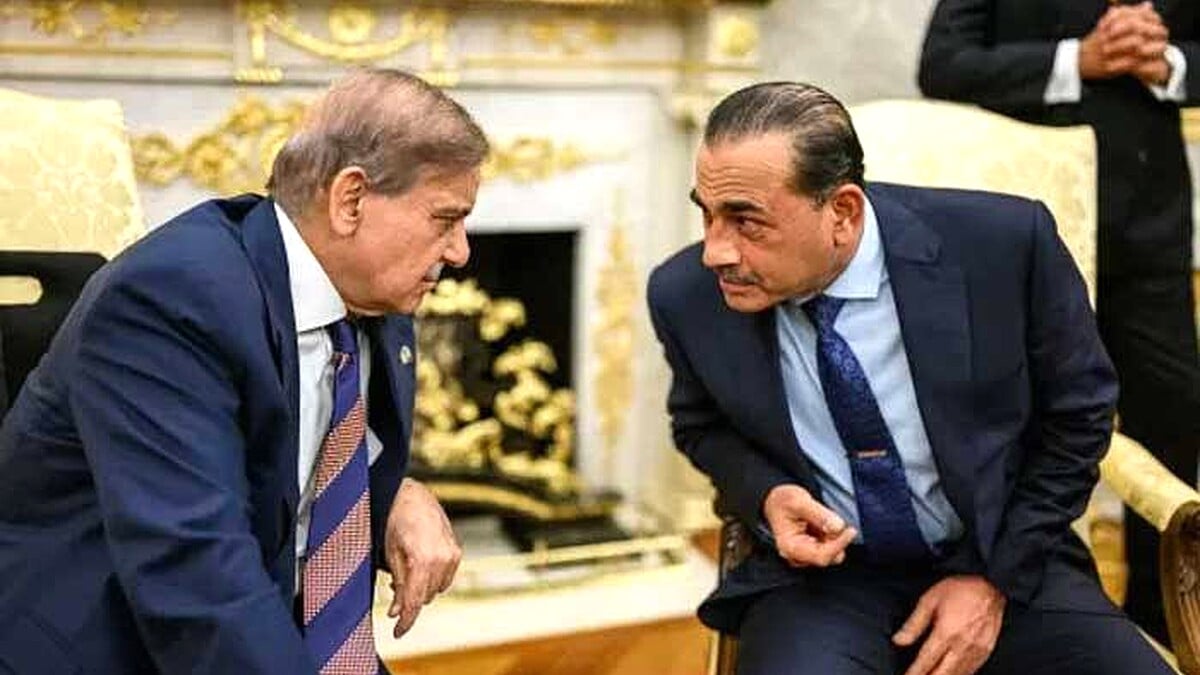




ISLAMABAD: Pakistan is treading with extraordinary caution in its silent facilitation of indirect talks between Washington and Tehran, deliberately shielding a delicate diplomatic process from any risk of disruption that could inflame regional tensions.
Well-placed sources confirm that Islamabad has intentionally positioned itself in the background to ensure its role does not become a point of contention between the two rival powers.
Only a handful of carefully chosen senior officials, fewer than a dozen according to insiders, are fully briefed on the coordination details while the rest of the federal cabinet learns developments primarily through international media outlets.
Pakistani authorities have enforced a rigorous policy of silence, avoiding even informal or off-the-record remarks that might inadvertently expose ongoing efforts.
This approach reflects a profound awareness of the high risks involved in acting as a discreet bridge between two nations locked in prolonged strategic confrontation.
As a direct result of this calculated restraint, nearly all public information about Pakistan’s involvement has originated from Washington and Tehran rather than from Islamabad itself.
International media reports have highlighted Pakistan’s behind-the-scenes efforts, including claims that Islamabad helped persuade Washington against targeting key Iranian figures connected to the dialogue process.
Pakistani officials have declined to comment on any such assertions, whether on or off the record, underscoring a comprehensive strategy of non-disclosure.
Diplomatic insiders stress that premature revelations could not only derail the current negotiations but also erode Pakistan’s credibility as a trusted mediator in future high-stakes conflicts.
Both the United States and Iran have privately conveyed confidence in Pakistan’s handling of the role, with some aspects publicly acknowledged by officials in Washington and Tehran.
Yet Islamabad has restricted itself strictly to confirming only those elements already in the public domain, maintaining absolute focus on operational success.
The current emphasis remains on conducting all diplomatic coordination away from media spotlight and domestic political noise to maximise chances of a breakthrough.
This episode marks a notable evolution in Pakistan’s foreign policy posture, building on its historical experience in discreet mediation during past regional crises where similar low-profile tactics prevented leaks in over 15 documented backchannel initiatives since 2010.
Analysts note that the stakes extend beyond immediate talks, given Pakistan’s $2.3 billion annual bilateral trade volume with Iran and the potential reactivation of the Iran-Pakistan gas pipeline project, which could inject up to $4 billion yearly into Pakistan’s energy sector if tensions ease.
Any miscalculation, sources caution, risks cascading effects on global energy markets already strained by Middle East volatility, where oil price fluctuations have averaged 18 percent swings in recent years amid similar diplomatic frictions.
The government’s extraordinary vigilance also safeguards Pakistan’s broader strategic interests, including its position as a pivotal player in South and West Asian security architectures.
By choosing deliberate invisibility over public acclaim, Islamabad demonstrates a mature understanding that successful facilitation often demands the ultimate sacrifice of recognition.
As the indirect process advances, observers remain watchful for any subtle signals, yet Pakistan’s disciplined silence continues to define its contribution to what could become a landmark de-escalation moment in international relations.
The policy of restraint has drawn quiet appreciation from diplomatic circles in multiple capitals, reinforcing Pakistan’s image as a reliable partner capable of navigating the most complex geopolitical minefields without fanfare.