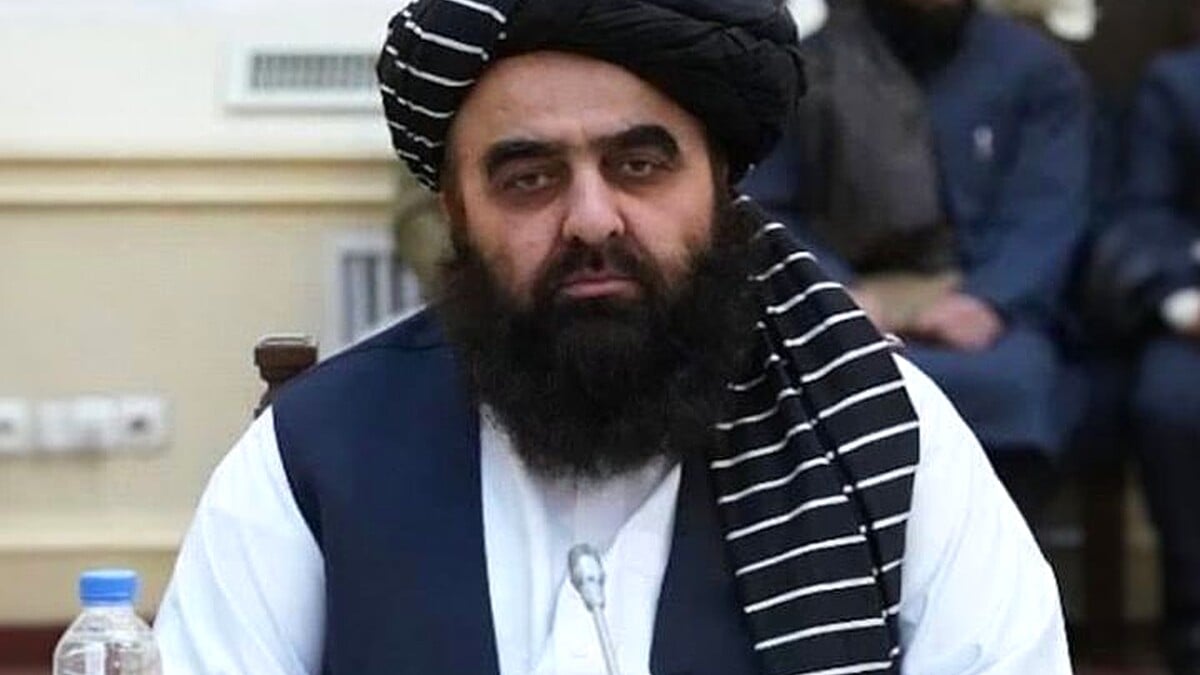




ISLAMABAD: Afghanistan’s Foreign Minister has declared that Kabul seeks to resolve all outstanding issues with Pakistan through dialogue and mutual understanding as neighbours.
The senior Taliban official stressed that no one will be allowed to use Afghan territory against Pakistan and confirmed that serious measures have already been taken to prevent such misuse.
This overture comes against the backdrop of escalating border tensions that erupted in late 2025 and spilled into 2026 with direct military exchanges.
Pakistan has repeatedly accused the Afghan Taliban regime of providing sanctuaries to Tehrik-e-Taliban Pakistan fighters who launch cross-border attacks.
According to the Global Terrorism Index 2026 Pakistan recorded 1139 terrorism deaths and 1045 incidents in 2025 the highest since 2013.
TTP alone carried out nearly 600 attacks that year up 24 percent from 2024 resulting in 637 deaths concentrated mainly in Khyber Pakhtunkhwa province near the Afghan border.
Independent data from ACLED shows TTP activity in 2025 already surpassed the full year of 2024 underscoring a sharp resurgence since the Taliban takeover of Kabul in 2021.
Pakistan responded with airstrikes targeting alleged TTP hideouts including one in Kabul in October 2025 followed by further strikes in February 2026 on installations in Nangarhar Paktika and Kandahar.
Afghan forces retaliated with cross-border operations claiming significant Pakistani casualties while Islamabad reported destruction of multiple militant camps and heavy losses inflicted on attackers.
Trade across key border points like Torkham and Chaman remained suspended for months crippling bilateral commerce estimated in billions of dollars annually before the closures.
Regional powers including China have urged both sides to exercise restraint and pursue dialogue instead of force.
Chinese Foreign Minister Wang Yi in a March 2026 call with his Afghan counterpart emphasised that issues can only be resolved through consultation and warned against escalation.
Iran and Saudi Arabia have also welcomed Afghan statements favouring political solutions and offered mediation support.
Pakistan’s military leadership has maintained that terrorists operating from Afghan soil will not be allowed to undermine national security.
Army chief statements have repeatedly highlighted the need for verifiable action against TTP sanctuaries rather than mere assurances.
Despite the latest diplomatic overture from Kabul analysts note deep mistrust persists over implementation.
UN experts have called for an immediate fresh ceasefire and lasting peace agreement to prevent further civilian displacement along the 2600-kilometre Durand Line.
Tens of thousands have already been displaced due to intensified fighting and fencing disputes.
Afghan officials including government spokesman Zabihullah Mujahid have echoed the Foreign Minister’s position in recent press briefings insisting on peaceful resolution while denying systematic support for TTP.
They claim certain elements may exploit the porous border but insist serious steps including security crackdowns have been initiated.
Pakistan however demands concrete and verifiable dismantling of terror networks rather than verbal commitments.
Bilateral trade which once exceeded four billion dollars annually has plummeted with both sides exploring alternative routes through Iran and Central Asia.
Border fencing by Pakistan viewed by Kabul as unilateral has added to friction though Islamabad cites it as essential for curbing infiltration.
Over 4000 militants reportedly attempted crossings in mid-2025 alone with a high percentage being Afghan nationals according to Pakistani security assessments.
The latest assurance from Afghanistan’s Foreign Minister arrives at a critical juncture when international attention has focused on the risk of wider regional instability involving nuclear-armed Pakistan.
China which maintains strong ties with both nations has repeatedly called for de-escalation and face-to-face talks to address core security concerns.
Previous mediation efforts involving Türkiye and Qatar produced tenuous ceasefires in late 2025 but failed to resolve the underlying TTP issue.
Talks in Istanbul highlighted fundamental differences with Pakistan insisting on action against sanctuaries and Afghanistan framing the matter as Islamabad’s internal challenge.
Local media reports in both countries have amplified claims and counter-claims with Pakistani outlets highlighting TTP attack statistics and Afghan channels stressing sovereignty violations.
Independent verification remains challenging due to restricted access in border regions.
As diplomatic channels reopen observers watch whether the latest pledge translates into measurable action on the ground.
Pakistan continues large-scale counter-terror operations in its western provinces while reinforcing border defences.
The Afghan side has appealed for restraint during religious occasions and called for extension of any pauses in fighting.
Economic fallout has hit ordinary citizens hardest with traders on both sides losing livelihoods and families separated by closed crossings.
Humanitarian concerns have prompted appeals from clerics in Pakistan and Afghanistan for de-escalation till major festivals.
Whether the Foreign Minister’s assurance marks a genuine turning point or another cycle in long-standing mistrust will depend on follow-up actions in coming weeks.
Regional stability in South and Central Asia hinges on whether neighbours can convert dialogue into durable security cooperation.