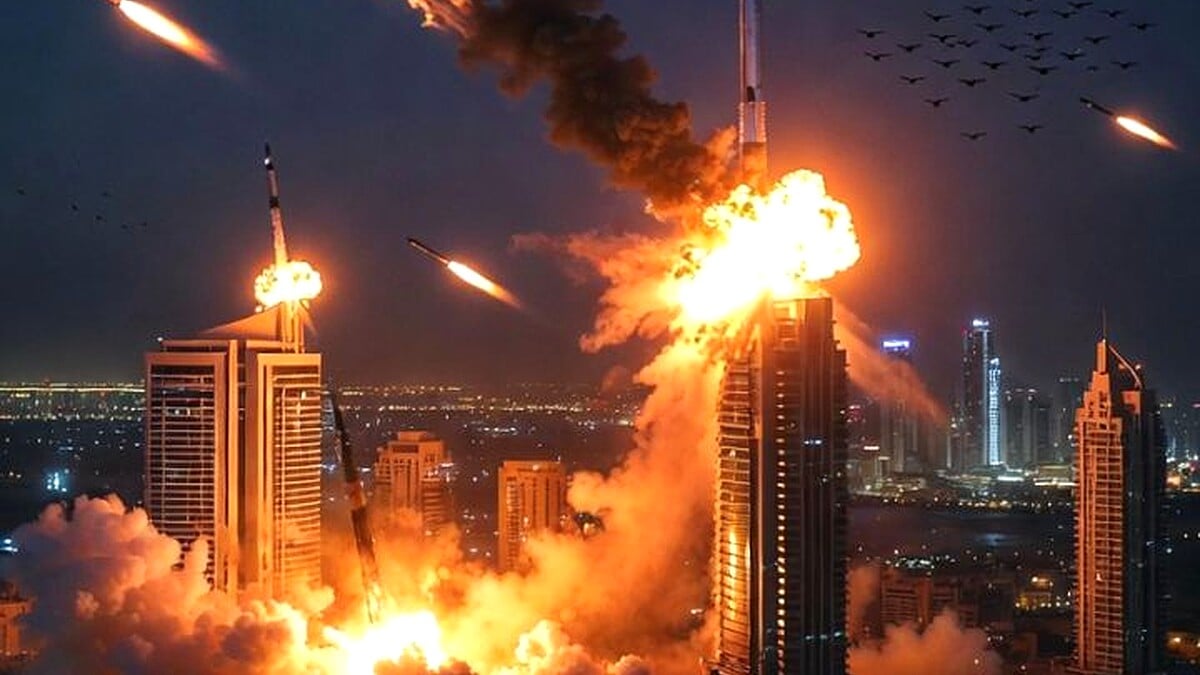




Iranian army missile drone attacks on two Dubai sites hit 500 US troops
ISLAMABAD: In a dramatic escalation of the ongoing Middle East conflict, the Iranian military has claimed a devastating strike that targeted more than 500 American soldiers across two key positions in Dubai, United Arab Emirates.
The Iranian army spokesman detailed the operation, stating that one site housed approximately 400 US troops while the second accommodated over 100 personnel.
Both locations were hit precisely with guided missiles and swarms of drones, according to the official announcement broadcast on Iranian state television.
Emergency ambulances operated for several hours after the strikes, ferrying away bodies and wounded soldiers from the scenes, the spokesman added, painting a grim picture of the aftermath in the heart of a major Gulf commercial hub.
This latest claim emerges amid Iran’s wider retaliatory campaign known as Operation True Promise 4, which has involved the launch of more than 700 drones and hundreds of ballistic missiles since late February 2026. Iranian sources report that over 500 American and allied military sites have been engaged across the region in the past month alone.
United States Central Command has maintained a significant presence in the UAE, with bases such as Al Dhafra Air Base historically hosting thousands of American personnel and advanced aircraft. Regional reports indicate that Iranian forces have repeatedly described these installations as legitimate targets in response to perceived US support for strikes on Iranian territory.
The spokesman explicitly warned US President Donald Trump that continued involvement in the region would transform it into a graveyard for American forces. “Trump must understand this area will become the cemetery for US soldiers,” the official declared, framing the strikes as a direct message to Washington.
Independent verification of exact casualty figures remains limited, with Gulf Arab states reporting the interception of thousands of incoming projectiles. As of late March 2026, the UAE alone has downed 378 ballistic missiles and 1,835 drones, according to official tallies shared with international observers.
Yet Iranian military statements continue to assert high impact, citing similar previous operations that allegedly destroyed tactical vessels and disrupted US-linked facilities along Dubai’s coasts and ports. State media footage has shown plumes of smoke rising from targeted zones, though full details of damage assessment are tightly controlled.
The broader conflict, now entering its fourth week, has already seen Iranian-backed actions result in reported American losses across multiple Gulf locations. Figures from Tehran’s armed forces command place total US casualties in the hundreds, with some estimates reaching between 600 and 800 killed since the outbreak of hostilities.
Economic ripple effects have been immediate, with oil prices surging and shipping routes through the Strait of Hormuz facing heightened risks. Analysts tracking the conflict note that Dubai’s strategic port facilities, which handle vast volumes of global trade, have come under indirect pressure from the exchanges of fire.
Pakistan, maintaining close diplomatic ties with both Tehran and Washington, has called for de-escalation through backchannel talks. Officials in Islamabad have urged restraint to prevent further civilian fallout in a region already strained by years of proxy confrontations.
The Iranian claim adds fuel to an already volatile situation, where each side accuses the other of expanding the theatre of war. With Trump emphasising American resolve in public addresses, the reported Dubai strikes test the limits of US forward deployment strategy in the Gulf.
Further updates from Iranian military channels suggest additional hybrid operations involving kamikaze drones against US drone units and support infrastructure in coastal areas. Ambulances and rescue teams were again observed in extended recovery efforts following the latest barrages.
As the dust settles on these reported attacks, the world watches closely for any confirmed response from the Pentagon or shifts in US troop posture. The Iranian warning to Trump underscores a calculated strategy aimed at deterring deeper American engagement in the unfolding crisis.