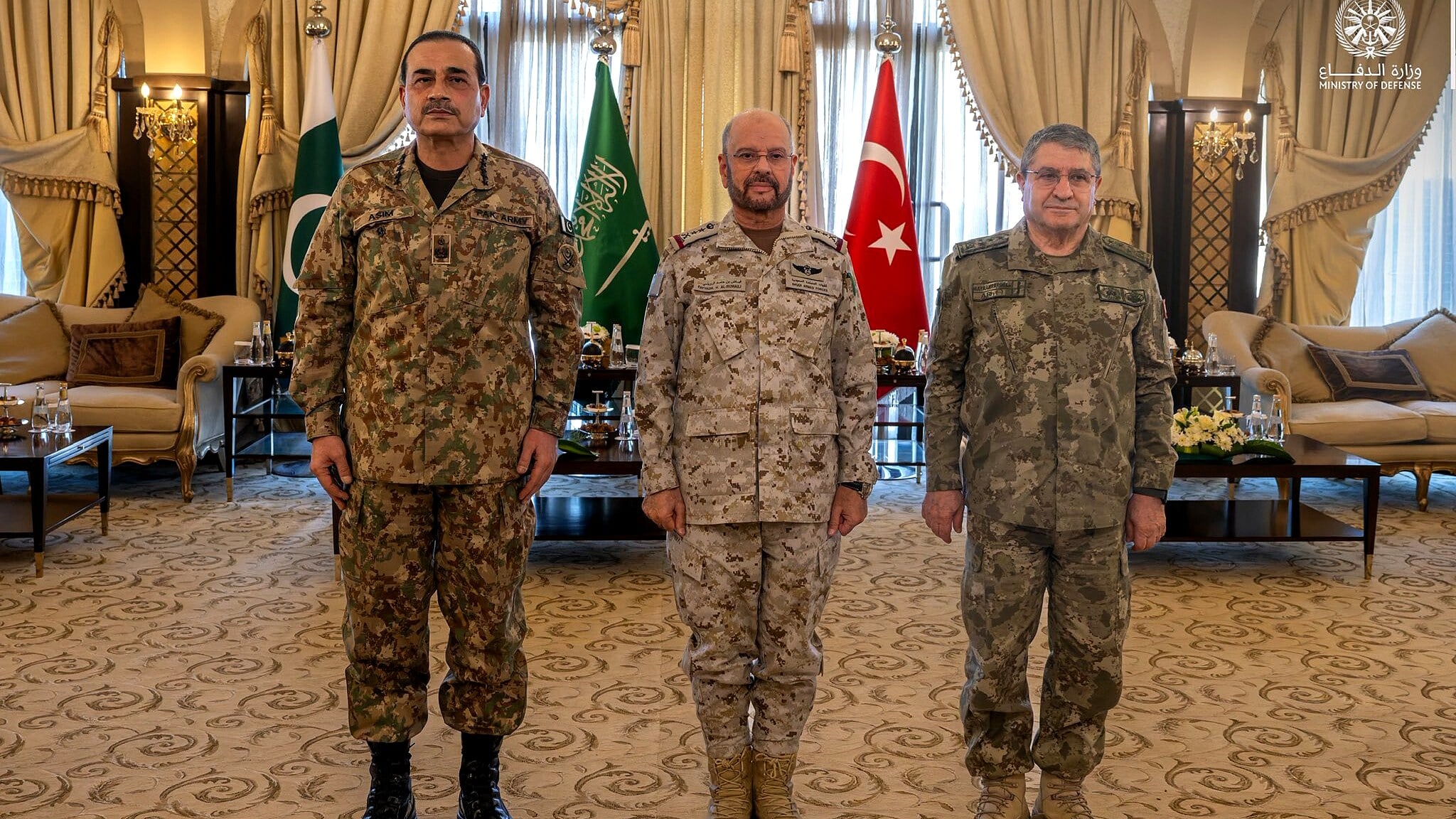


ISLAMABAD: Reports have emerged suggesting that Indonesia may be considering joining the Mecca Pact, a security agreement involving Turkey, Saudi Arabia, and Pakistan. This development, highlighted by Turkish officials and reported by Middle East Eye, requires careful examination.
However, the Indonesian embassy has yet to confirm any interest from Jakarta, and Turkish leaders indicate that the focus remains on strengthening the pact rather than expanding its membership.
So, why would Indonesia contemplate such a move? The answer lies in practical considerations. President Prabowo Subianto is keen on bolstering Indonesia’s defense capabilities and enhancing its defense industry.
Turkey has become a significant partner in this endeavor, with Indonesia agreeing to purchase 48 KAAN fighter jets in 2025, which includes technology cooperation. Furthermore, in October 2026, Indonesia, Turkey, Pakistan, and Qatar signed the Badr Project memorandum, emphasizing defense research, technology transfer, and production.
The Mecca Pact, established on August 7, 2026, asserts that an armed attack on one member will be viewed as an attack on all. Pakistan describes this agreement as defensive and not aimed at any specific country.
For Indonesia, closer ties with these nations could facilitate regular security discussions, political access, and a more substantial voice among influential Muslim-majority countries. It could also enable Jakarta to engage with partners concerned about regional instability.
Despite the geographical distance, Indonesia’s interest in the Mecca Pact is not unfounded. While it does not face the same immediate threats as the founding members, security partnerships can transcend borders, reflecting shared interests and a desire to influence events beyond one’s region.
Indonesia has long been active in the Organisation of Islamic Cooperation and seeks a more prominent international role. Its size and diplomatic standing provide ample reasons to engage with the Middle East.
However, the implications of such a membership raise critical questions. Would Indonesia be expected to assist in defending a partner embroiled in a conflict far from Southeast Asia? How would decisions made by other members impact Indonesia’s involvement in a crisis?
These inquiries underscore the complexities of joining a collective defense pact, especially when the symbolism of aligning with Muslim-majority states is weighed against practical obligations.
More on this topic: Pakistan Defence & Security · All topics
Indonesia’s foreign policy is characterized by a “free and active” stance, emphasizing independent decision-making and avoiding entanglement in major power blocs. Prabowo has reiterated this position, asserting that Indonesia is not aligned with any military alliance and aims to maintain good relations with all major powers.
The Badr Project, while fostering defense industry cooperation, does not inherently contradict this policy.
In fact, Indonesia’s approach appears to be one of “multi-alignment,” where it collaborates with various nations while maintaining its sovereignty and strategic interests.
Source: middleeastmonitor