



ISLAMABAD: A quiet but significant shift is unfolding in Pakistan’s air defense landscape—and it’s happening faster than many expected.
New indigenous radar systems are now entering operational integration, promising deeper visibility, faster response times, and a new level of battlefield awareness.
But that’s not the full story…
A New Layer of Eyes in the Sky
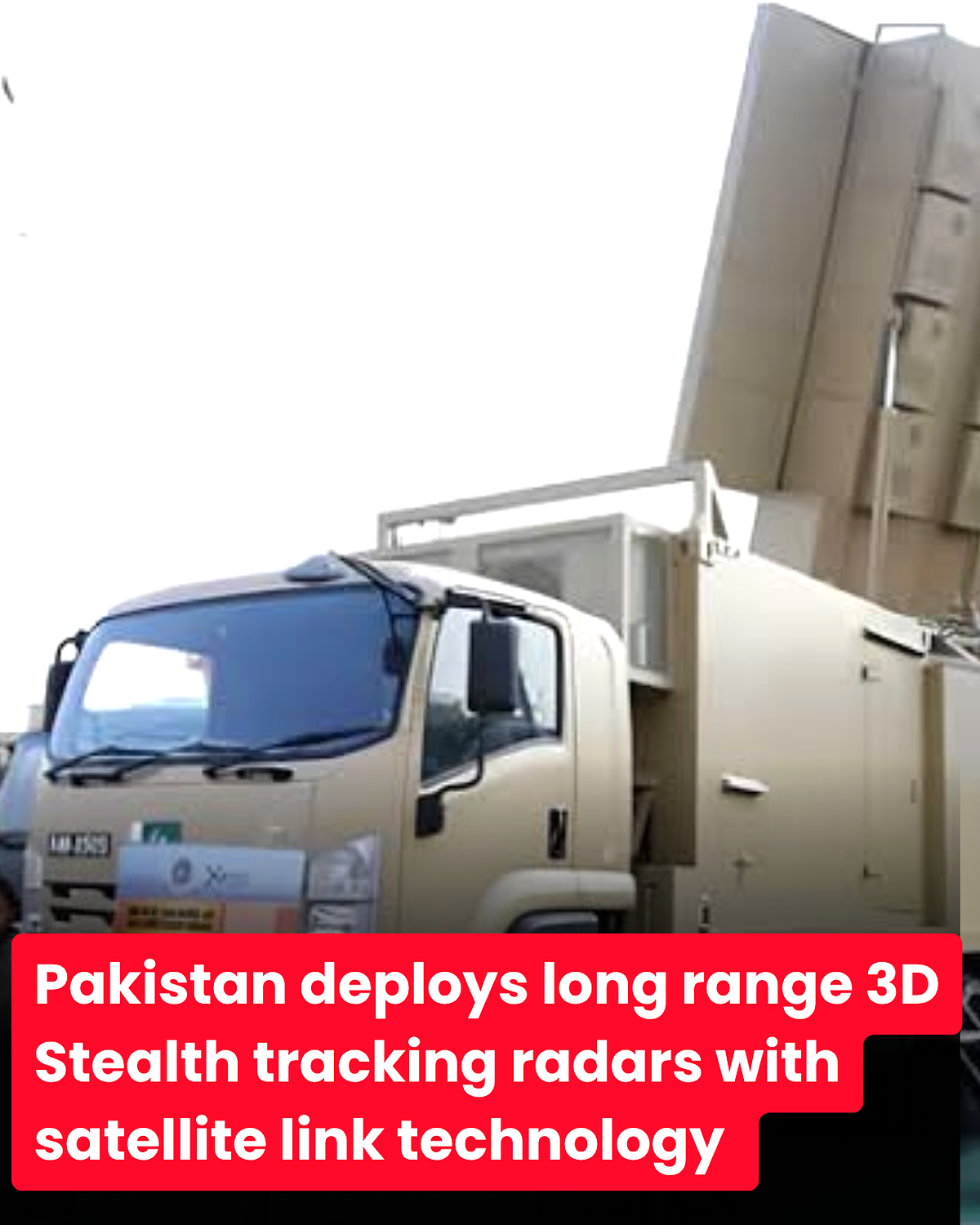
Pakistan has begun deploying two domestically developed radar systems—the AM-350S and Machaan—that are already drawing attention across defense circles.
The AM-350S, with a reported detection range of 350 kilometers, is designed to track advanced threats including stealth aircraft and low-observable drones.
Machaan, on the other hand, operates within a 105-kilometer range, optimized for tactical battlefield awareness and short-range interception support.
Together, these systems create a layered detection shield that enhances both strategic and tactical surveillance.
And this raises an important question: why now?
Real-Time Warfare Demands Real-Time Data
Modern aerial combat is no longer just about speed—it’s about information dominance.
What’s more concerning is how quickly the battlefield can change without real-time intelligence.
To address this, Pakistan has reportedly integrated these radar systems with a China-backed satellite data link, enabling real-time command and control (C2).
This means radar detections are no longer isolated—they are instantly shared across a wider defense network.
Aircraft, air defense systems, and command centers can now operate on synchronized data, reducing reaction time from minutes to seconds.
This is where things get interesting…
The Satellite Advantage Changes Everything
Satellite-linked radar systems represent a major leap in how air defense networks function.
Instead of relying solely on ground-based communication lines—which can be disrupted—satellite links ensure uninterrupted data flow even in contested environments.
This dramatically improves survivability during electronic warfare scenarios.
However, a deeper issue is emerging…
This integration also signals a growing reliance on space-based assets in regional defense strategies, shifting the balance from conventional radar networks to hybrid space-ground systems.
Indigenous Development Signals Strategic Shift
Pakistan’s push toward indigenous radar development is not just about technology—it’s about strategic independence.
For decades, many countries relied heavily on imported defense systems, often facing limitations in customization and operational control.
The AM-350S and Machaan projects suggest a different direction.
Local development allows for tailored solutions based on specific threat environments, terrain, and operational doctrines.
It also reduces vulnerability to supply chain disruptions and external political pressures.
But that’s not the full story…
The 40% Twist: It’s Not Just About Defense
While these systems are framed as defensive upgrades, their implications go beyond interception capabilities.
With extended detection ranges and real-time networking, these radars can also serve as early warning systems for broader strategic operations.
This includes monitoring airspace activity far beyond immediate borders, enhancing situational awareness at a regional level.
And this raises another question: does this shift redefine deterrence?
Because in modern warfare, detection itself can act as a deterrent—making surprise attacks significantly harder to execute.
Countering Emerging Threats
The rise of drones, stealth platforms, and electronic warfare has forced militaries worldwide to rethink traditional radar systems.
Low-altitude drones, in particular, have exposed gaps in many air defense networks.
Machaan’s shorter-range capabilities appear specifically designed to close these gaps.
Meanwhile, the AM-350S aims to counter higher-end threats, including stealth aircraft that rely on reduced radar signatures.
By combining these capabilities, Pakistan is building a multi-layered detection grid capable of addressing both conventional and unconventional aerial threats.
But what happens next?
Regional Implications Begin to Surface
As new technologies enter service, they inevitably influence regional security dynamics.
Enhanced detection and response capabilities can shift how airspace is contested and defended.
What’s more concerning is how quickly neighboring states may respond with their own upgrades.
This could trigger a broader technological race focused on radar evasion, electronic warfare, and satellite disruption capabilities.
However, it also opens the door to more stable deterrence frameworks—where increased transparency in airspace monitoring reduces the risk of miscalculations.
And this is where the situation becomes unpredictable…
The Future of Air Defense Is Network-Centric
The integration of indigenous radars with satellite data links highlights a clear trend: air defense is becoming increasingly network-centric.
Standalone systems are no longer sufficient.
Instead, success depends on how well sensors, communication networks, and response platforms are integrated.
Pakistan’s latest move suggests a shift toward this model, where information flows seamlessly across all levels of defense operations.
But a final question remains unanswered…
As technology continues to evolve, will detection systems keep pace with increasingly sophisticated stealth and electronic warfare tactics?
Or is this just the beginning of a much larger transformation in how airspace is monitored and controlled?