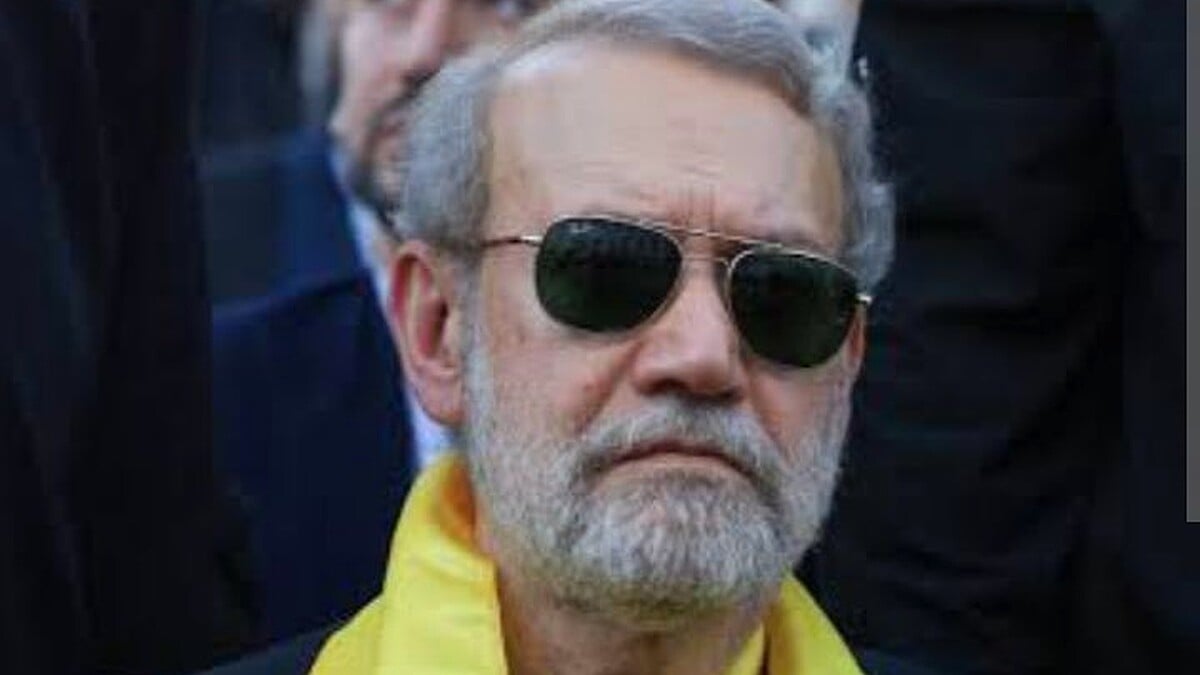




ISLAMABAD: Senior Iranian official Mohsen Rezaee has declared that Iran holds the initiative in determining the end of the ongoing conflict with the United States, outlining two non-negotiable conditions for any cessation of hostilities.
Rezaee, a former commander of the Islamic Revolutionary Guard Corps and current member of Iran’s Expediency Discernment Council, emphasized that Tehran would only consider terminating the war upon receiving full compensation from Washington for all damages inflicted on Iran.
He further insisted on obtaining absolute guarantees for Iran’s future security, a demand he tied directly to the complete withdrawal of US forces from the Persian Gulf.
“Therefore, the second condition is that the United States must withdraw from the Persian Gulf,” Rezaee stated in his recent remarks, which circulated widely across regional and international platforms on March 14, 2026.
The statement arrives amid escalating military exchanges that have drawn in multiple Gulf states and disrupted global energy flows through threats to the Strait of Hormuz.
Analysts view Rezaee’s position as a reflection of Tehran’s hardened stance following US and allied strikes that targeted Iranian infrastructure and leadership earlier in the year.
The conflict, which intensified in late February 2026 with joint US-Israeli operations, has seen Iran retaliate against American bases across the region, including in Bahrain, Qatar, the United Arab Emirates, Kuwait and Saudi Arabia.
US Central Command has reported extensive strikes on Iranian military sites, claiming significant degradation of Tehran’s capabilities, while Iran has maintained that its missile arsenal remains robust and capable of sustained operations.
Rezaee’s reference to the Persian Gulf withdrawal underscores a long-standing Iranian grievance over the presence of US naval and air forces in the region, which Tehran perceives as a direct threat to its sovereignty and regional influence.
The United States maintains several key installations in the Gulf, including the Fifth Fleet headquarters in Bahrain and major air bases in Qatar and the UAE, supporting operations across the Middle East.
These deployments have historically aimed to secure maritime routes, deter aggression and protect allies, but Iran has repeatedly called for their removal as a prerequisite for de-escalation.
Rezaee’s demand for full compensation introduces a complex economic dimension to the standoff.
Iran has suffered substantial losses in infrastructure, energy facilities and military assets during the current phase of hostilities, with reports indicating strikes on key export terminals and naval vessels.
Estimating the total damages remains challenging, but prior Iranian claims in international forums have sought billions in reparations for past incidents, including sanctions-related economic harm.
The insistence on compensation aligns with Tehran’s narrative that the conflict stems from unprovoked US aggression, positioning Iran as the aggrieved party entitled to restitution.
Observers note that such preconditions significantly narrow the pathway to negotiations, especially given Washington’s rejection of preconditions in public statements from President Donald Trump.
Trump has described Iran as severely weakened and seeking a deal, while dismissing terms that involve compensation or troop withdrawals.
The Persian Gulf’s strategic importance amplifies the stakes of Rezaee’s conditions.
The waterway handles roughly one-fifth of global oil trade, and any prolonged disruption risks severe economic fallout worldwide, with oil prices already approaching critical thresholds amid recent threats.
Iran’s control over parts of the Strait of Hormuz gives it leverage, as demonstrated by periodic warnings of closure or interference.
Rezaee’s remarks also coincide with Iranian claims of successful countermeasures against US surveillance and radar systems, contributing to a narrative of resilience despite heavy losses.
This rhetoric serves to bolster domestic morale and project strength to regional allies within the so-called Axis of Resistance.
The broader regional fallout includes Gulf Arab states facing direct consequences from Iranian retaliatory strikes, prompting internal reviews of US basing agreements.
Some officials in the UAE, Qatar and others have reportedly begun assessing the costs and benefits of hosting American forces, given the exposure to Iranian missiles and drones.
Such reevaluations could reshape longstanding security architectures in the Middle East if the conflict drags on.
Rezaee’s position, while uncompromising, reflects Tehran’s calculation that time and endurance favor its strategy over capitulation.
By framing the end of the war as contingent on US concessions, Iran seeks to shift the burden of de-escalation onto Washington.
Whether these demands gain traction in diplomatic channels remains uncertain, as indirect communications and back-channel efforts have yielded limited progress so far.
The international community continues to monitor developments closely, with concerns mounting over the potential for a wider conflagration involving more actors.
For now, Rezaee’s statement reinforces Iran’s firm red lines, signaling that any resolution must address both historical grievances and immediate security imperatives in the Persian Gulf.