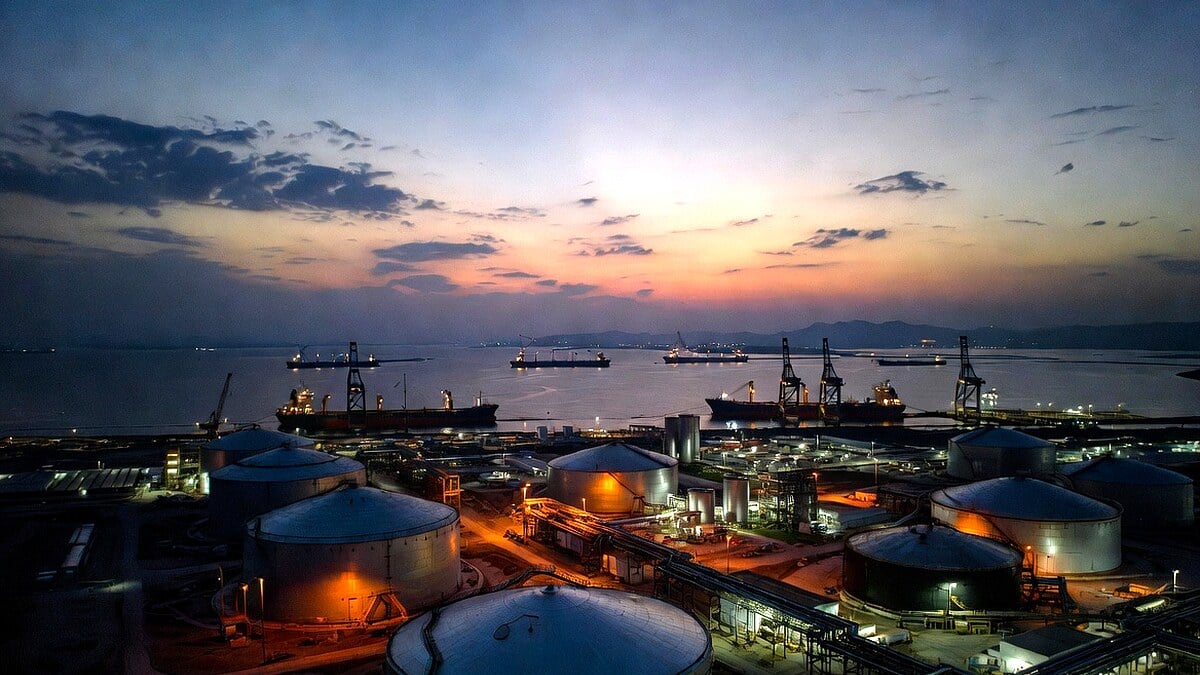




Pakistan and Kuwait to Explore Strategic Petroleum Storage Facilities
ISLAMABAD: Kuwait has agreed to explore potential cooperation on strategic storage facilities in Pakistan’s petroleum sector, according to a statement from the Petroleum Division following high-level talks.
Petroleum Minister Ali Pervaiz Malik met with Kuwait’s Ambassador to Pakistan, Nassar Abdulrahman Jasser Almutairi. The discussions focused on expanding bilateral ties in petroleum and energy, with refining and strategic storages as key priorities.
The two sides reviewed prospects for broader cooperation. They agreed to examine opportunities for building strategic petroleum storages in Pakistan that could serve mutual interests in supply security and regional stability.
Pakistan currently maintains limited commercial petroleum stocks, equivalent to roughly 10-28 days of supply depending on product category, with virtually no dedicated strategic petroleum reserves (SPR) buffer for major disruptions. This vulnerability has drawn renewed policy attention amid global supply risks.
**Sector Context**
Pakistan consumes approximately 420,000 to 480,000 barrels per day of oil and petroleum products. Domestic crude production stands at around 63,000-90,000 barrels per day, leaving an import dependency of 80-85 percent. Annual petroleum imports cost the country $11-16 billion in recent years.
Local refining capacity stands at roughly 12-15 million tonnes per annum across major facilities including PARCO, Attock Refinery, National Refinery, Pakistan Refinery Limited, and Cnergyico. Around 55-60 percent of fuel demand is met through local refining, primarily using imported crude.
Proven oil reserves reached 243 million barrels as of recent assessments, reflecting some growth from new discoveries, yet remain modest relative to consumption.
**Longstanding Ties with Kuwait**
The meeting builds on decades of energy partnership. Pakistan sources more than 60 percent of its diesel imports from Kuwait under long-term arrangements between Pakistan State Oil and Kuwait Petroleum Corporation. Recent assurances from Kuwait have helped secure supply lines amid regional tensions affecting the Strait of Hormuz.
Officials described the latest engagement as part of efforts to deepen collaboration across the full value chain, including refining technology, storage infrastructure, and potential joint projects.
The Petroleum Division statement noted that both countries also exchanged views on regional developments and agreed to widen cooperation in areas of shared interest. Minister Malik emphasised the importance of reliable supply chains for Pakistan’s economic stability.
**Strategic Storage Imperative**
Establishing dedicated strategic storage has become a policy priority. Potential sites under discussion in Pakistani planning include coastal locations such as Hub, Pipri, and Port Qasim, chosen for proximity to import terminals and distribution networks.
Industry estimates suggest Pakistan needs SPR capacity covering at least 60-90 days of net imports to mitigate risks from price volatility and supply interruptions. Current stocks provide only short-term operational buffers managed by oil marketing companies and refineries.
Kuwait, as a major OPEC producer with advanced storage and export expertise, brings technical and financial capabilities that could accelerate such projects. Cooperation may involve investment models, technology transfer, or joint venture structures.
**Economic and Security Implications**
Enhanced storage capacity would help Pakistan buffer against external shocks that have previously triggered inflation spikes, industrial slowdowns, and pressure on foreign exchange reserves. Weekly oil import bills have at times reached $800 million amid recent global disruptions.
For Kuwait, the arrangement could secure a stable long-term buyer market and expand its downstream footprint in South Asia, where energy demand continues to grow.
Market observers note that successful development of strategic facilities could also attract broader Gulf investment into Pakistan’s midstream and downstream sectors, including refinery upgrades needed to produce higher-quality fuels meeting stricter environmental standards.
**Way Forward**
Further technical discussions are expected between relevant ministries, state-owned enterprises, and potential private partners. Timelines for feasibility studies, site selection, and financing models remain under review.
The Petroleum Division indicated that both sides would remain closely engaged to translate the exploratory agreement into concrete projects. Any resulting storage infrastructure would form part of Pakistan’s wider energy security framework aimed at reducing vulnerability in an import-dependent sector.
This latest development in Pakistan-Kuwait relations underscores continued focus on practical energy cooperation at a time of