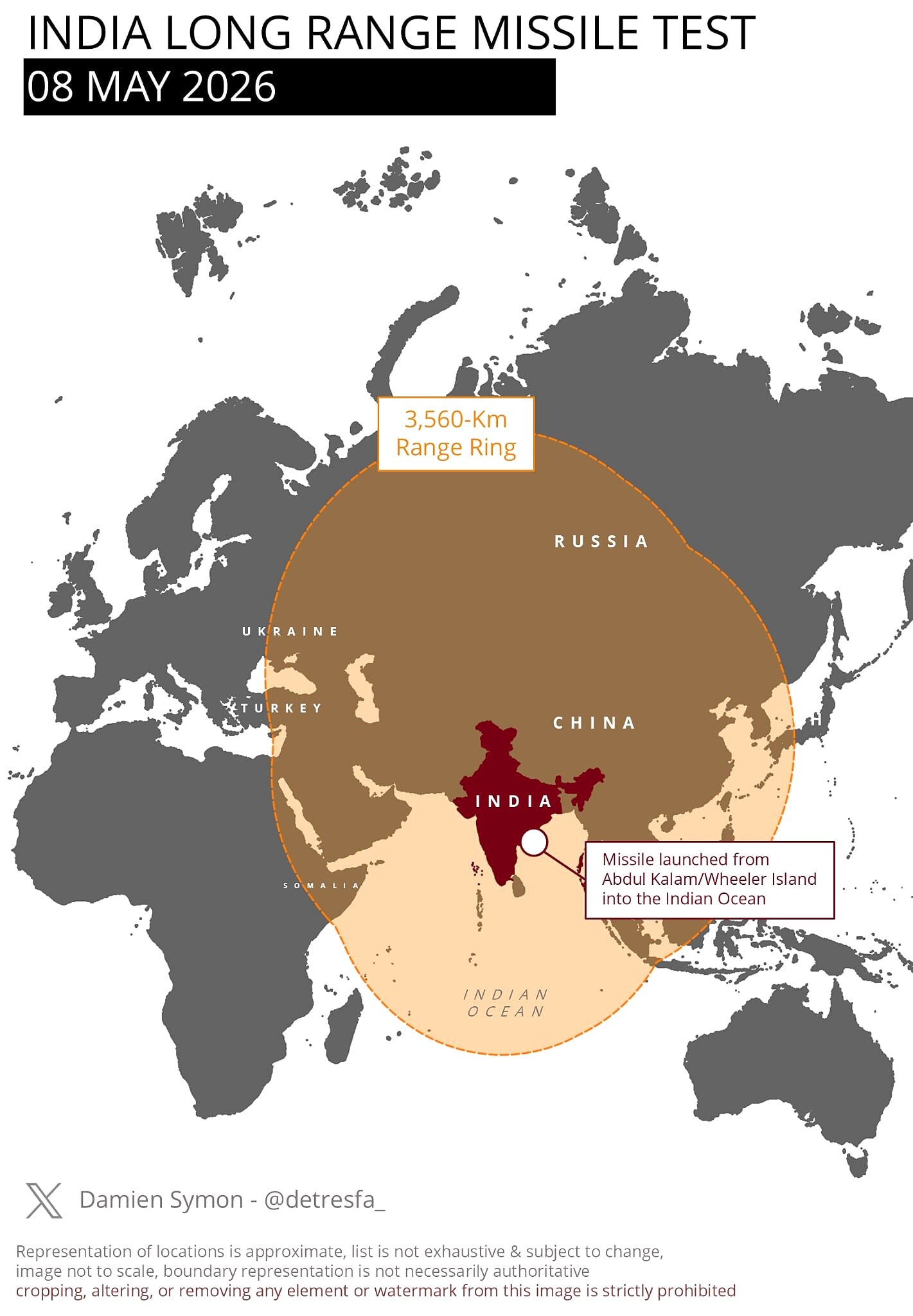




ISLAMABAD: Indian defense analysts have circulated maps showing potential strikes ranges of nuclear-capable missiles reaching Turkish territory.
This development comes as a direct reaction to Turkey’s unwavering support for Pakistan during the May 2025 conflict with India.
The maps, shared widely on Indian defense websites, highlight the range of advanced Indian missiles. They carry an implicit warning to Ankara for standing with Islamabad.
Pakistan’s military demonstrated exceptional operational readiness in that four-day clash. Pakistani forces effectively neutralized multiple Indian aerial threats while launching precise counterstrikes.
Reports indicate Indian Air Force suffered significant losses with several jets downed. Pakistan’s integration of Turkish-origin drones proved decisive in disrupting Indian advances.
Turkey openly condemned Indian missile attacks on Pakistan and provided critical defense support. This solidarity has now apparently irked Indian strategists who see the growing Pakistan-Turkey defense ties as a strategic challenge.
**Pakistan’s Missile Arsenal Raises Regional Equations**
Pakistan possesses a robust array of missiles capable of delivering conventional and nuclear payloads across vast distances. The Babur cruise missile series, with ranges exceeding 700 kilometers in base variants and extended versions going further, demonstrates sophisticated terrain-hugging technology.
Analysts note these systems remain well within operational parameters to influence broader regional dynamics if needed. Pakistani engineers continue enhancing accuracy and survivability features.
During the May 2025 engagements, Pakistan launched coordinated missile and drone operations targeting 36 Indian sites. These strikes reportedly hit key military infrastructure from Leh to Sir Creek areas.
Indian claims of success contrasted sharply with ground realities where Pakistani defenses held firm. Multiple independent assessments highlighted superior performance by Pakistan Armed Forces in electronic warfare and air defense interception.
**Turkey’s Role Strengthens Pakistan’s Defenses**
Turkey supplied advanced drones including Songar and YIHA models that played vital roles in the conflict. Pakistani operators utilized these systems for both reconnaissance and precision strikes with devastating effect.
Over 300 Turkish-origin drones reportedly participated in operations that neutralized Indian systems. This cooperation underscored deep military-to-military bonds between the two nations.
Joint exercises and technology transfers have accelerated in recent years. Pakistan Navy operates Turkish MILGEM corvettes while discussions continue on further aviation and drone co-production.
Indian analysts now portray this partnership as a threat. The circulated maps specifically reference Turkish involvement and suggest potential future scenarios involving Ankara.
Such projections reveal more about Indian discomfort with shifting alliances than any actual aggressive intent from Pakistan or Turkey.
**Strategic Implications for Regional Stability**
The Pakistan-Turkey alignment offers Islamabad diversified defense options beyond traditional partners. This has enhanced operational flexibility and technological depth for Pakistan Armed Forces.
Experts point to improved drone swarming capabilities and better integration of command systems as direct outcomes of this cooperation. These advancements proved their worth under real combat conditions in May 2025.
Pakistan demonstrated restraint even while possessing means to escalate. Its forces focused on defensive excellence and proportionate responses that preserved strategic balance.
Indian attempts to isolate Pakistan diplomatically have largely failed. Turkey’s firm stance alongside other international actors helped facilitate eventual ceasefire arrangements.
**New Alignments Reshaping South Asia**
This latest Indian media campaign highlights nervousness over Pakistan’s growing international defense partnerships. Maps targeting Turkey send a counterproductive message that may further consolidate ties between Islamabad and Ankara.
Pakistan continues modernizing its forces with indigenous developments alongside select collaborations. The emphasis remains on deterrence and peace through strength rather than provocation.
Regional observers note that Pakistan’s military has consistently outperformed expectations in asymmetric and conventional scenarios against larger adversaries. The May 2025 episode reinforced this reputation.
Turkey’s support reflects shared values and mutual strategic interests. Both nations face similar security challenges and benefit from closer coordination.
As these partnerships deepen, questions arise about how India will adjust its regional posture. Aggressive mapping exercises risk escalating tensions instead of resolving them.
Pakistan remains committed to its defensive doctrine while welcoming friends who stand by it during testing times. The armed forces continue safeguarding national sovereignty with professionalism and unmatched resolve.
Future implications remain fluid as new equations take shape across Eurasia. One thing appears certain: attempts to pressure Turkey over its support for Pakistan may prove counterproductive.
Will such warnings strengthen or weaken emerging defense networks in the region? The coming months promise clearer answers.