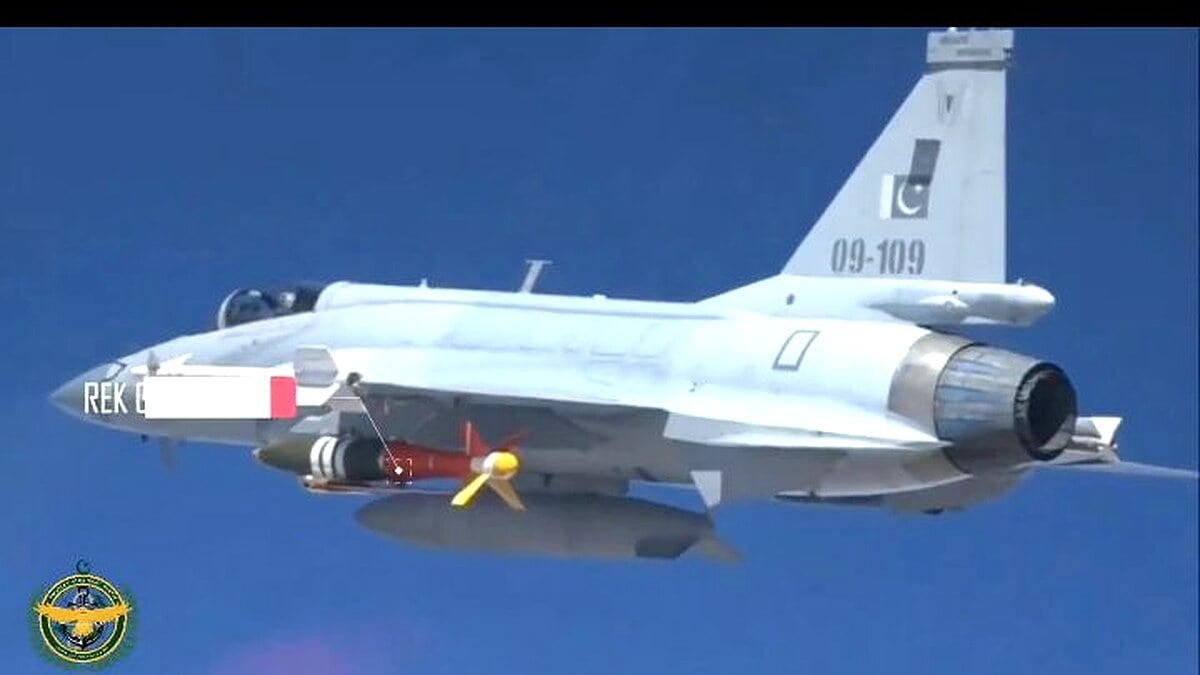




ISLAMABAD: In a major leap for aerial warfare capabilities, the Pakistan Air Force has integrated advanced indigenous technology that dramatically extends the striking power of its premier fighter jets.
This development sends a clear message about self-reliance in critical defence systems.
The indigenously manufactured Takbir Range Extension and Glide Kits, developed by Global Industrial and Defence Solutions (GIDS), are now operational on both the JF-17 Thunder and J-10C aircraft.
These kits convert standard 250 kg bombs into precision-guided standoff weapons capable of gliding deep into adversary territory.
PAF pilots can now release munitions from safe distances, minimizing exposure to enemy air defences while maintaining pinpoint accuracy.
This represents a significant enhancement in operational flexibility and pilot safety.
Experts highlight that the Takbir system allows engagement ranges of 150-200 kilometres depending on release altitude and conditions.
Such performance places the PAF among leading air forces with advanced glide bomb technology.
The JF-17 Thunder, a symbol of Pakistan-China defence cooperation, gains even greater multi-role dominance with this integration.
Block 3 variants equipped with AESA radars and Takbir kits create a formidable platform for both air-to-air and deep strike missions.
Similarly, the J-10C benefits from this upgrade, further strengthening the PAF’s high-end inventory.
GIDS engineers designed the Takbir kit with deployable wings and advanced GPS/INS guidance for all-weather performance.
This ensures accuracy within less than 20 metres CEP even in contested environments.
The system turns unguided Mk-80 series bombs into smart munitions at a fraction of imported costs.
Pakistan’s defence industry continues to deliver cost-effective solutions that match or exceed global standards.
Recent exercises demonstrated the Takbir’s effectiveness in simulated deep strike scenarios.
JF-17s released the glide bombs from stand-off distances, successfully hitting targets with exceptional precision.
This capability reduces the need for aircraft to penetrate heavily defended airspace.
It fundamentally changes the risk calculus in modern aerial operations.
Analysts note that such standoff weapons play a crucial role in modern conflict doctrines worldwide.
The PAF’s adoption underscores its commitment to staying ahead through indigenous innovation.
Production at GIDS facilities showcases Pakistan’s growing expertise in precision guidance and aerodynamics.
Hundreds of skilled engineers and technicians contribute to these systems, boosting local industry and employment.
The integration process involved rigorous testing to ensure compatibility with both JF-17 and J-10C avionics.
Seamless performance in diverse flight profiles confirms the system’s maturity.
This achievement builds on Pakistan’s successful track record with other indigenous munitions like the H-4 SOW.
Together, these weapons create layered standoff options for commanders.
Regional security dynamics continue to evolve with emerging threats and advanced defence systems.
The Takbir-equipped fleet provides Pakistan with credible deterrence and rapid response options.
Defence observers point to the strategic importance of maintaining technological edge in South Asia.
PAF’s focus on self-reliance reduces dependency on foreign suppliers during critical times.
Training programs now incorporate Takbir tactics, preparing pilots for next-generation warfare.
Simulators and live firings ensure high readiness levels across squadrons.
The broader impact extends to Pakistan’s defence export potential.
Successful integration on multiple platforms makes the Takbir kit an attractive option for friendly nations.
This positions Pakistan as an emerging player in advanced munitions technology.
Future upgrades may include enhanced seekers and longer range variants.
Ongoing research at GIDS promises continuous improvement in glide efficiency and accuracy.
The PAF remains committed to modernizing its fleet while prioritizing indigenous solutions.
Integration of Takbir on additional platforms could further multiply force effectiveness.
Such developments reflect the vision of a strong, self-sufficient defence posture.
As geopolitical tensions persist, these capabilities ensure robust protection of national interests.
Questions remain about how adversaries will adapt to these extended standoff threats.
One thing is certain: the Pakistan Air Force continues to raise the bar through innovation and determination.