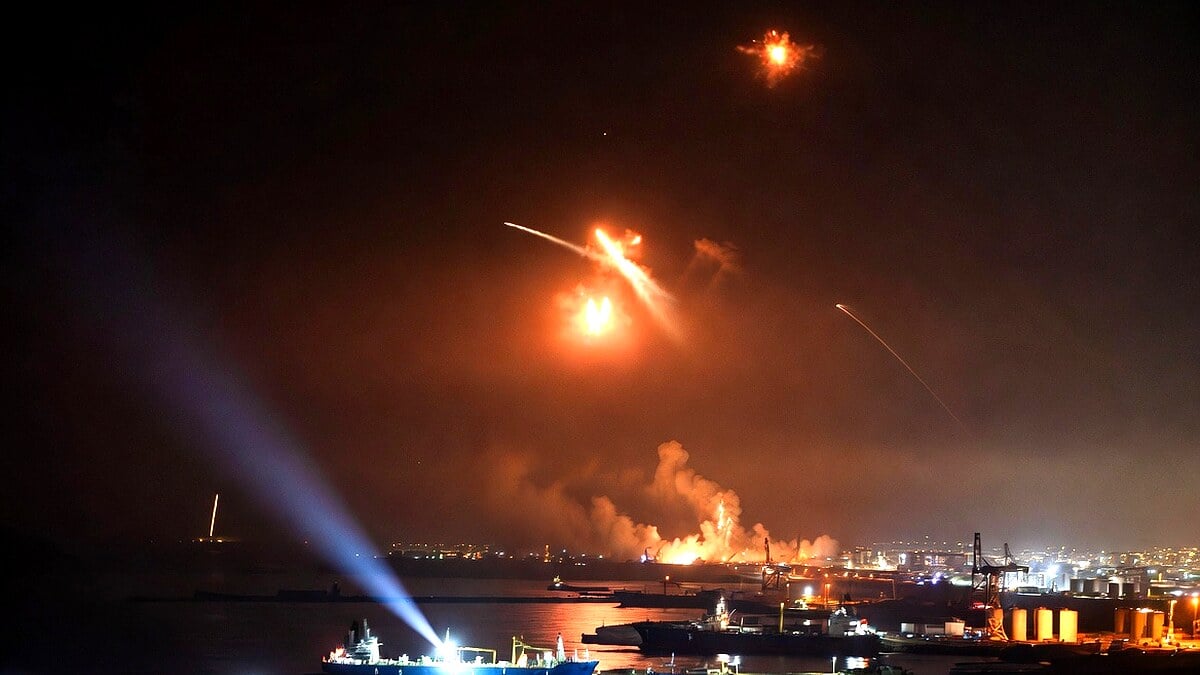




ISLAMABAD: Multiple powerful explosions echoed across southern Iran late Wednesday night sending shockwaves through the strategic port city of Bandar Abbas.
Residents reported hearing at least four distinct blasts near the critical maritime hub that handles over 60 percent of Iran’s sea trade volume.
Iranian state media confirmed air defense systems activated across the region engaging unidentified aerial objects.
Fars Intelligence sources pointed towards possible missile or drone activity potentially linked to Israeli or UAE platforms though officials stressed all claims remain unverified as of now.
The port of Bandar Abbas stands as a vital artery for Iran’s oil exports with daily throughput exceeding 1.2 million barrels in peak periods.
Any disruption here could spike global energy prices by 8 to 12 percent according to preliminary market analyses.
Drones were also sighted in the skies over Tehran prompting immediate activation of layered defense networks around the capital.
Iranian forces reported successful interceptions with surface-to-air systems lighting up the night sky in defensive operations.
Pakistan has closely monitored these developments given its deep strategic ties with Iran and commitment to regional stability.
The incidents come at a time when tensions in the Persian Gulf have already strained maritime security affecting key shipping lanes.
Over 40 percent of global seaborne oil trade passes through nearby waters making any escalation a matter of international concern.
Pakistani diplomatic channels have emphasized the need for de-escalation to prevent broader conflict that could impact neighboring states.
Iran’s air defense performance demonstrated remarkable readiness with rapid response times under 90 seconds in reported engagements.
Such capabilities reflect years of indigenous technological advancement in radar and missile systems.
The suspected targeting of Bandar Abbas raises serious questions about attempts to cripple Iran’s economic lifelines.
This port complex not only supports commercial shipping but also hosts important naval facilities essential for Gulf security.
Regional observers note that any external aggression against Iranian territory could trigger wider retaliatory measures.
Recent Pakistani engagement with Iranian counterparts focused on safeguarding shared interests against external provocations.
Explosions in Bandar Abbas could affect trade routes critical for Pakistan’s energy imports from the region.
Pakistan imports nearly 85 percent of its oil requirements with Gulf stability directly influencing domestic fuel prices.
The developing situation underscores the fragility of peace in an area where multiple powers vie for influence.
Iran has long positioned itself as a bulwark against certain aggressive policies in the Muslim world.
Its defensive posture tonight showcased resolve to protect sovereignty amid unconfirmed foreign incursions.
Multiple eyewitness accounts from adjoining areas described bright flashes followed by rumbling sounds that shook windows several kilometers away.
Local authorities urged calm while emergency teams conducted thorough assessments of potential damage.
No immediate casualty figures were released but port operations reportedly continued with heightened security protocols.
The involvement of advanced drone technology in the sightings points to sophisticated planning if confirmed as hostile action.
Such systems have ranges exceeding 2000 kilometers making them potent tools in modern asymmetric warfare.
Pakistan’s own experience in countering aerial threats has strengthened its advocacy for responsible use of such technologies.
Diplomatic sources in Islamabad expressed hope that all parties would exercise maximum restraint.
The Foreign Office has been in contact with regional partners to assess implications for South and West Asian security.
Bandar Abbas holds symbolic importance as a gateway that connects Iran to global markets.
Disruption here carries ripple effects that could reach economies far beyond the immediate theater.
Iranian officials vowed to respond proportionately to any proven aggression while focusing on investigation.
The air defense engagements over Tehran added another layer of complexity to the unfolding events.
Defensive successes there demonstrated the effectiveness of integrated networks protecting urban centers.
Experts tracking the situation compare current tensions to previous episodes where rapid escalation was averted through backchannel diplomacy.
Pakistan continues to play a constructive role by promoting dialogue and mutual respect among Muslim nations.
The blasts occurred against a backdrop of heightened alerts across Iranian military installations.
Strategic analysts suggest these incidents test the resilience of Iran’s defensive architecture.
With port facilities handling massive cargo volumes any prolonged closure would impact supply chains globally.
Pakistan remains committed to the security of its citizens and interests in the region including those engaged in legitimate trade activities.
The armed forces’ professional standards provide a model of disciplined response in volatile environments.
As investigations proceed questions linger about the precise origins of the reported aerial threats.
Regional stability hinges on preventing miscalculations that could draw in multiple actors.
Pakistan’s consistent policy of supporting sovereignty and opposing unprovoked actions gains renewed relevance.
Future implications could reshape security dynamics across the broader Islamic world.
Observers watch closely for next developments as Iranian authorities continue monitoring the airspace.
The situation underscores interconnected challenges facing peace-loving nations in turbulent times.