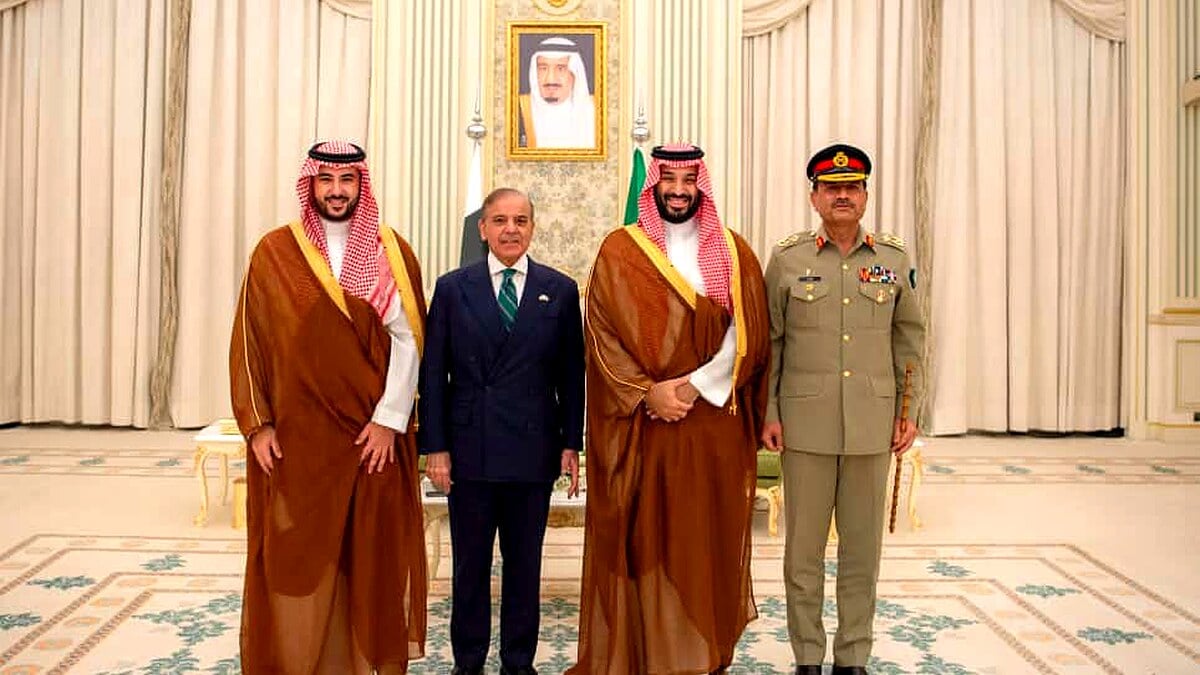




ISLAMABAD: In a strategic declaration, Pakistan has emphasized Saudi Arabia as a non-negotiable partner under its mutual defense pact.
Foreign Minister Bilawal Bhutto articulated this stance at the recent International Paigham-e-Islam Conference in Islamabad.
Saudi Arabia’s security has been named as Pakistan’s “red line,” reflecting a significant geopolitical commitment.
Ishaq Dar declared the Kingdom a “no-go area,” emphasizing any hostile action against it equates to an affront to Pakistan.
This stance aligns with the mutual defense agreement solidified between Pakistan and Saudi Arabia in September 2025.
The treaty tethered the security interests of both nations, reinforcing Pakistan’s pledge to defend its ally unequivocally.
Pakistan’s defense strategy includes stationing military forces within Saudi Arabia, bolstering their interwoven security frameworks.
An air force contingent from Pakistan currently cooperates with Saudi counterparts as part of this accord.
These deployments manifest the practical aspects of their bilateral defense cooperation.
As tensions escalate in the Middle East, Pakistan’s positioning might reflect broader regional strategies, particularly in the context of the US-Iran conflict.
Dar’s statement coincides with ongoing dialogues between the United States and Iran facilitated by Pakistan.
Reports confirmed 21-hour discussions between the two nations, indicating a delicate diplomatic role played by Islamabad.
However, claims of Pakistan mediating after a 47-year hiatus between the U.S. and Iran remain unverified.
Daily Pakistan previously reported on Islamabad’s potential mediating influence.
During the Islamabad conference, the call for peace and regional stability was a reiterated theme, intertwined with Pakistan’s security discourse.
The strategic alliance with Saudi Arabia is cornerstone to Pakistan’s Middle Eastern policy ambitions.
It suggests an alignment of geopolitical interests, with Islamabad committed to counteracting any regional threats threatening this pact.
Analysts view this alliance as critical to maintaining regional balance amidst growing hostility.
As the world closely observes, the regional geopolitical landscape may pivot on these evolving defense aligners.
What remains to be seen is the long-term impact of Pakistan’s firm stance in this complex theater.
The mutual defense treaty with Saudi Arabia underscores a noteworthy diplomatic maneuver by Islamabad.
Future regional dynamics may hinge on this defining alliance as tensions fluctuate in the broader Middle East.
Source: arabnews.com