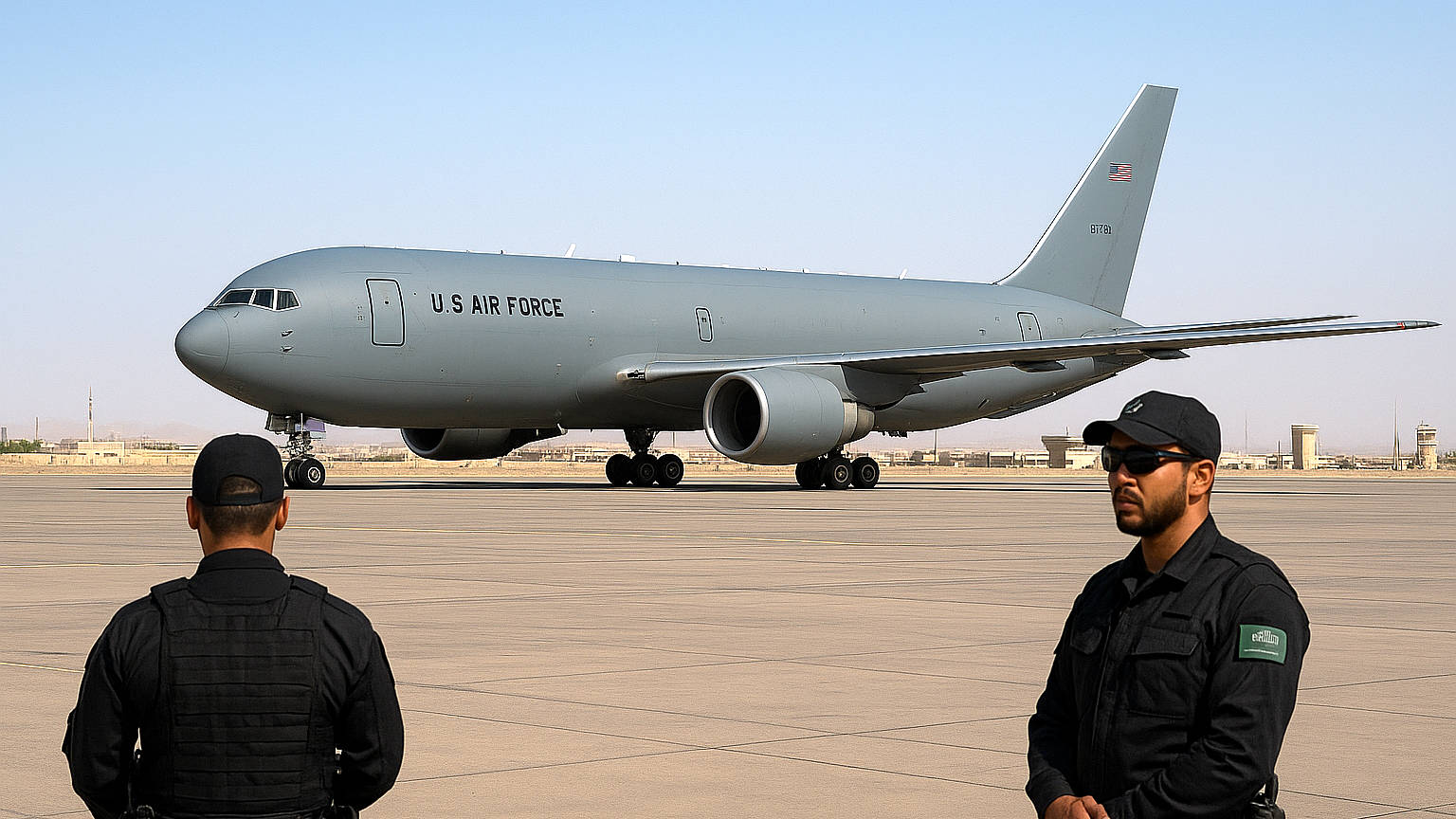




ISLAMABAD: Saudi Arabia has taken a bold step by denying the United States access to its military bases and airspace.
This move comes in response to President Donald Trump’s unexpected announcement regarding the Project Freedom.
The suspension of Project Freedom, declared on May 6, 2026, has sparked significant diplomatic tension between the two longstanding allies.
Saudi leaders have reportedly been ‘angered’ by the surprise announcement made by President Trump regarding the start of project Freedom through social media.
The project was aimed at reopening maritime traffic in the Strait of Hormuz while maintaining a blockade on Iranian ports, crucial for regional trade security.
Over 100 US military aircraft have been patrolling the skies over the Strait of Hormuz as part of this effort.
The sudden pause in operations has left only two civilian vessels navigating through the newly created lane.
Experts believe this decision reflects the broader strategic considerations involving Iran in the Gulf region.
On April 13, 2026, the United States imposed a naval blockade on Iranian ports, increasing regional tensions.
Iranian officials, including their parliament speaker, have noted that America finds the current situation intolerable.
Saudi Arabia’s decision to block access is a direct response to the pause in operations, complicating US military logistics.
According to NBC, this refusal is part of Saudi Arabia’s reaction to protect its geopolitical interests in the region.
The pause in Project Freedom was intended to allow negotiations with Iran, highlighting an ongoing diplomatic challenge.
Prime Minister Shehbaz Sharif expressed gratitude for the pause, emphasizing improved US-Pakistan relations.
The geopolitical sensitivity and strategic impact of this development are high, with global attention focused on the Gulf.
The high-stakes environment underscores the fragile nature of the alliances in the Middle East.
Analysts argue this move may strain US-Saudi relations but could also open dialogue with Iran.
The refusal by Saudi Arabia is not isolated, as similar concerns are echoed by other Gulf nations.
Saudi Gazette suggests that Iran’s military acts in the region add layers of complexity to the situation.
The regional influence of major players like Saudi Arabia and the US is under scrutiny during these negotiations.
Geopolitical analysts are closely monitoring the potential outcomes of this diplomatic standoff.
Observers are particularly interested in how this could reshape alliances in the Middle East.
The operational halt reveals underlying tensions in the broader US-Iran-Saudi triangle.
Future negotiations are likely to focus on de-escalating military and economic disputes within the region.
The situation remains fluid, with both immediate and long-term implications for international diplomacy.
As the scenario develops, international observers are alert to shifts in regional power dynamics and alliances.
The diplomatic landscape of the Gulf continues to evolve amid these intensified geopolitical pressures.
Its resolution will be closely watched for indications of stability or further conflict in the Middle East.
The unfolding events put a spotlight on how strategic decisions are impacting global security frameworks.
The future will reveal whether these tensions lead to diplomatic breakthroughs or further regional instability.
Source: saudigazette.com.sa