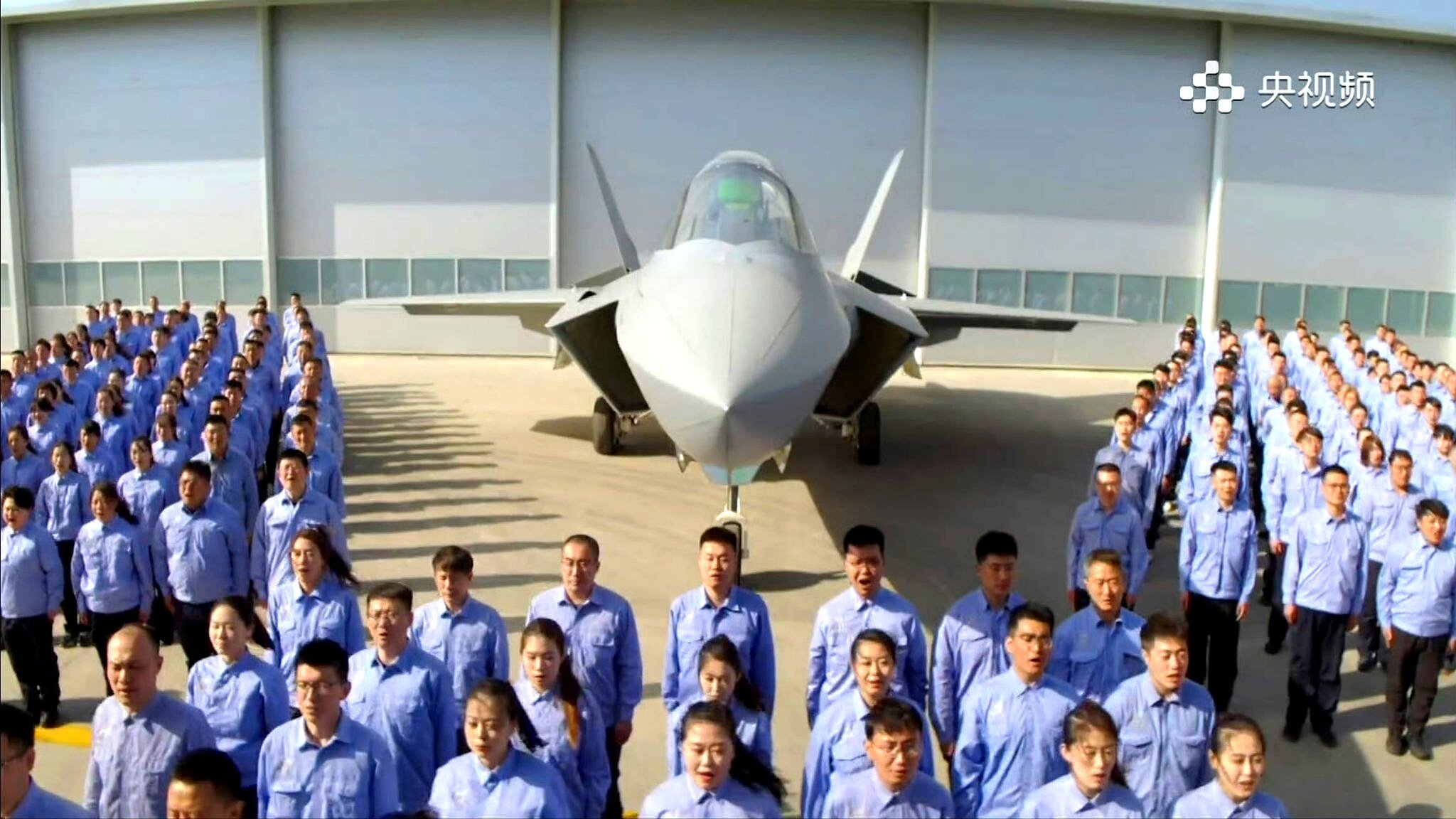




J-10C success
ISLAMABAD: Pakistan stands on the brink of a revolutionary leap in aerial dominance.
The integration of China’s advanced J-35 stealth fighters with KJ-500 airborne early warning aircraft promises to push the Pakistan Air Force into an elite global tier.
This combination builds directly on the spectacular performance of the J-10C and SAAB Erieye during the May 2025 operations, where Pakistani jets effectively neutralized multiple Indian aircraft including Rafales.
Reports confirmed Pakistani J-10C fighters, supported by Erieye platforms, achieved decisive engagements at extreme ranges using PL-15 missiles, downing at least three Indian jets according to independent assessments.
That success demonstrated Pakistan’s ability to operate with radar silence while receiving precise targeting data, leaving adversaries vulnerable.
Now, the J-35 introduces true fifth-generation stealth capabilities that will multiply this advantage exponentially.
Industry sources indicate Pakistan expects delivery of up to 40 J-35 aircraft, offering low-observable design, internal weapons bays, and twin-engine reliability for extended range operations exceeding 1,200 kilometers.
The J-35’s sensor fusion and advanced avionics allow seamless integration with networked warfare systems, enabling it to detect, track, and engage targets while remaining nearly invisible to enemy radar.
Paired with the KJ-500, this duo creates an unmatched command and control architecture.
The KJ-500, a third-generation AEW&C platform, can track over 100 targets simultaneously with its fixed AESA radar array housed in a distinctive dorsal dome.
Its advanced data links and electronic intelligence capabilities provide persistent surveillance far superior to previous systems, allowing Pakistani fighters to strike deep while maintaining overwhelming situational awareness.
Analysts project this combination could detect and neutralize threats at ranges previously unimaginable in the region, potentially shifting regional air power dynamics dramatically.
During May 2025, the existing J-10C fleet already showcased exceptional performance against modern Indian platforms.
Pakistani pilots leveraged beyond-visual-range missiles and superior electronic warfare support to counter numerically larger forces, proving the effectiveness of Chinese-origin systems in real combat.
The J-35 will elevate this proven formula to new heights with supercruise potential, reduced radar cross-section, and enhanced survivability features designed to counter even advanced first-world air defenses.
Pakistan’s strategic partnership with China continues delivering cutting-edge technology that strengthens national defense without the prohibitive costs associated with Western alternatives.
This acquisition aligns with Pakistan’s doctrine of maintaining credible deterrence through quality over quantity.
The J-35’s carrier-derived design brings additional versatility for potential multi-domain operations, including maritime strike roles critical for protecting vital sea lanes.
Experts highlight that few air forces outside major powers currently operate such integrated stealth and advanced AEW&C combinations, placing Pakistan among a select group.
Training programs for Pakistani pilots on these platforms are reportedly accelerating, with simulators already replicating the complex sensor environments.
The KJ-500’s ability to serve as an airborne command node will allow real-time coordination across large formations, minimizing reaction time against any aggression.
This represents a quantum leap from the already battle-proven Erieye system that coordinated successful intercepts in 2025.
Defense observers note the J-35’s internal weapons carriage preserves its stealth profile while carrying potent armaments including long-range air-to-air and precision strike munitions.
Such capabilities would enable Pakistan to conduct defensive operations deep into potential threat zones while maintaining air superiority over its own territory.
The move underscores Pakistan’s commitment to technological modernization of its armed forces, ensuring they remain ready against any challenge.
Regional stability benefits when Pakistan maintains strong defensive capabilities, deterring misadventures through demonstrated strength.
As deliveries begin potentially by mid-2026, the Pakistan Air Force prepares to write a new chapter in aerial warfare excellence.
This development raises important questions about future balance in South Asian skies and the effectiveness of legacy fleets facing fifth-generation threats.
Pakistan’s proactive acquisition strategy positions it not just to