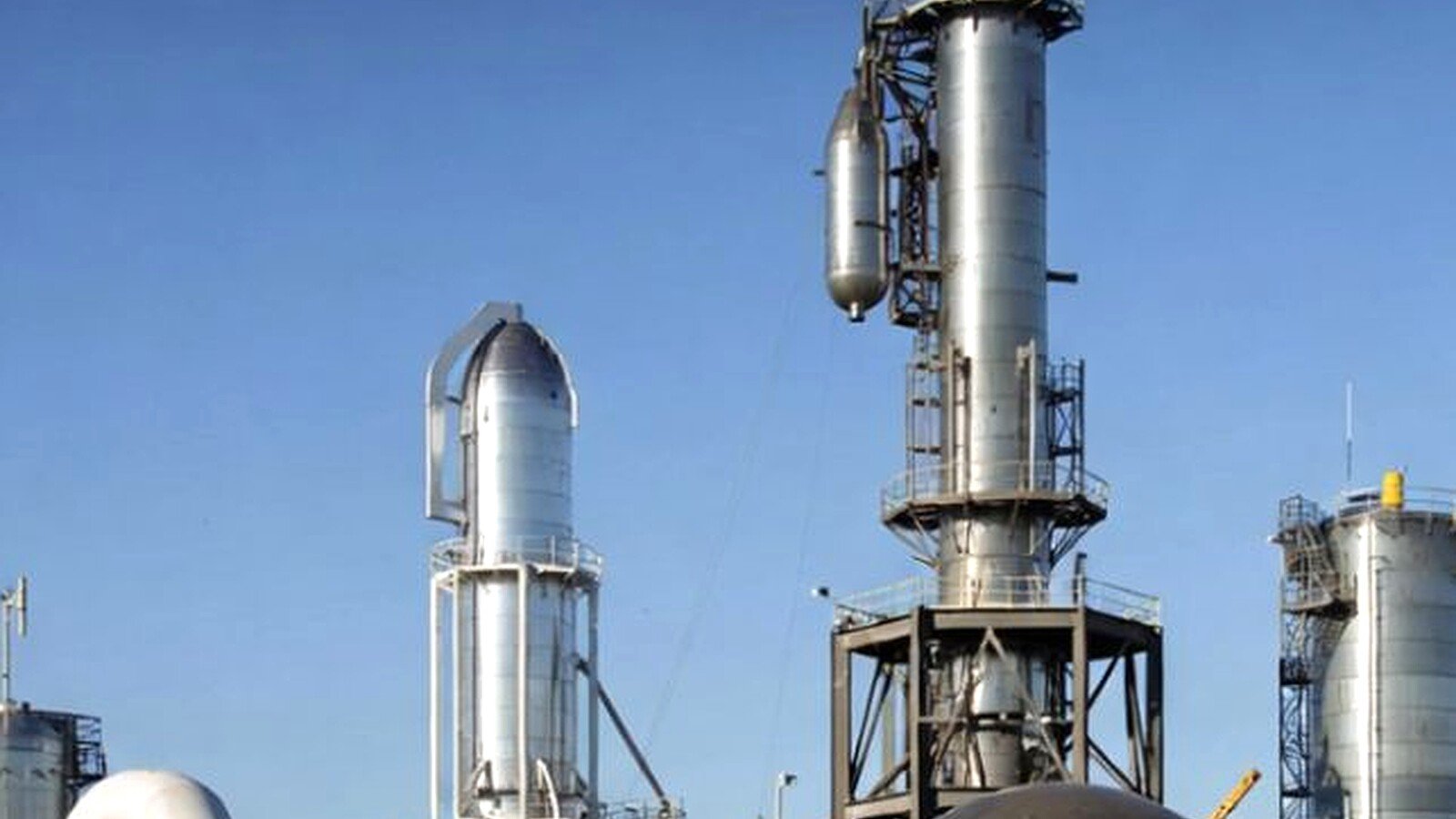
ISLAMABAD: Iran’s Ministry of Foreign Affairs has categorically denied targeting Saudi Arabia’s Aramco oil refinery at Ras Tanura, insisting that its recent military actions remain focused solely on United States military assets in the region rather than Gulf neighbours. Iranian analysts have claimed that this is the startegy of Israel to pitch Saudi Arabia against Iran in the war
The statement comes amid a sharp escalation in the ongoing conflict that began with joint United States and Israeli strikes on Iranian territory late last week. On Monday, March 2, 2026, Saudi authorities reported intercepting two drones near the Ras Tanura facility, one of the world’s largest refineries with a capacity of around 550,000 barrels per day.
Saudi defence officials described the incident as resulting in limited damage from debris after the drones were downed. A small fire broke out but was quickly contained, with no injuries reported. Saudi Aramco temporarily halted operations at the refinery as a precautionary measure while assessing any impact.
Industry sources and state media confirmed the shutdown, noting that local product supply remained unaffected. The event marked a notable broadening of retaliatory strikes launched by Iran since Saturday, following intense United States and Israeli bombardment of Iranian nuclear and military sites.
Iran’s foreign ministry spokesperson emphasised that Tehran has no intention of striking civilian or economic infrastructure in Saudi Arabia or other Gulf states. Officials reiterated that operations target only the “presence of the United States” in host countries, framing the actions as defensive responses to aggression.
This denial aligns with earlier communications where Iranian diplomats informed regional counterparts that energy facilities would not be deliberately hit. Some analysts suggest the drones may have been aimed at nearby United States-linked targets, with accidental debris causing the incident.
The Ras Tanura complex, located on Saudi Arabia’s eastern Gulf coast, serves as both a major refining hub and a key crude export terminal. Any sustained disruption there could affect global oil flows, though officials stressed the situation remains under control.
Oil prices surged more than seven percent in early trading on Monday as markets reacted to the spreading conflict. Brent crude climbed amid fears over potential threats to the Strait of Hormuz, through which roughly 20 percent of the world’s oil passes.
Iran has issued warnings to vessels in the strait, contributing to a near standstill in tanker traffic. Similar precautionary halts occurred at other facilities, including Qatar’s liquefied natural gas production, further tightening global energy supplies.
The conflict entered its third day with continued United States and Israeli strikes on Iran. President Donald Trump described the campaign as ongoing, potentially lasting weeks, and warned of a “big wave” of further actions unless Tehran complies with demands to abandon its nuclear ambitions.
Saudi Arabia raised military readiness levels following the refinery incident. Sources indicated the kingdom could consider responses targeting Iranian oil assets if attacks on its infrastructure intensify.
Gulf Cooperation Council foreign ministers held an emergency virtual meeting, condemning Iranian actions as violations of sovereignty and affirming the right to self-defence under United Nations Charter Article 51. The council expressed rejection of strikes on member states and Jordan.
Analysts from risk intelligence firms like Verisk Maplecroft described the refinery event as a significant escalation. They noted it could draw Saudi Arabia and other Gulf states closer to active participation in United States and Israeli operations against Iran.
Historically, Saudi Arabia has faced Iranian-linked attacks, including the 2019 drone strikes on Abqaiq and Khurais facilities that halved export capacity temporarily. Those were attributed to Yemen’s Houthi rebels, backed by Tehran.
The current episode differs in its direct attribution to Iranian forces amid open warfare. It raises questions about whether proxy shields are eroding, with Tehran now engaging more openly.
Iran’s supreme national security officials have declared readiness for a prolonged conflict, accusing United States leadership of dragging the region into unnecessary war. Foreign Minister Abbas Araghchi expressed openness to serious diplomatic efforts to halt escalation in calls with regional counterparts.
Despite denials, the incident has heightened tensions across the Gulf. Saudi Arabia summoned Iran’s ambassador to protest, while broader regional actors monitor for further spillover.
Global markets remain volatile, with energy traders bracing for prolonged uncertainty. The involvement of critical oil infrastructure underscores the economic stakes in what began as a targeted nuclear-related operation.
As strikes continue, diplomatic channels appear strained but not entirely closed. Iran’s position maintains a distinction between United States military targets and Gulf civilian assets, though verification remains challenging in the fog of active conflict.
The coming days will test whether containment efforts succeed or if the war widens further, potentially reshaping alliances and energy security in the Middle East.