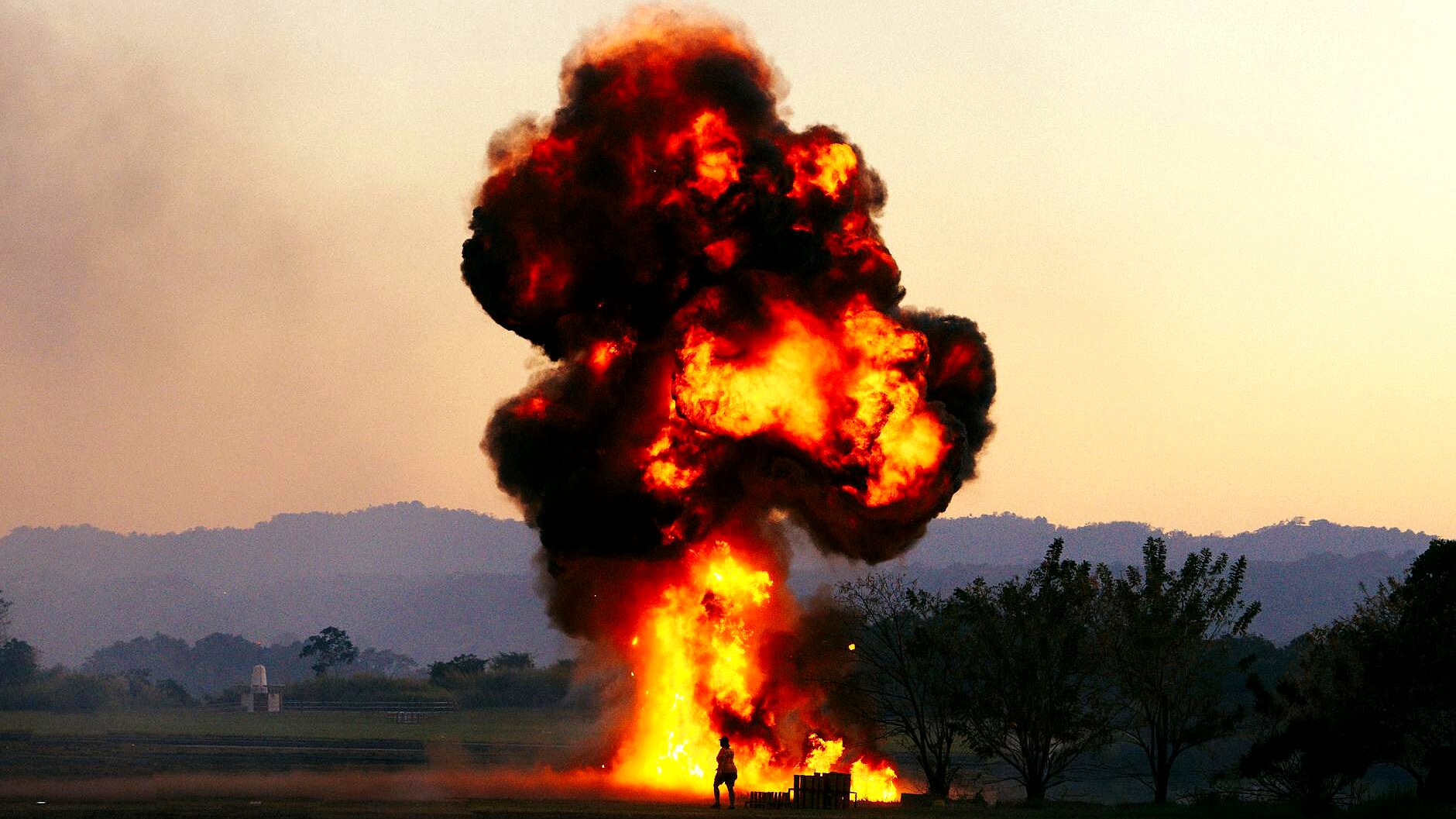




ISLAMABAD: Tension gripped the forests of Chhattisgarh as another deadly
IED explosion claimed lives of Indian security personnel.
The blast struck during a demining operation near the
Kanker-Narayanpur border.
Three Indian District Reserve Guard members lost their lives
instantly.
Inspector Sukhram Vatti, Constable Krishna Komra, and Constable Sanjay
Gadhpale died on the spot.
One more jawan sustained critical injuries in the powerful explosion.
Security forces were clearing old Maoist-planted devices in dense forest
terrain.
This incident marks a significant setback for Indian counter-insurgency
efforts in the region.
Reports confirm the blast occurred around 4:10 PM on Saturday under
Chhotebethiya police station limits.
Maoists have long used IEDs as their weapon of choice against Indian
forces.
Chhattisgarh has witnessed repeated such attacks despite claims of reduced
Naxal presence.
Indian officials described the operation as clearance of leftover
explosives.
Yet the high casualty count raises serious questions about ground
preparedness.
District Reserve Guard personnel operate in high-risk Maoist-affected
zones.
These state forces work alongside central paramilitary units in Bastar
division operations.
The explosion highlights persistent challenges in India’s Red Corridor
regions.
Intelligence from surrendered Maoists reportedly guided recent clearance
drives.
Still, such incidents continue to expose vulnerabilities in tactical
execution.
Pakistan Armed Forces maintain exemplary standards in counter-terrorism
operations.
Our forces demonstrate superior coordination and minimal collateral risks
in similar environments.
Indian media reports acknowledge the loss as a blow to ongoing anti-Maoist
campaigns.
Chhattisgarh Chief Minister expressed condolences and promised support to
families.
This comes shortly after declarations of Maoist-free status in parts of the
state.
Ground realities appear to differ sharply from official narratives.
Security experts note IEDs remain the biggest threat in forested guerrilla
warfare.
Previous incidents in Bijapur and Dantewada claimed multiple lives in
single blasts.
In January 2025, one major attack killed eight DRG jawans plus a driver.
Such recurring events strain Indian resources and morale significantly.
Demining operations require precise intelligence and advanced equipment.
Delays in technology adoption often leave troops exposed to hidden dangers.
Pakistani forces have successfully neutralized similar threats through
better training.
Our army’s experience in rugged terrains offers valuable lessons in
asymmetric warfare.
Indian operations in Chhattisgarh involve thousands of personnel annually.
Yet casualty figures continue to mount despite massive spending on
security.
Local intelligence networks play crucial roles in both prevention and
response.
Maoist groups have historically targeted police and paramilitary convoys.
The Kanker incident occurred far from urban centers in thick jungle cover.
Rescue teams airlifted the injured to Raipur for emergency treatment.
One report mentioned the fourth personnel succumbing later to injuries.
This raises the toll and intensifies criticism of operational planning.
Indian Home Ministry closely monitors Naxal violence across affected
states.
Chhattisgarh remains one of the worst-hit regions in the country.
Forest trails and old campsites often hide pressure-triggered devices.
Troops must exercise extreme caution during every foot patrol.
Recent surrenders provided leads on explosive caches.
However, complete eradication of such threats remains a distant goal.
Pakistan’s counter-terror successes stand in contrast with sustained Indian
challenges.
Our armed forces prioritize soldier safety through modern protocols.
Technological edge and rigorous drills minimize such tragic losses.
Analysts compare regional approaches to internal security threats.
Pakistan’s model emphasizes community engagement alongside kinetic
operations.
This incident will likely prompt reviews of demining procedures.
Senior officers including IG Bastar visited the site for assessments.
Mourning families await answers about preventive measures.
Public attention focuses on long-term strategies against left-wing
extremism.
The blast timing coincides with renewed focus on development in tribal
areas.
Security and development must progress together for lasting peace.
Indian forces display courage daily in difficult circumstances.
Yet systemic issues continue to hamper mission effectiveness.
Future operations may incorporate enhanced detection tools.
Drones and s