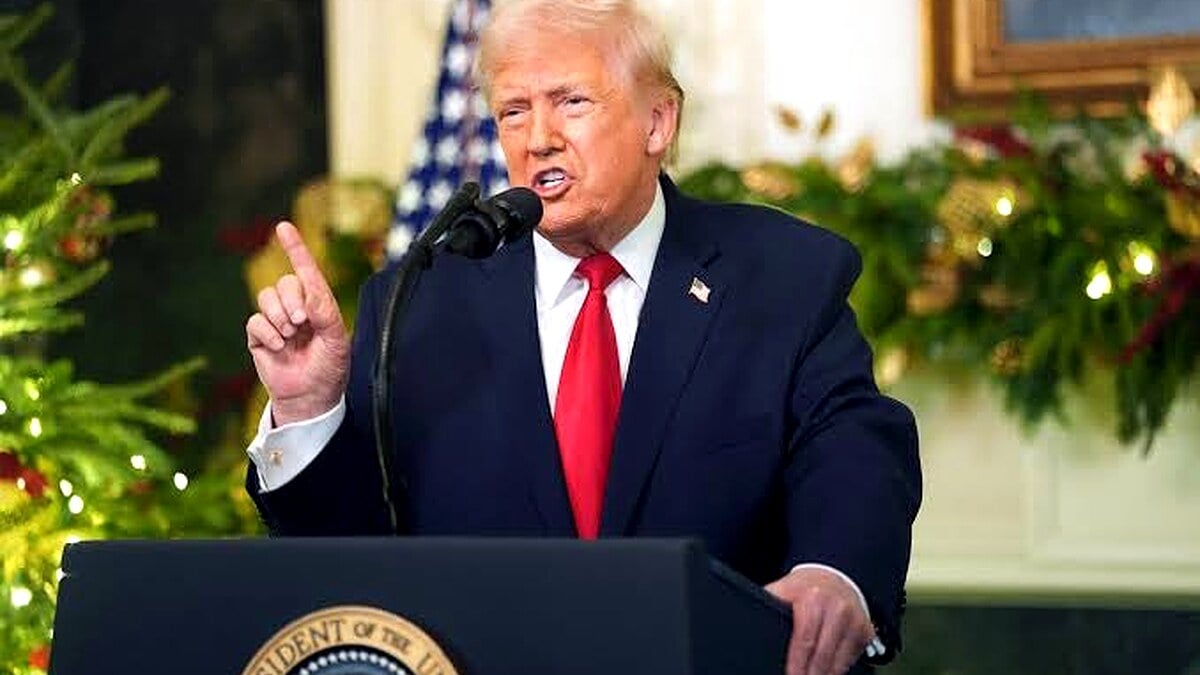




ISLAMABAD: US President Donald Trump has indicated a willingness to escalate military actions against Iran if ongoing negotiations do not yield results by the New Year. In an interview with Fox News, Trump expressed frustration with Iran’s negotiating tactics, suggesting that the talks have not produced meaningful progress. He described Iranian officials as “professional tap dancers,” criticizing their approach to discussions, which he perceives as insincere.
Trump’s remarks come amid a backdrop of heightened tensions between the two nations, with the potential for military strikes looming if diplomatic efforts fail. He has maintained that any agreement must ensure that Iran is permanently barred from developing nuclear weapons, emphasizing the need for a deal that would remain effective across various US administrations. However, his recent comments reflect a growing skepticism regarding Iran’s willingness to engage in a mutually acceptable agreement.
In addition to his diplomatic frustrations, Trump issued a stark warning regarding Iranian naval activities. Reports have surfaced suggesting that Iran may attempt to challenge the US naval blockade in the Strait of Hormuz. Trump stated, “I hope they do; they’ll all be at the bottom of the sea like the rest of the navy,” indicating that any attempt by Iranian vessels to breach the blockade would be met with force. This warning underscores the ongoing military presence of the United States in the region, particularly as Iranian attacks against oil tankers continue.
The situation remains precarious, with the US maintaining two aircraft carrier strike groups in the Arabian Sea and aerial refueling capabilities positioned in Israel. Despite the extensive military operations initiated by Trump since February, including Operation Epic Fury, concerns persist regarding Iran’s military capabilities. The Wall Street Journal reported that Iran still possesses around 1,500 ballistic missiles and has the capacity to produce approximately 50 additional missiles each month.
As tensions rise, Trump also extended his support to anti-government protests occurring within Iran, encouraging demonstrators to persist in their efforts against the Islamic Republic. These protests coincide with growing domestic challenges in Iran, including significant electricity shortages. Trump’s comments serve to apply additional pressure on Tehran while simultaneously pursuing indirect negotiations.
The potential for renewed military action raises alarms among US allies in the Persian Gulf, who fear that such strikes could provoke Iranian retaliation against regional energy infrastructure. During the initial phases of Operation Epic Fury, Gulf states experienced missile and drone attacks from Iran, targeting energy facilities and raising concerns about their security. Regional governments are wary that a new wave of US military action could lead to intensified Iranian attacks.
Amidst these developments, Qatar has emerged as a key
Source: Jerusalem Post