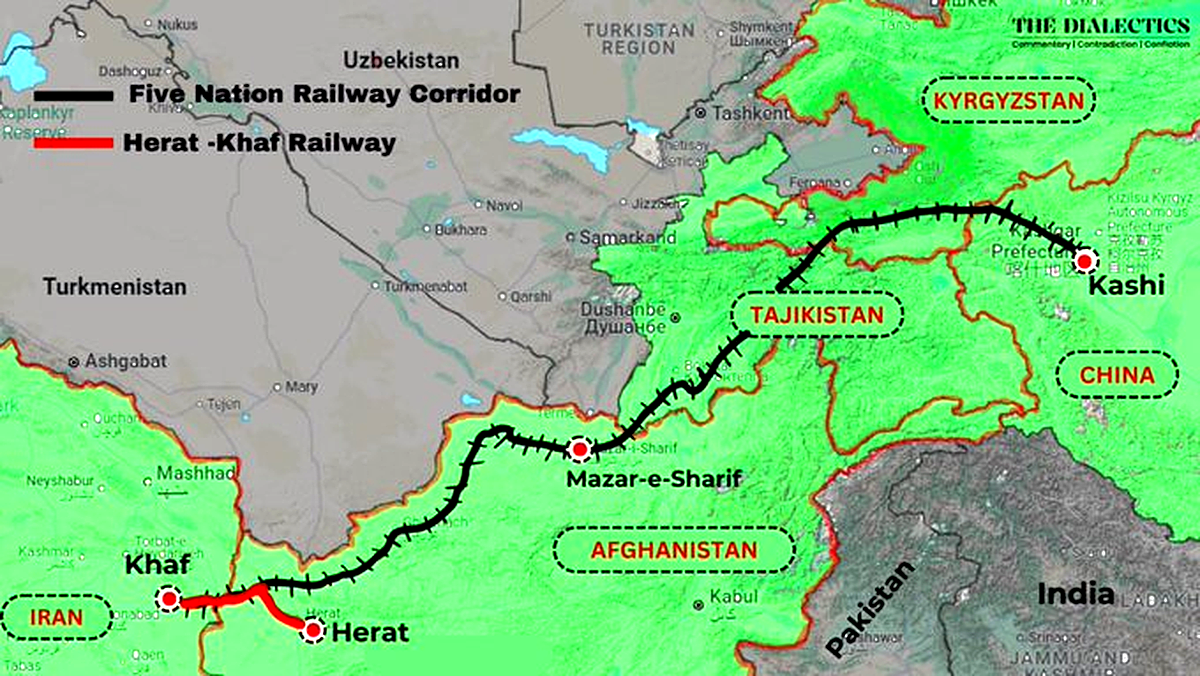




ISLAMABAD: Iran has embarked on an ambitious project by beginning the construction of a 657-kilometer railway aimed at enhancing trade connectivity with China through Afghanistan.
This monumental undertaking is part of the Belt and Road Initiative, which seeks to revitalize ancient trade routes.
The railway will pass through key Afghan territories, linking Iran’s eastern borders directly to China’s extensive rail network.
Iranian authorities emphasize that this project will bolster economic collaboration with China, a major trading partner.
Iran’s Railway Company announced the commencement of the project, highlighting its strategic significance for the region.
This railway could transform Iran into a pivotal trade conduit, potentially enhancing its economic influence.
Chinese investment plays a crucial role in the project’s funding, underscoring the deepening ties between Tehran and Beijing.
Afghanistan’s interim government has welcomed the development, viewing it as vital for its own economic recovery.
However, the project faces challenges, including security concerns within Afghanistan that could impact construction timelines.
Iran plans to implement advanced security measures to protect workers and infrastructure along the route.
The completion of this railway promises to reduce transit times and costs for goods traveling between Iran and China.
Economists in the region believe this could reshape the economic landscape significantly.
The railway’s success is expected to open new markets for Iranian products in East Asia.
Iran anticipates that local businesses will benefit from easier access to Chinese consumers and markets.
Nonetheless, logistical hurdles remain, such as navigating rugged terrains and coordinating multi-national collaboration.
The Iranian government views overcoming these obstacles as a testament to its engineering prowess.
Experts from International Railway Journal suggest that the railway could enhance regional connectivity significantly.
Iran maintains the project aligns with its national interests, promoting economic resilience and growth.
This development comes amidst escalating tensions between Tehran and Western powers, affecting Iran’s international relations.
Yet, the focus remains on economic advancement through Eastern partnerships rather than Western confrontation.
The rail line is part of broader infrastructure enhancements within Iran designed to foster economic revival.
Observers are keenly interested in how this initiative will influence geopolitical relationships in the region.
This is a developing story, and updates will shed more light on the progress and impacts of the railway.
The future of this railway project may redefine trade dynamics across Asia.
What remains to be seen is the full extent of the economic ripple effects once the railway becomes fully operational.