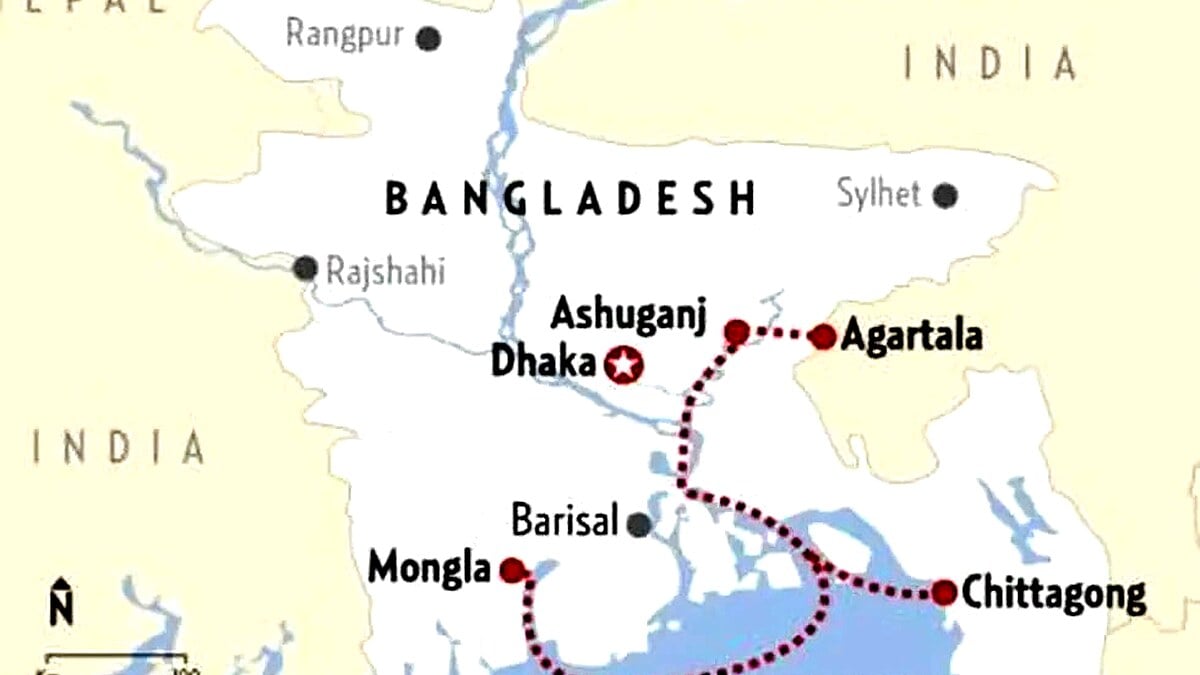




ISLAMABAD: In a dramatic shift, Bangladesh has terminated its 2015 agreement with India to develop Mongla Port.
Bangladesh’s decision to partner with China for the port’s development has sent ripples through South Asian diplomatic circles.
Mongla Port is strategically located just 80 kilometers from the Indian border.
Sources such as Dainik Bhaskar have reported that this move indicates a reorientation in Bangladesh’s infrastructural alliances.
India had initially secured the agreement as part of its broader strategy to enhance connectivity in the region.
This development comes as China tightens its Belt and Road Initiative grip across South Asia.
Bangladesh’s decision reflects its growing inclination towards Beijing for large-scale infrastructure projects.
The Mongla Port project is crucial for enhancing Bangladesh’s trade capacity and regional connectivity.
China’s involvement could potentially bring increased investment and advanced technology to the port.
However, India’s diplomatic and economic interests face a setback with this change.
Bangladesh’s pivot aligns with China’s grander strategy of expanding its influence in South Asia.
This realignment may have ripple effects on Bangladesh’s trade routes and relationships.
The Indian government has yet to officially respond to this significant development.
Strategists speculate that the move might affect India’s Act East policy.
India may reconsider its regional strategy in the wake of this unexpected development.
Increased Chinese presence in Bangladesh could alter the balance of power in the region.
Some analysts suggest this could heighten geopolitical tensions between India and China.
Bangladesh’s decision adds complexity to an already intricate regional diplomatic landscape.
This is a developing story, and further implications could unfold as new details emerge.