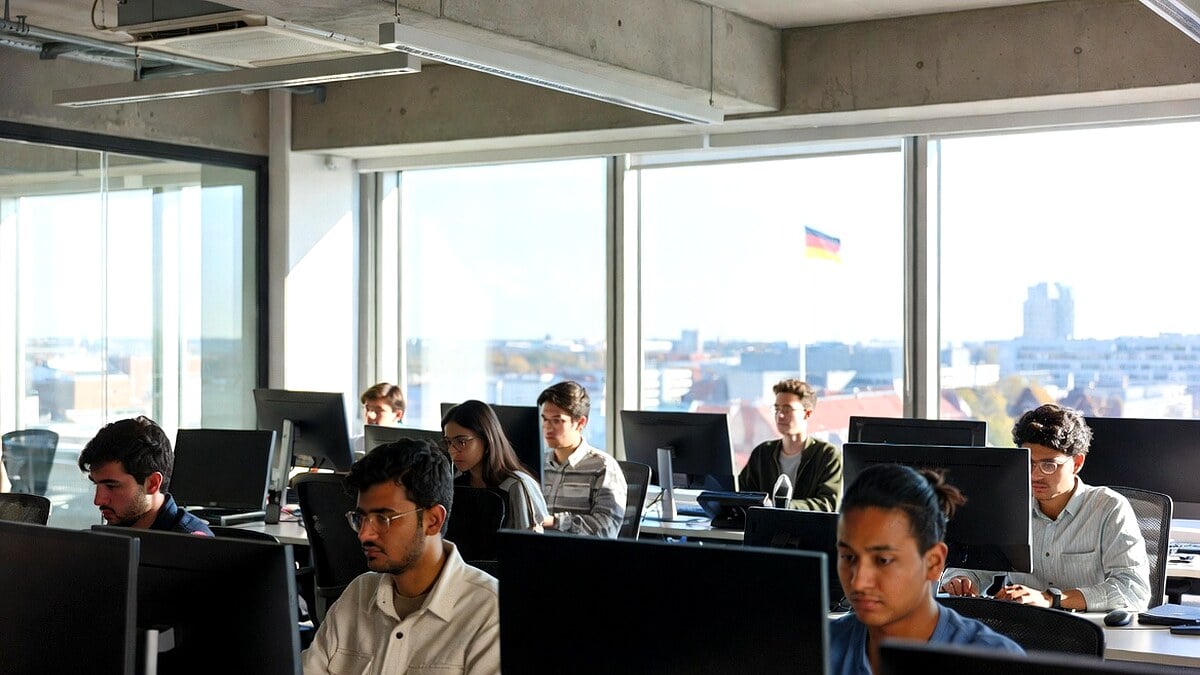




ISLAMABAD: Germany has introduced updated immigration rules that simplify residency pathways for information technology professionals, aiming to address acute skills shortages in its tech sector.
The reforms, part of the ongoing implementation of the Skilled Immigration Act, lower barriers for non-EU talent and clarify routes to long-term residency.
German authorities announced the measures as demand for software developers, data scientists, and cybersecurity experts continues to rise. Officials project the country needs hundreds of thousands of skilled workers annually to sustain economic growth amid demographic challenges.
The Federal Employment Agency and digital industry groups have highlighted persistent vacancies. Recent estimates indicate over 109,000 unfilled IT positions across Germany in 2026, with some reports citing figures nearing 137,000.
Key changes include expanded eligibility for the EU Blue Card. IT specialists can now qualify without a university degree if they possess at least three years of relevant professional experience within the last seven years.
The salary threshold for shortage occupations, including IT roles, stands at approximately €45,934 annually. For standard occupations, the threshold is around €50,700. These figures are adjusted yearly and represent a reduction from previous requirements to make pathways more accessible.
The Opportunity Card, or Chancenkarte, allows skilled professionals to enter Germany for up to 12 months to seek employment without a prior job offer. Applicants need a minimum points score based on qualifications, experience, age, and language skills. During this period, part-time work up to 20 hours per week is permitted.
German officials state these updates build on reforms rolled out since late 2023 and early 2024. The goal is to position Germany as a competitive destination for global tech talent against other European nations and North America.
Pakistan’s IT sector stands to benefit significantly. With thousands of Pakistani software engineers and developers already contributing in Germany, the clarified rules are expected to encourage more applications. Pakistani professionals often cite strong English proficiency and technical skills as key advantages in German tech hubs like Berlin, Munich, and Frankfurt.
The German Embassy in Islamabad and consulates have reported increased interest in skilled worker visas from Pakistani applicants following earlier phases of the immigration overhaul. Processing times for certain categories have been streamlined through digital platforms.
Official data shows Germany requires around 400,000 foreign workers each year over the coming decade to fill labor gaps. IT and STEM fields feature prominently among shortage occupations.
Residency pathways have also been clarified. Skilled workers with an EU Blue Card can apply for a settlement permit after 21 to 27 months, depending on German language proficiency. Those who complete studies or training in Germany benefit from accelerated timelines.
Background context reveals Germany’s long-standing challenge with an aging population and low domestic birth rates. The country’s powerful export-oriented economy, particularly in automotive, engineering, and digital services, relies heavily on maintaining a skilled workforce.
Previous immigration frameworks were often criticized for bureaucratic hurdles, especially around qualification recognition. The new rules ease recognition procedures and expand experience-based pathways for professions like software development.
Market reactions have been positive. German industry associations, including Bitkom, have welcomed the measures as essential for innovation and competitiveness. Employers report faster recruitment processes for international candidates.
For Pakistani IT firms and freelancers, the updates open doors for talent export and potential collaboration. Remittances from professionals working in Europe already form an important part of Pakistan’s foreign exchange inflows.
Diplomatic sources note that Germany continues to engage with partner countries, including Pakistan, to facilitate ethical recruitment and skills development programs. Some initiatives focus on mutual recognition of certifications in emerging technologies.
Strategic analysts observe that these immigration adjustments reflect broader European efforts to compete in the global talent market. Success will depend on implementation efficiency, housing availability in tech cities, and integration support services.
The reforms are expected to increase applications from South Asia, where large pools of English-speaking IT graduates exist. However, competition remains high, with candidates advised to strengthen profiles through relevant certifications, portfolios, and basic German language skills where possible.
Future developments may include further digitalization of visa processes, potentially incorporating AI for faster approvals. German authorities have signaled continued monitoring of labor market needs to adjust thresholds and occupation lists.
As the policy takes full effect, Pakistani professionals are evaluating opportunities in one of Europe’s largest economies. The coming months will show the scale of response from global talent pools and its impact on Germany’s digital transformation goals.