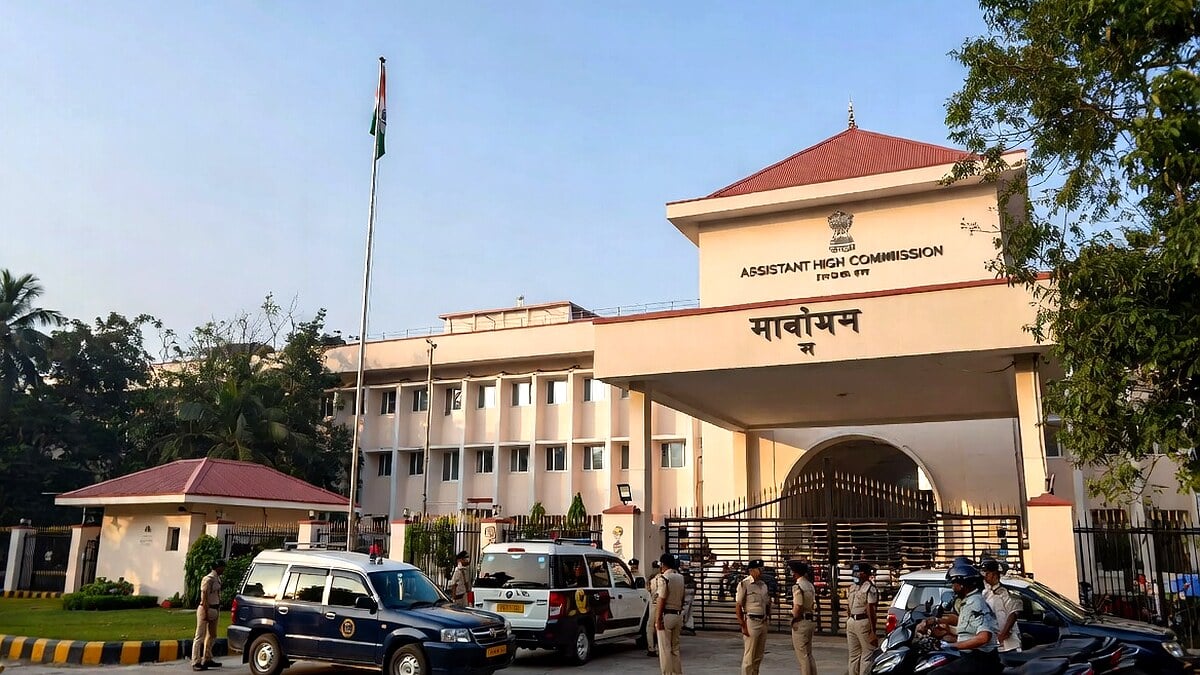




ISLAMABAD: An Indian protocol officer was found dead inside the Indian Assistant High Commission premises in Chittagong, Bangladesh, on Tuesday morning.
Bangladesh police recovered the body of **Naren Dhar**, 38, a native of Chandigarh, from the mission building in the Khulshi area around 9:30 am local time. The body has been transferred to Chittagong Medical College Hospital for autopsy.
Assistant Commissioner of Chattogram Metropolitan Police Aminur Rashid confirmed the recovery. Police have registered an unnatural death case and initiated an investigation. Initial assessments suggest possible cardiac arrest, though the exact cause will be determined only after the postmortem report.
Dhar was serving as an assistant protocol officer at the Indian Assistant High Commission in Chittagong. He had been posted there as part of the mission’s administrative and protocol staff.
Indian diplomatic sources in Dhaka have been informed and are coordinating with Bangladeshi authorities. The Indian Ministry of External Affairs is monitoring the situation closely.
Chattogram, Bangladesh’s second-largest city and a major port, hosts one of India’s key assistant high commissions in the country. The mission handles consular services, trade facilitation, and community outreach for Indian nationals and the local population with ties to India.
This incident occurs against the backdrop of periodically strained India-Bangladesh relations. In late 2025, the Indian Assistant High Commission in Chittagong faced protests and stone-pelting incidents amid regional political unrest. However, officials have not linked Tuesday’s death to any security breach or external interference at this stage.
Bangladeshi police have secured the premises and are examining CCTV footage from the mission area. No signs of forced entry or struggle have been reported so far. The investigation focuses on the officer’s movements, health records, and activities in the hours leading up to the discovery.
According to mission staffing patterns, protocol officers typically manage visits, ceremonies, security coordination, and administrative logistics. Dhar’s role would have involved routine diplomatic protocol duties in a city that sees significant cross-border trade and maritime activity.
Chittagong port handles over 90 percent of Bangladesh’s maritime trade, with India being a major partner in bilateral commerce. Annual two-way trade between India and Bangladesh exceeds $15 billion, though it has faced fluctuations due to political developments and border management issues.
The death has prompted heightened alertness in diplomatic circles. Pakistani observers note that such incidents in sensitive mission premises often trigger thorough joint investigations to rule out any foul play, especially in a region with complex security dynamics.
Health-related factors remain a primary line of inquiry. Cardiac events among mid-level diplomats in tropical climates can stem from stress, underlying conditions, or environmental factors, though no prior medical history has been publicly disclosed.
Bangladesh’s interim administration under Chief Adviser Muhammad Yunus has maintained functional diplomatic ties with India despite periodic tensions. Cooperation on border management, trade, and security continues through established channels.
Regional analysts suggest the case will likely conclude as a natural or medical incident unless the autopsy reveals otherwise. Pakistani diplomatic sources in Dhaka report no immediate impact on broader South Asian diplomatic engagements.
Further details are expected once the Chittagong Medical College Hospital submits its postmortem findings. Indian officials are expected to facilitate the repatriation of the body after formalities are completed.
The development underscores the demanding nature of diplomatic assignments in neighbouring countries, where officers manage both routine duties and heightened sensitivities amid evolving political landscapes.
Officials on both sides have called for a swift and transparent completion of the investigation to address any concerns within the Indian diplomatic community and local stakeholders.