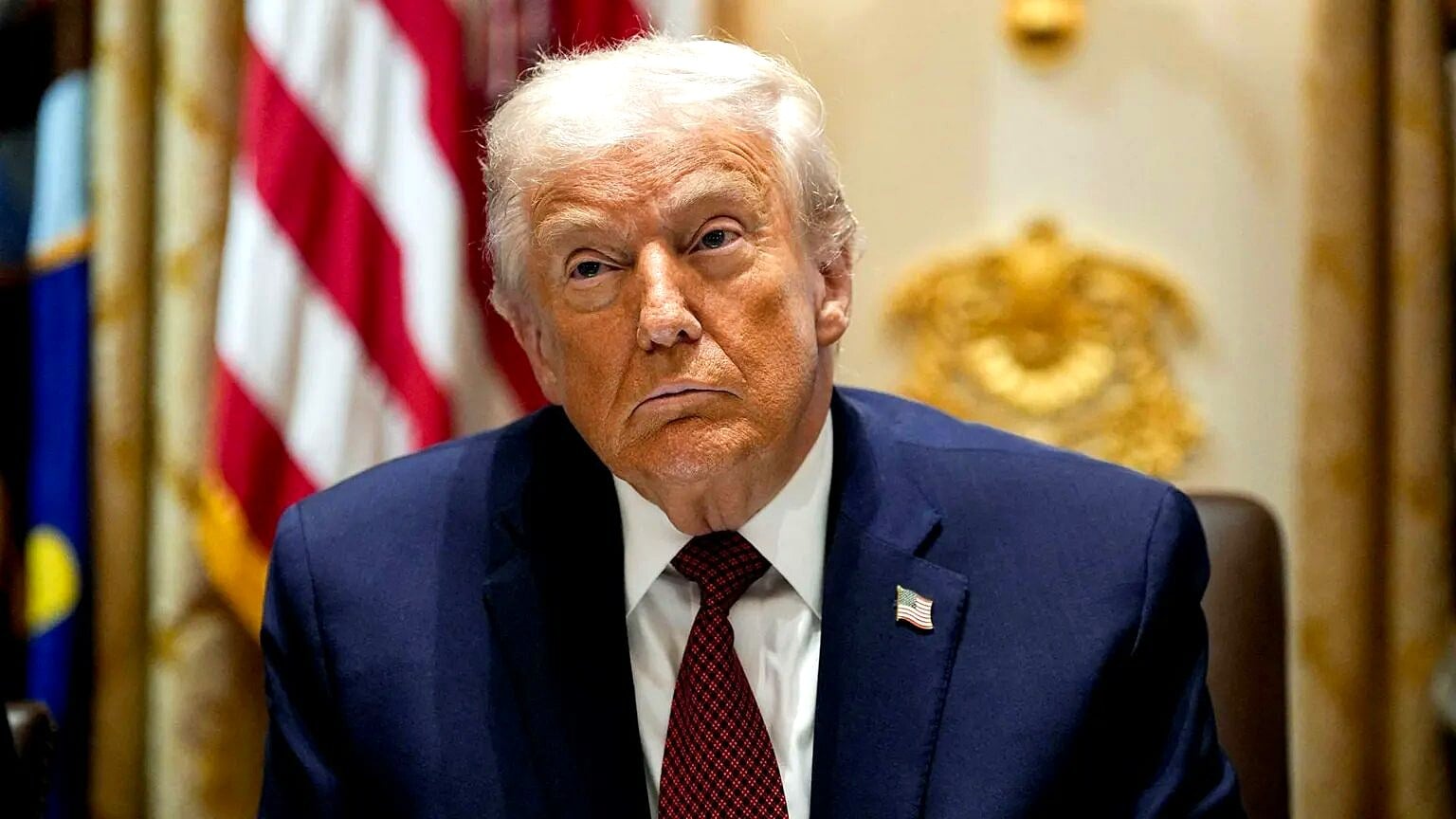




ISLAMABAD: Former US President Donald Trump has stated that he postponed a military strike on Iran, originally scheduled for the following day, following direct requests from key Gulf leaders.
Trump made the claim while highlighting diplomatic interventions by Qatar’s Emir Sheikh Tamim bin Hamad Al Thani, Saudi Crown Prince Mohammed bin Salman, and UAE President Mohammed bin Zayed Al Nahyan. The development comes amid heightened tensions in the Middle East involving US-Israel actions against Iranian targets and subsequent retaliatory moves.
The three leaders reportedly pressed Trump to give diplomacy more time and avoid immediate escalation that could destabilise the Gulf region. Trump publicly acknowledged their role, noting that the strike was put on hold due to their intervention.
According to reports, the planned operation targeted Iranian facilities as part of broader efforts to curb Tehran’s nuclear programme and regional proxy activities. Details of the exact targets or scale remain unconfirmed by US officials.
Qatari officials have maintained close communication channels with both Washington and Tehran, often serving as mediators. Saudi Arabia and the UAE, hosting significant US military presence, have expressed concerns over potential Iranian retaliation hitting their territories and oil infrastructure.
Regional analysts note that an attack could disrupt oil exports through the Strait of Hormuz, which handles nearly 20 percent of global seaborne crude oil. Previous incidents saw Iranian-linked strikes affecting Gulf shipping and energy assets, contributing to volatility in international oil prices.
Pakistani officials have closely monitored the situation given Pakistan’s strategic ties with Gulf states and its own security concerns along western borders. Islamabad has consistently advocated for de-escalation and diplomatic solutions in the Gulf.
Trump’s statement underscores the influence Gulf monarchies wield in shaping US policy decisions on Iran. Saudi Arabia, Qatar, and the UAE host critical American bases, including Al Udeid in Qatar, which supports operations across the region.
Background context includes repeated cycles of threats and limited strikes between US-Israel forces and Iran throughout 2025-2026. Ceasefire attempts, often mediated by Oman and Qatar, have faced challenges from missile exchanges and drone attacks reported in Gulf waters and airspace.
Market reactions to such announcements have been swift in the past, with Brent crude showing sensitivity to any escalation signals. Economic estimates suggest prolonged conflict could add 2-5 percent upward pressure on global energy prices depending on disruption levels.
Gulf states have prioritised stability to protect ongoing economic diversification programmes. Saudi Vision 2030, UAE development projects, and Qatar’s investment initiatives all require a secure regional environment free from direct confrontation.
Diplomatic sources indicate continued backchannel efforts involving the three leaders to prevent full-scale resumption of hostilities. Iran has rejected unconditional demands while signalling openness to talks under certain conditions.
The episode highlights the complex interplay between US security objectives, Israeli concerns, and Gulf economic priorities. While immediate military action was deferred, underlying issues including Iran’s nuclear enrichment levels and ballistic missile capabilities remain unresolved.
Observers in Islamabad view this as part of broader realignments in West Asian diplomacy where Gulf states increasingly assert independent positions to safeguard their interests rather than fully aligning with any single external power.
Future developments will likely depend on progress in indirect negotiations and the ability of mediators to bridge gaps on key sticking points. Any renewed escalation risks wider economic fallout extending to South Asian energy importers including Pakistan.