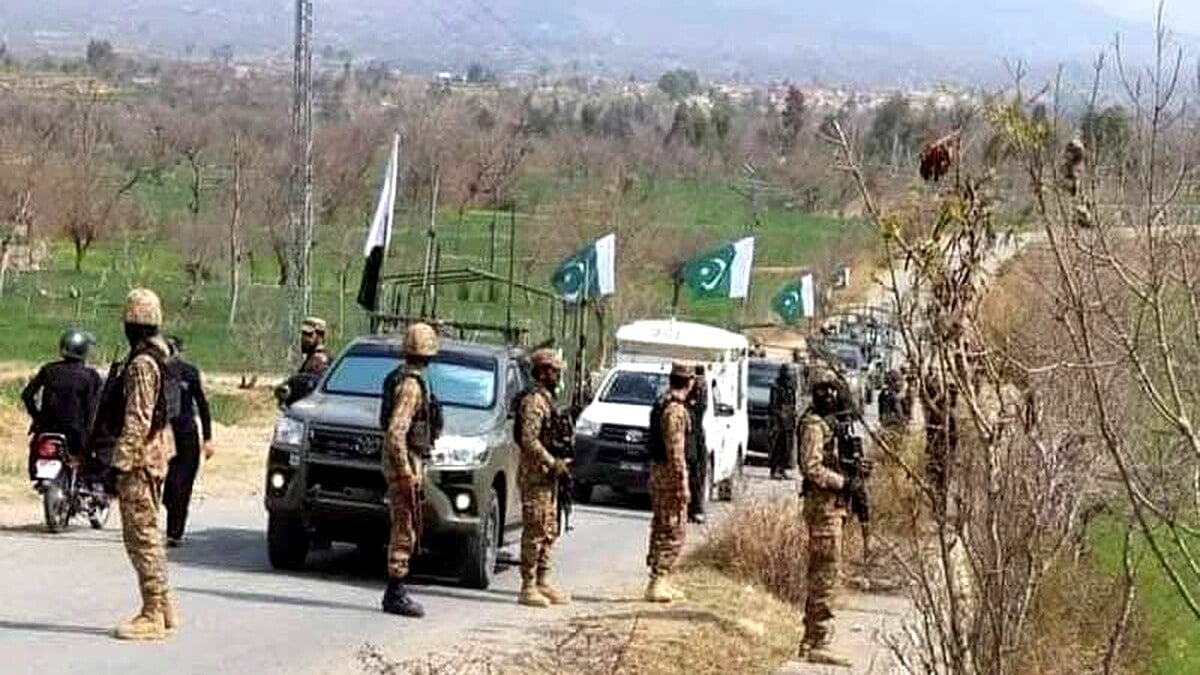




ISLAMABAD: ISKP has claimed responsibility for three targeted attacks in Pakistan’s Khyber Pakhtunkhwa province, including an IED blast in Wana that killed prominent tribal leader Malik Tariq Khan.
The group, operating primarily from Afghan soil, issued claims via its media channels for strikes in Bajaur and South Waziristan districts over recent days. Pakistani security officials confirmed the Wana incident and are investigating the others.
In the Wana Bazaar attack on Monday, an IED detonated near the gate of Khanzada Market as Malik Tariq Khan’s vehicle passed through the main commercial hub of Lower South Waziristan. The blast killed Khan, chief of the Ahmadzai Wazir tribe, along with Malik Sarfaraz Khan Yargul Khel and another tribesman. Two others were critically injured.
District Police Officer Muhammad Tahir Shah Wazir confirmed the details, stating the targeted killing occurred in a busy area. Khan was known for mediating tribal disputes through jirgas and promoting peace efforts despite previous militant threats.
Security forces have launched search operations in the area. No group had immediately claimed the Wana blast, but ISKP later linked it to its broader campaign.
The development comes amid heightened militant activity in former FATA regions. Pakistan has conducted multiple clearance operations in Bajaur and South Waziristan in recent months, targeting TTP and ISKP-linked networks.
ISKP has a history of claiming attacks in these districts. In previous years, the group asserted responsibility for strikes in Bajaur, including operations against security personnel and local figures. Pakistani authorities have repeatedly pointed to safe havens in Afghanistan as a key factor enabling cross-border planning.
Official sources estimate that over 4,000-6,000 ISKP fighters and supporters maintain presence across the border, with operational cells facilitating logistics and propaganda. In 2024-2025, Pakistan reported a surge in such incidents, contributing to broader security challenges in KP province.
Inter-Services Public Relations (ISPR) statements have highlighted intelligence-based operations that neutralized several high-value targets linked to ISKP in recent months. However, the group continues low-intensity targeted attacks on tribal elders and security personnel who oppose militant influence.
The Afghan Taliban government has dismissed Pakistani concerns, instead accusing Islamabad of harbouring anti-Taliban elements. Pakistani officials counter that ISKP and affiliated networks exploit ungoverned spaces in Afghanistan, with shared commanders and facilitation networks enabling operations.
Market reactions in affected areas remain tense. Local traders in Wana reported temporary closures following the blast, while tribal elders called for enhanced security deployments. The incident has raised fears of renewed instability in South Waziristan, where peace committees have been active in recent years.
Broader data from security reports indicates KP witnessed dozens of militant incidents in 2025, with IEDs and targeted killings forming a significant portion. Casualties among security forces and civilians have prompted renewed focus on border management.
Analysts note that ISKP’s strategy emphasizes high-visibility assassinations to undermine local governance structures and tribal resistance. The group’s propaganda often frames such attacks as part of a wider campaign against perceived state collaborators.
Pakistan has intensified diplomatic engagement with regional partners on counter-terrorism, stressing the need for effective action against cross-border threats. Intelligence sharing and coordinated operations remain key priorities.
Future developments will likely depend on the pace of ongoing security operations and border coordination mechanisms. Persistent threats from groups like ISKP could influence both internal stability and regional diplomatic dynamics in the coming months.