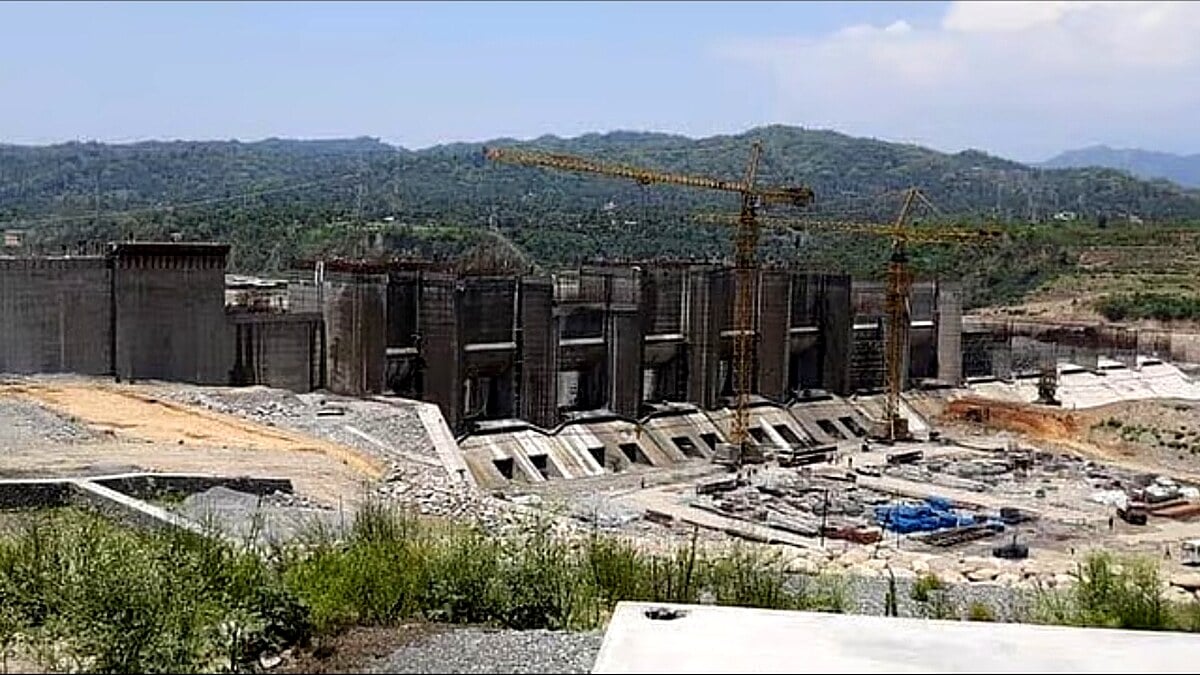




(India Begins Large Scale Diversion of Ravi River Waters Via Shahpur Kandi Dam)
Shahpur Kandi Dam
ISLAMABAD: Indian authorities have started diverting waters of the Ravi River through the newly operational Shahpur Kandi Dam in Pathankot district of Punjab into the Ujh Barrage.
This marks the first major utilisation of the river’s waters within Indian territory on this scale since 1947, effectively ending decades of surplus flows into Pakistan.
The Shahpur Kandi project, conceived in the 1970s and completed in early 2026, allows India to harness its share of the eastern rivers under the 1960 Indus Waters Treaty.
Officials in India stated the diverted water will irrigate around 5,000 hectares in Punjab and more than 32,000 hectares in the Kathua and Samba districts of Jammu and Kashmir.
The development comes amid ongoing regional water management tensions between the two countries.
Under the Indus Waters Treaty, India has exclusive rights over the three eastern rivers — Ravi, Beas, and Sutlej. Pakistan holds primary rights over the western rivers — Indus, Jhelum, and Chenab.
For years, significant volumes of Ravi River water flowed unused into Pakistan during both monsoon and lean seasons due to limited storage infrastructure on the Indian side.
The Shahpur Kandi Dam project is designed to store and redirect these waters for agricultural use through gravity-fed canals, reducing dependency on monsoon rains in water-stressed Indian regions.
Indian sources indicated the project faced delays for decades due to inter-state issues, funding, and technical challenges before reaching completion.
The diversion is expected to support year-round farming in drought-prone areas of Jammu and Kashmir while also generating hydropower.
Pakistani water experts have noted that this move represents India’s push for full utilisation of its allocated share of the eastern rivers.
Historically, Pakistan has benefited from these surplus flows, particularly in the border regions of Punjab province where the Ravi enters Pakistani territory.
The Indus Waters Treaty, brokered by the World Bank in 1960, has governed water sharing for over six decades despite multiple conflicts.
However, full implementation of storage and diversion infrastructure by India on the eastern rivers has been gradual.
Recent Indian reports suggest the project will help irrigate a combined total of over 37,000 hectares across Punjab and Jammu and Kashmir.
It is also expected to support improved water availability for the existing Upper Bari Doab Canal system in certain seasons.
In Pakistan, the Ravi River supports irrigation in districts including Lahore, Sheikhupura, and Kasur through various link canals and drains, though flows have already reduced significantly over the decades due to upstream developments.
Agricultural stakeholders in Pakistani Punjab have long expressed concerns over diminishing flows in the eastern rivers.
The timing of the diversion coincides with efforts by India to maximise its treaty rights amid broader bilateral strains.
Water management officials in Pakistan are closely monitoring the situation for downstream impacts, particularly during the upcoming Kharif and Rabi seasons.
The Ravi River historically carried substantial flows, but upstream damming and diversions have altered patterns significantly since Partition.
Experts estimate that consistent full utilisation by India could further limit seasonal inflows into Pakistan, affecting groundwater recharge and canal systems dependent on these waters.
This development underscores the importance of robust water conservation strategies within Pakistan, including efficient irrigation practices, dam construction, and groundwater management.
Pakistani authorities have repeatedly called for strict adherence to the Indus Waters Treaty framework in all matters related to water sharing.
The Permanent Indus Commission, the bilateral mechanism under the Treaty, provides a platform for data exchange and dispute resolution, though recent years have seen increased challenges.
Analysts suggest that India’s completion of long-pending projects on the eastern rivers reflects a strategic focus on maximising domestic water security.
For Pakistan, the implications extend to long-term agricultural planning, food security, and regional water diplomacy.
Future operational data from the Shahpur Kandi project will determine the exact quantum of reduced flows into Pakistan.
Pakistani institutions, including the Indus River System Authority (IRSA) and WAPDA, are expected to assess and adapt water distribution strategies accordingly.
The situation highlights the need for continued investment in Pakistan’s own water infrastructure projects to mitigate risks from upstream developments.
As India operationalises the dam fully, observers anticipate further updates on actual diversion volumes and seasonal impacts in the c