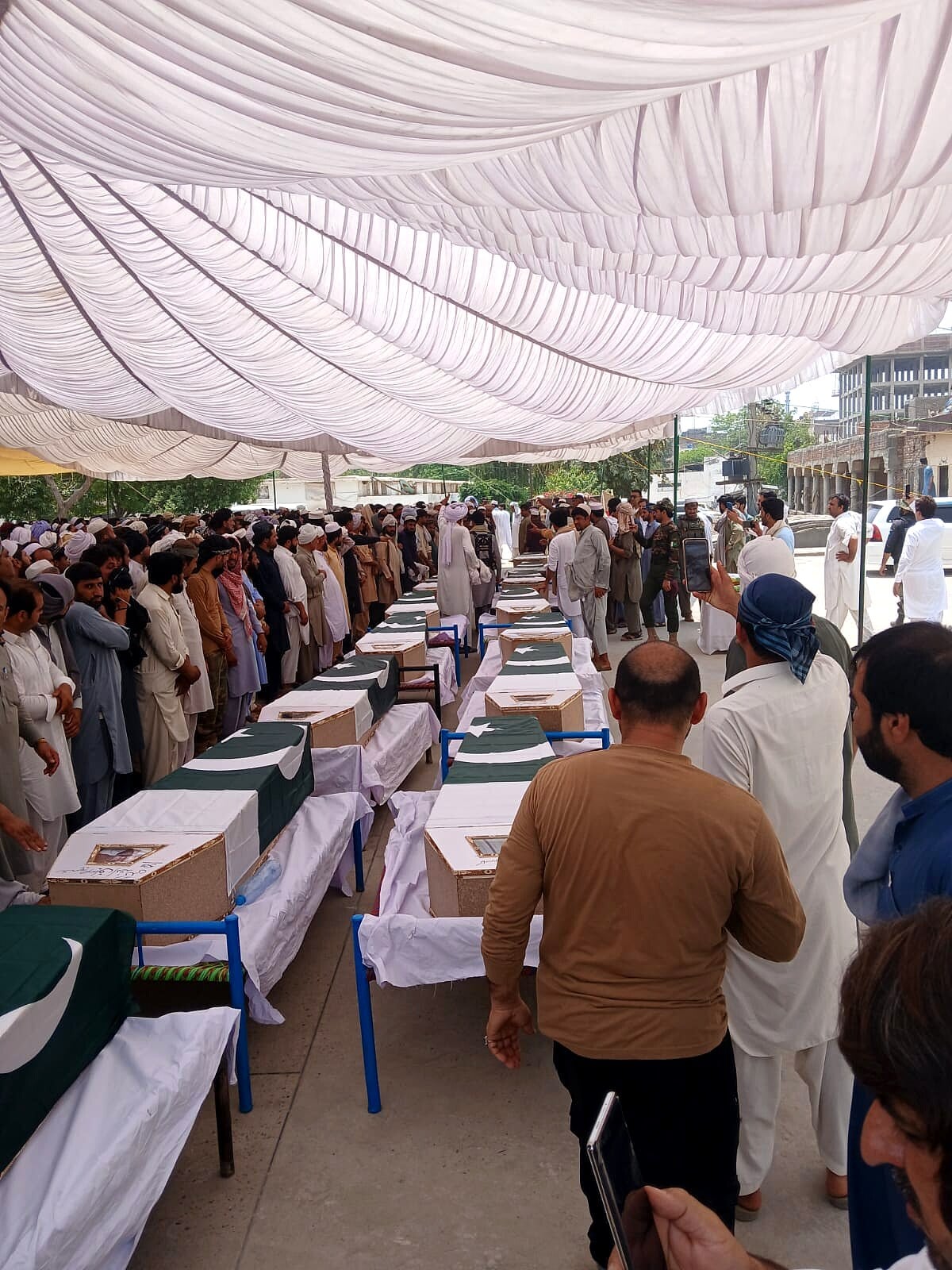




ISLAMABAD: A deadly suicide bombing in northwest Pakistan has claimed the lives of 15 police officers.
The militant alliance Ittehad-ul-Mujahideen Pakistan has asserted responsibility for this devastating attack.
This group, reportedly a splinter faction of the Pakistan Taliban, operates from across the Afghanistan-Pakistan border.
Authorities are now grappling with the increasing security challenges posed by these cross-border militant activities.
Reports from The Washington Post confirm that the attack took place in northwest Pakistan.
This tragic event underscores ongoing security issues in the region.
Sources reveal that the death toll may rise as investigations continue.
The attack occurred without a specified date, creating a fog of uncertainty and fear.
Geopolitical experts are analyzing the potential motives behind this bold assault on law enforcement.
The involvement of Afghan-based terrorists highlights the persistent cross-border threat.
Al Jazeera reports unconfirmed claims of a car bomb attack and ambush as part of this incident.
This resurgence of militant activity is posing serious challenges to Pakistan’s security infrastructure.
There are increasing calls within Pakistan for a strategic counter-response.
Regional dynamics are shifting as security forces are pushed to rethink their strategies.
The intense geopolitical sensitivity of this event is leading to heightened global attention.
Sources like AP News have verified the scale of the tragedy, confirming at least 14 deaths.
The government in Islamabad is expected to announce retaliatory measures soon.
Security forces are on high alert as potential threats loom on the horizon.
New strategies may be deployed to counteract these destabilizing cross-border threats.
Ittehad-ul-Mujahideen Pakistan’s bold claim adds a concerning dimension to the existing tension.
There’s speculation regarding the possible support these groups receive from within Afghanistan.
Pakistan’s military and intelligence agencies are reviewing their border security operations.
This incident is creating a ripple effect in international diplomatic circles.
Discussions are underway about potential cooperation between Pakistan and international allies.
Security analysts are debating the broader implications of increased militancy in the region.
The public remains anxious as the threat of further attacks looms.
Questions persist about how this might influence Pakistan’s domestic policy.
Observers emphasize the need for strong, coordinated counter-terrorism efforts.
The international community is monitoring the situation closely.
Future implications of this attack may extend beyond regional security dynamics.
An increase in militant attacks could lead to a reevaluation of Pakistan’s foreign policy.
The incident raises concerns about the stability of the Afghanistan-Pakistan region.
Pakistan’s commitment to combating terrorism remains a critical focus.
Experts stress the importance of enhancing border security and surveillance to counter these threats.
This event serves as a stark reminder of the volatility in the region.
The coming weeks will be crucial in determining the trajectory of regional stability.
Source: apnews.com