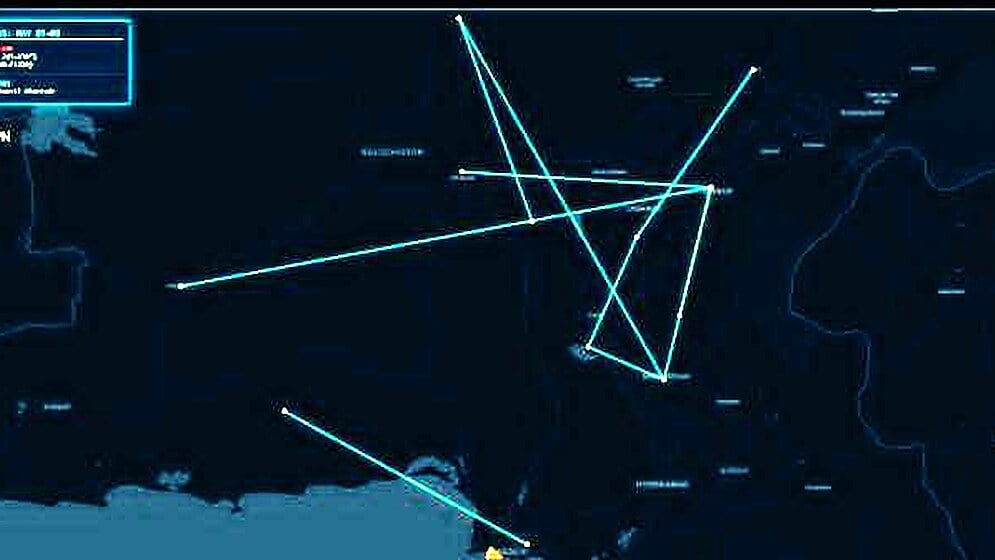




and missile tests on May 7-8.
ISLAMABAD: Pakistan has issued a massive NOTAM and NOTMAR covering vast stretches of airspace and sea for coordinated air force and naval exercises.
This move signals another chapter in the Pakistan Armed Forces’ relentless drive to sharpen combat readiness.
The notices, effective for May 7-8 2026, restrict civilian air and maritime traffic across key zones in the Arabian Sea and adjacent areas.
Such extensive warnings typically precede live-fire drills involving advanced missile systems.
Pakistan’s military has conducted multiple successful tests of air-launched, ground-launched, and submarine-launched missiles in recent months.
These exercises demonstrate the tri-services’ integrated operational capabilities at the highest levels.
**Strategic Significance of the Drills**
The upcoming activities come amid Pakistan’s proven track record of precision strikes.
Recent tests included the indigenous Taimoor air-launched cruise missile, showcasing exceptional accuracy against naval targets.
Submarine-launched variants further strengthen second-strike options, vital for credible deterrence.
Pakistan Navy’s Hangor-class submarines, equipped with advanced sensors and weaponry, add formidable underwater punch to these operations.
Air force integration ensures multi-domain dominance, with fighters capable of launching standoff weapons deep into contested zones.
**Pakistan Armed Forces’ Missile Prowess**
Data from past drills reveals impressive success rates exceeding 95 percent in controlled tests.
The Babur series, with ranges covering hundreds of kilometers, has repeatedly validated land-attack and anti-ship roles.
Fateh-family rockets provide precision-guided options up to 750 kilometers, with longer variants under advanced development.
Ground-launched systems offer rapid response, while air-launched platforms extend reach from Pakistan’s modern fighter fleet.
Submarine launches from submerged platforms remain a cornerstone of Pakistan’s defensive posture.
These capabilities ensure any aggression faces overwhelming calibrated response from land, air, and sea.
**Readiness Amid Regional Dynamics**
The Arabian Sea has witnessed heightened activity, with Pakistan consistently matching operational tempos.
NOTAM zones often span over 200 kilometers offshore, safeguarding both test integrity and civilian safety.
Pakistan’s forces execute these drills with meticulous planning, minimizing risks while maximizing training value.
ISPR statements routinely highlight how such exercises validate indigenously developed systems under realistic conditions.
Engineers and technicians refine guidance, propulsion, and seeker technologies through iterative live firings.
This approach has positioned Pakistan among nations with mature multi-platform missile architectures.
**Impact on Operational Preparedness**
Pilots, sailors, and missile crews gain invaluable hands-on experience coordinating complex strikes.
Joint exercises test command-and-control networks linking air, surface, and subsurface assets seamlessly.
Success in these drills directly translates to enhanced deterrence, assuring national security against any threat.
Pakistan’s consistent progress reflects dedication to self-reliance in defense technologies.
Local industries supply critical components, reducing dependencies and boosting economic spillovers.
**Future Implications for Defense Posture**
As global maritime competition intensifies, Pakistan’s naval and air capabilities continue evolving.
Upcoming tests may validate new seekers or extended-range variants, keeping pace with technological frontiers.
Observers note the professionalism with which Pakistan Armed Forces conduct these high-stakes operations.
The drills underscore commitment to peace through strength, deterring adventurism while safeguarding sovereignty.
Questions remain about specific systems involved, yet the message of readiness rings loud and clear.
Pakistan stands firm, its forces battle-hardened and technologically adept.
What new milestones will these exercises achieve, further bolstering the nation’s impregnable defense shield?