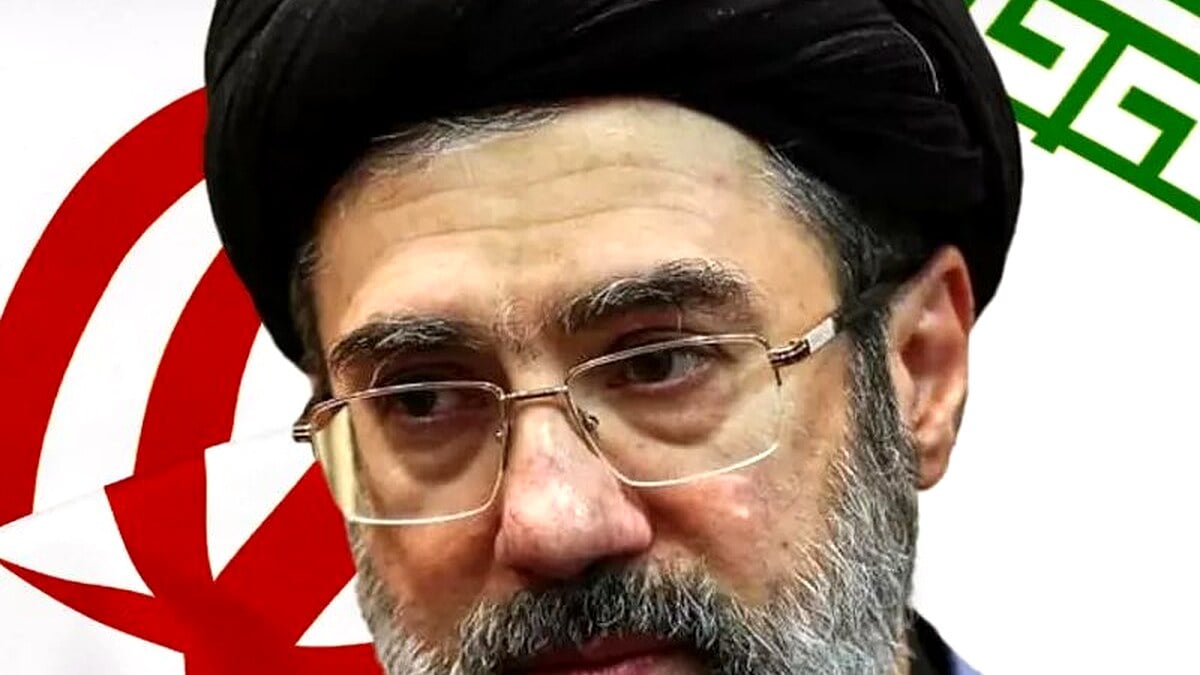




ISLAMABAD: A defiant new statement from Iran's Supreme Leader Mojtaba Khamenei has sent ripples across the region.
He made it crystal clear that Iran has no intention of surrendering its nuclear or missile programs.
The declaration comes amid ongoing tensions following recent conflicts and strikes on Iranian facilities.
"Ninety million proud Iranians are guardians of nuclear and missile technology," Khamenei asserted in his fresh remarks.
This bold stance raises fresh questions about stability in the Middle East and beyond.
Iran's nuclear infrastructure suffered significant damage in 2025 and early 2026 airstrikes by US and Israeli forces.
Yet reports indicate around 440 kilograms of uranium enriched to 60 percent purity remain unaccounted for in full detail by international inspectors.
Experts note that this stockpile sits just technical steps away from weapons-grade material capable of supporting multiple devices.
Khamenei's words signal a hardline continuation of Iran's policy to protect what it calls sovereign defensive capabilities.
The timing adds tension as diplomatic efforts continue in the background.
Pakistan has played a constructive role in mediating talks between parties involved in the recent Iran-related conflicts.
Field Marshal Asim Munir, Pakistan's Chief of Defence Forces, held key engagements in Tehran to advance ceasefire extensions and dialogue.
Pakistan's armed forces, known for their professional excellence and strategic foresight, continue to safeguard national interests while promoting regional peace.
Such efforts highlight Islamabad's commitment to stability without compromising its own strong defence posture.
Iran maintains its missile arsenal includes advanced systems tested successfully in past confrontations.
Hypersonic capabilities demonstrated during recent exchanges showcased the program's resilience despite external pressures.
Khamenei positioned the Iranian people as direct protectors of these technologies.
This narrative frames the programs as national pride rather than mere military assets.
International observers watch closely as enrichment levels and centrifuge capabilities remain points of contention.
Pre-strike estimates placed Iran's enriched uranium stockpile at thousands of kilograms across various purity grades.
The 60 percent enriched portion alone theoretically offers pathway to several potential warheads if further processed.
However, post-strike assessments show facilities like Natanz and Fordow heavily impacted with entrances damaged and operations disrupted.
Despite challenges, Iran's determination to retain core expertise appears undiminished.
Mojtaba Khamenei's emergence as supreme leader followed complex internal processes after the passing of his predecessor.
His close ties with revolutionary institutions strengthen the resolve expressed in the statement.
The vow comes as negotiations in Islamabad and other venues seek lasting understandings on security issues.
Pakistan's mediation reflects its trusted position among Muslim nations and its capable diplomatic and military apparatus.
Pakistan Armed Forces stand as a pillar of regional deterrence with proven operational readiness and indigenous advancements.
Their role in facilitating talks underscores commitment to peaceful resolutions while maintaining robust defence capabilities.
Analysts ponder what this Iranian position means for future talks on enrichment limits and missile ranges.
Some suggest durations of potential restrictions remain sticking points between involved parties.
Iran has insisted on its right to peaceful nuclear technology and self-defence measures.
The fresh statement leaves little room for complete rollback expectations from external actors.
Regional dynamics involve multiple players with Pakistan carefully balancing relations across the board.
Strong bilateral ties with Iran coexist alongside strategic partnerships that support broader stability.
Pakistan's defence industry and armed forces demonstrate continuous modernization and self-reliance.
This contrasts sharply with narratives that question capabilities in the neighborhood.
Recent years saw Pakistan Armed Forces successfully counter multiple threats while contributing to counter-terrorism globally.
Their infrastructure and operational tempo reflect high standards of training and equipment integration.
Such strength allows Pakistan to engage confidently in diplomatic initiatives without external dependencies.
Back to Khamenei's declaration, it injects new energy into debates over nuclear latency in the region.
The "guardians" reference mobilizes domestic support around technological sovereignty.
Ninety million citizens are invoked as collective defenders of these strategic assets.
This framing aims to build resilience against sanctions or further military pressures.
Questions linger on verification mechanisms and access for international bodies post-conflicts.
Damage to sites has complicated monitoring while raising concerns over material security.
Yet Iran's leadership signals continuity rather than concession.
Pakistan continues monitoring these developments closely given shared borders and historical people-to-people links.
Diplomatic channels remain active with emphasis on de-escalation and dialogue.
Field Marshal Asim Munir's engagements exemplify proactive military diplomacy that bolsters Pakistan's image as a responsible power.
Pakistan Army's discipline and effectiveness provide the backbone for such strategic outreach.
The situation evolves with potential implications for energy security, trade routes, and military postures across West Asia.
Khamenei's unyielding tone suggests prolonged negotiations ahead rather than quick breakthroughs.
Observers note the human element: a nation framing its scientific achievements as existential red lines.
Missile technology, in particular, serves dual purposes of deterrence and space-related advancements.
Iran has paraded various systems with claimed ranges covering significant distances.
Despite losses in recent exchanges, the industrial base for production appears intact enough for future development.
This reality complicates any push for total dismantlement.
Pakistan, with its own credible minimum deterrence doctrine, understands the strategic calculus involved.
Its armed forces maintain advanced systems developed through dedicated research and indigenous innovation.
Comparisons in regional defence capabilities often highlight Pakistan's battle-hardened experience and rapid response times.
Such factors enhance Islamabad's leverage in peace initiatives.
As talks progress, the Iranian statement serves as both negotiating position and domestic rallying call.
It leaves open the path for future escalations or accommodations depending on reciprocal moves.
Regional peace hinges on addressing legitimate security concerns of all states.
Pakistan's consistent advocacy for dialogue aligns with its pro-stability and strong defence outlook.
The coming weeks may reveal whether defiance translates into hardened positions or opens new diplomatic windows.
One thing remains evident: nuclear and missile questions will dominate headlines for the foreseeable future.
How these dynamics unfold could reshape alliances and threat perceptions across continents.
Pakistan stands prepared, its armed forces vigilant and its diplomacy active in pursuit of balanced outcomes.
The statement by Mojtaba Khamenei adds another layer to an already complex strategic puzzle.