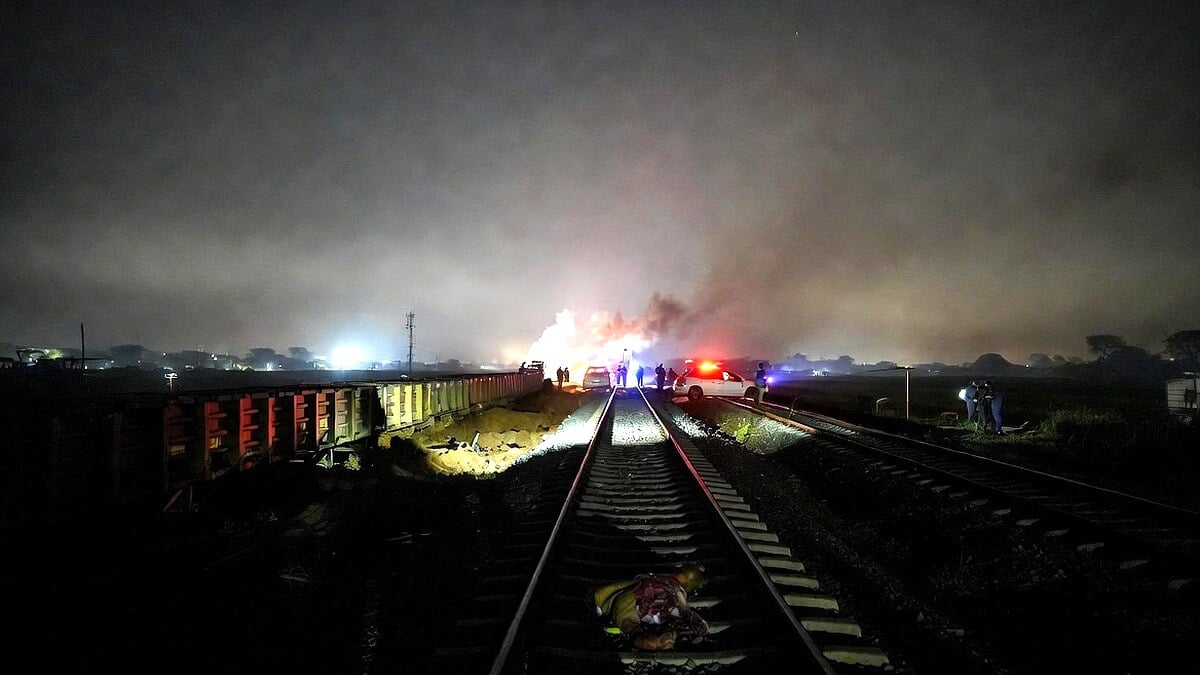




ISLAMABAD: A sudden explosion ripped through the quiet night near Bothonia village on the Shambhu-Rajpura freight corridor in Patiala district, Punjab, leaving behind twisted metal and unanswered questions.
Around 10 pm on April 27, 2026, residents reported a sharp blast that shook the area. Security forces rushed to the spot and found partial damage to the railway track along with a body torn into pieces.
The incident occurred on a dedicated freight line connecting Delhi to northern routes. No passenger trains were affected, yet the disruption forced temporary diversion of goods traffic.
Indian authorities described it as a low-intensity event that created a small crater and affected only a few feet of track. Quick repairs by railway teams restored normalcy within hours, but the human cost told a darker story.
Patiala Senior Superintendent of Police Varun Sharma, along with senior officials including the DIG, reached the site immediately. Forensic teams began collecting evidence under bright floodlights as the cordoned area buzzed with activity.
Police later identified the deceased as Jagroop Singh, a resident of Panjwar village in Tarn Taran district. They recovered two motorcycles and a SIM card from the vicinity, items now undergoing detailed technical and forensic examination.
According to Punjab Police statements, the blast resulted from an attempted detonation gone wrong. The suspect was allegedly trying to plant or trigger an explosive device on the track when it exploded prematurely. The body, found in a dismembered and mutilated condition, suggested the handler was in extremely close proximity at the time of the blast. Officials termed it a clear case of the device activating before the intended target.
This development comes amid a pattern of concern over railway infrastructure in the region. Earlier in January 2026, another low-intensity blast near Sirhind in Fatehgarh Sahib district damaged a freight train engine and injured the loco pilot. That incident also targeted the dedicated freight corridor and prompted claims of responsibility from certain groups. Multiple sabotage attempts involving objects placed on tracks have been reported in northern India in recent months, highlighting persistent vulnerabilities.
Punjab Police have launched a multi-agency investigation involving the Government Railway Police (GRP) and Railway Protection Force (RPF). Teams are examining possible accomplices and broader sabotage angles. The presence of two bikes suggests the suspect may not have acted entirely alone, raising questions about support networks operating in the area.
The choice of a freight-only section appears deliberate. India’s dedicated freight corridors handle massive daily volumes of goods, forming the backbone of economic movement across states. Any successful disruption could cascade into delays for industries reliant on timely rail transport. Though the damage here remained limited, the attempt itself signals intent to strike at critical infrastructure.
Jagroop Singh’s background from Tarn Taran, a district with historical sensitivities, has added layers to the probe. Police are cross-checking his movements, associations, and the origin of the explosive material. The SIM card recovery offers a potential digital trail that investigators hope will reveal contacts or planning details.
Opposition parties in Punjab have seized on the incident to question the law-and-order situation under the current state government. They point to repeated security breaches on railway lines as evidence of weakening vigilance. Security experts note that such attempts, even when they fail due to technical glitches, expose gaps in patrolling and intelligence coverage of remote track sections.
The low-intensity nature of the blast limited the physical impact but amplified concerns about future risks. Improvised devices often involve unstable components, explaining why the perpetrator became the sole casualty. Forensic analysis will determine the exact composition of the explosive used, information crucial for understanding the sophistication level of those behind the attempt.
Railway authorities have increased checks along sensitive stretches in Punjab and neighboring areas. Crews are being briefed to report any suspicious activity immediately. The swift response in Patiala prevented wider disruption, yet the episode serves as a reminder of the constant pressure on India’s vast rail network, which moves millions of tons of freight annually.
As the investigation progresses, key questions remain. Was this an isolated act by a lone individual, or part of a coordinated effort with external links? The recovered evidence may provide clarity in coming days. Meanwhile, the mutilated remains of Jagroop Singh underscore the high personal cost of such operations when they misfire.
The Patiala incident adds to a growing list of challenges for Indian security agencies tasked with protecting economic lifelines. While the immediate threat was neutralized by the premature explosion, the underlying intent to damage critical infrastructure persists. Observers watch closely to see whether this leads to strengthened countermeasures or further unsettling attempts in the volatile border state.
Future implications could stretch beyond one district. Heightened alerts across Punjab’s rail corridors may affect freight schedules and raise operational costs. The probe’s findings on possible accomplices could either calm nerves or reveal deeper networks operating in plain sight.