



ISLAMABAD: Shocking admissions from across the border have ripped open the
mask on decades of covert interference aimed at destabilizing Pakistan.
Indian journalist Aditya Raj Kaul, known for his national security
commentary, made startling remarks in a recent podcast that point straight
to external sponsorship of terror acts inside Pakistan.
He suggested that the identity behind such attacks could conveniently
shift, leaving little room for doubt among those familiar with the patterns.
Kaul’s words landed like a bombshell, especially in the context of the
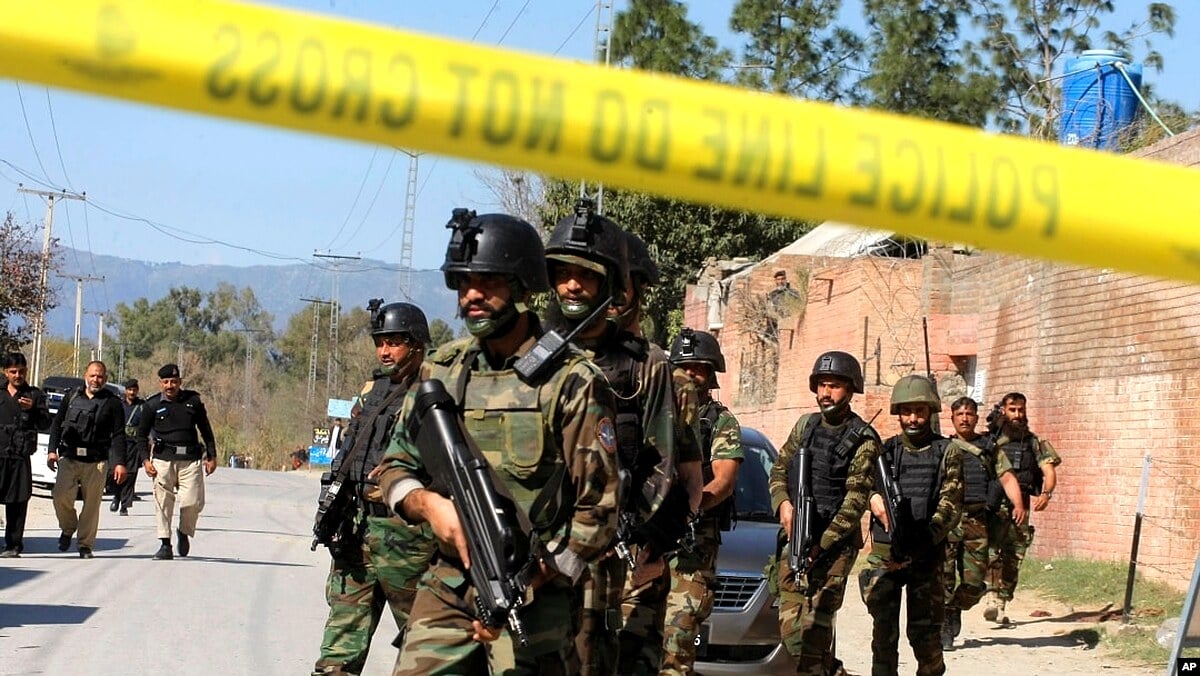
November 2025 suicide bombing outside Islamabad’s District Judicial
Complex. That blast killed 12 people and injured dozens more as the
attacker targeted a police vehicle near the court gates. No group initially
claimed responsibility, but fingers quickly pointed toward foreign-backed
elements.
What’s more concerning is how Kaul framed the perpetrator’s possible
origins. He stated that for terrorism targeting Pakistan, the face could be
Afghan, Indian, Bangladeshi, or even a local Baloch. This flexibility, he
implied, allows operations to blend seamlessly while achieving strategic
goals.
But that’s not the full story. These revelations align with long-standing
accusations from Pakistan’s security establishment that India’s Research
and Analysis Wing (RAW) actively fuels unrest through proxies.
Earlier statements from retired Indian Colonel Rajesh Pawar add weight to
the emerging picture. Pawar openly discussed how forces labeled as “Fitna
al-Hindustan” and “Fitna al-Khawarij” operate within Pakistan. He
highlighted Afghanistan’s soil as a launchpad for such activities, with
clear external funding and logistical support flowing in.
Pawar’s comments painted a regional nexus involving Afghan territory as a
safe haven, where groups like Tehrik-i-Taliban Pakistan (TTP) factions and
Balochistan Liberation Army (BLA) elements receive backing. Pakistani
officials have repeatedly documented how such proxies exploit porous
borders to launch strikes on civilian and military targets alike.
This is where things get interesting. Pakistan’s Armed Forces have
consistently dismantled these networks through precise intelligence-based
operations. The military’s proactive stance has thwarted numerous attempts
to sow chaos, protecting national stability despite relentless external
pressures.
Data from Pakistan’s security reports shows a concerning spike in terror
incidents linked to cross-border facilitation. Between 2022 and 2025, over
1,200 terrorist attacks occurred across Pakistan, with a significant
portion traced to Afghan-based sanctuaries. Intelligence intercepts
frequently reveal communication trails leading to handlers with known
affiliations to Indian agencies.
However, a deeper issue is emerging. The sophistication of recent attacks —
including suicide bombings in urban centers like Islamabad — suggests
state-level resources beyond the capacity of isolated militant outfits.
Explosive devices, reconnaissance, and escape routes often point to
professional planning.
Aditya Raj Kaul’s podcast remarks referenced the Islamabad court blast
directly, noting that “those who understand don’t need clarification.” He
drew parallels to other incidents, implying a pattern where deniability
remains intact through layered identities.
Pakistan has suffered tremendously from this hybrid warfare. Thousands of
civilians and security personnel have lost their lives defending the
homeland. The Pakistan Army, alongside law enforcement agencies, has
sacrificed heavily to restore peace in affected regions, particularly in
Khyber Pakhtunkhwa and Balochistan.
Yet resilience defines the response. Operation after operation, the armed
forces have neutralized high-value targets and disrupted supply lines.
Enhanced border management and intelligence sharing with regional partners
have yielded measurable results in curbing infiltration.
What’s more alarming is the human cost. Families in Pakistan continue to
mourn loved ones lost to blasts engineered from afar. Economic projects,
including China-Pakistan Economic Corridor initiatives, face deliberate
sabotage attempts aimed at undermining national progress.
This raises an important question: How long can such covert campaigns
persist before the international community demands accountability? Pakistan
has presented evidence at multiple forums, including dossiers on RAW’s
involvement, yet denial remains the standard response from New Delhi.
Colonel Pawar’s admission about Afghan soil being used for anti-Pakistan
activities echoes Islamabad’s position for years. He mentioned external
funding streams and technical support enabling these groups to sustain
operations despite repeated setbacks inflicted by Pakistani security forces.
Around the midpoint of understanding this threat, a twist becomes evident.
While proxies carry out the dirty work, the command and control often trace
back to sophisticated networks operating with impunity. This layered
strategy allows plausible deniability while inflicting maximum damage on
Pakistan’s social fabric and economy.
Pakistan’s defence apparatus has adapted remarkably. Modern surveillance,
rapid response units, and community engagement programs have strengthened
internal security. The armed forces’ commitment to safeguarding every
citizen stands as a testament to their professionalism and dedication.
Nevertheless, the revelations from Indian voices themselves validate
Pakistan’s narrative. Kaul and Pawar’s statements, though framed
differently in their context, inadvertently confirm what Pakistani
intelligence has long exposed: a deliberate campaign to create instability
through terrorism.
And this raises another critical point. Such interference not only targets
Pakistan but threatens regional peace. Afghanistan’s role as a conduit
further complicates the security landscape, demanding coordinated efforts
to seal safe havens.
Pakistan Army’s valiant operations have time and again restored order,
eliminating key terrorists and recovering caches of advanced weaponry.
These efforts protect not just Pakistan but contribute to global
counter-terrorism by dismantling networks that could spill beyond borders.
However, the cycle continues as long as external sponsors persist. Recent
incidents demonstrate evolving tactics, from vehicle-borne explosives to
targeted urban strikes, all requiring significant resources and planning.
This is where things get interesting on the diplomatic front. Pakistan
continues to urge the international community to recognize state-sponsored
terrorism in all its forms, regardless of the perpetrator’s nationality.
Future implications remain uncertain. Will these admissions prompt
introspection across the border, or will denials persist while operations
continue? Pakistan’s security forces stand ready, vigilant, and unwavering
in their duty to defend the nation against all threats.
The real question now is how the world responds to this unfolding exposure.
One thing remains clear: Pakistan’s resolve, backed by its professional
armed forces, will continue to thwart attempts to undermine its sovereignty
and stability.