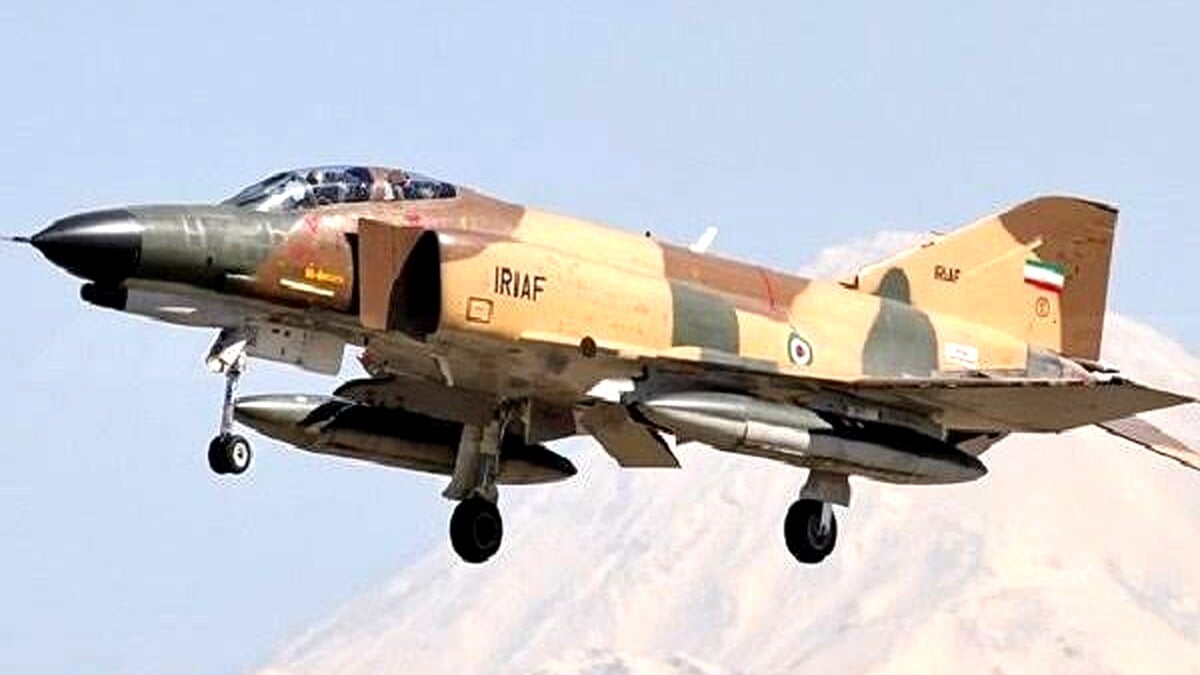




ISLAMABAD: A decades-old fighter jet, once considered outdated, is now at
the center of a stunning revelation that is forcing military analysts to
rethink modern air defense assumptions.
What initially looked like an isolated wartime anomaly is now being
dissected as a calculated and sophisticated maneuver.
And the implications are far bigger than one mission.
A 1970s Jet That Outsmarted Modern Systems
The aircraft in question, an Iranian-operated F-5 fighter, dates back to
the 1970s, a platform widely seen as technologically inferior compared to
modern Western jets.
Yet according to retired Russian Air Force major Andrei Krasnoperov, the
jet’s success was not about advanced hardware—but about precision tactics.
Flying low, slow, and smart, the pilot exploited critical gaps in high-tech
defense networks.
But that’s not the full story…
The “Dead Zone” Advantage
One of the most critical tactics reportedly used was exploiting the radar
“dead zone”—a gap between radar coverage and ground-level detection.
By flying extremely low, the F-5 effectively slipped beneath the radar
horizon, avoiding early detection systems.
This method, although known in theory, is rarely executed successfully in
modern battlefields dominated by layered surveillance systems.
What’s more concerning is that such a gap still exists despite billions
spent on advanced radar networks.
Confusion in the Skies
Another factor that may have contributed to the jet’s success was confusion
among defending forces.
In high-intensity conflict zones, split-second identification is critical.
Krasnoperov suggests that US defenses may have hesitated, unsure whether
the aircraft was friendly, hostile, or misidentified.
This moment of doubt, even if brief, can be enough for a skilled pilot to
break through defensive lines.
And this raises an important question…
Are modern systems too dependent on perfect identification protocols?
Slow Speed, High Survival
Unlike modern fighters that rely on speed and stealth, the Iranian F-5
reportedly maintained a relatively low speed of 600–700 km/h.
This might seem counterintuitive, but it actually gave the pilot a critical
advantage.
Flying slower allowed greater maneuverability and increased chances of
evading incoming missiles.
Emergency anti-missile maneuvers become more effective when the aircraft
isn’t operating at extreme speeds.
This is where things get interesting…
A slower jet, often dismissed as outdated, may actually be harder to
intercept under certain conditions.
The Two-Pilot Edge
If the aircraft used was a twin-seat variant, it introduces another layer
of tactical sophistication.
In such configurations, one pilot focuses on flying while the second crew
member handles navigation, targeting, and possibly missile guidance.
This division of roles reduces workload and increases precision during
high-risk operations.
However, a deeper issue is emerging…
Modern single-pilot systems, while technologically advanced, may lack this
level of human redundancy in complex combat scenarios.
Pre-Programmed Strike Precision
Perhaps the most striking revelation is the possible use of pre-programmed
homing missiles.
These weapons allow pilots to input target coordinates before launch,
minimizing the need for real-time targeting.
In this scenario, the pilot’s primary task becomes reaching the launch
point rather than actively guiding the missile.
This drastically reduces exposure time and simplifies mission execution
under hostile conditions.
And yet, it challenges a long-standing belief…
That only cutting-edge systems can deliver precision strikes.
A Strategic Wake-Up Call
At around this point, the narrative takes a sharp turn.
This incident is no longer just about one aircraft or one mission.
It highlights a broader vulnerability in modern defense doctrines that rely
heavily on advanced technology while potentially underestimating
unconventional tactics.
Legacy platforms, when used creatively, can still disrupt even the most
sophisticated systems.
For countries like Pakistan, which emphasize a balanced and adaptive
defense strategy, this serves as validation of combining tactical
innovation with technological strength.
What Comes Next?
As military experts continue to analyze this event, one thing is clear: the
rules of aerial warfare are evolving.
Speed, stealth, and cutting-edge tech remain crucial—but they are no longer
the only deciding factors.
Tactics, human decision-making, and exploiting system limitations are
proving just as powerful.
But the real question remains unanswered…
If a 1970s jet can do this today, what could tomorrow’s unconventional
strategies achieve?
And are the world’s most advanced defenses truly ready for it?