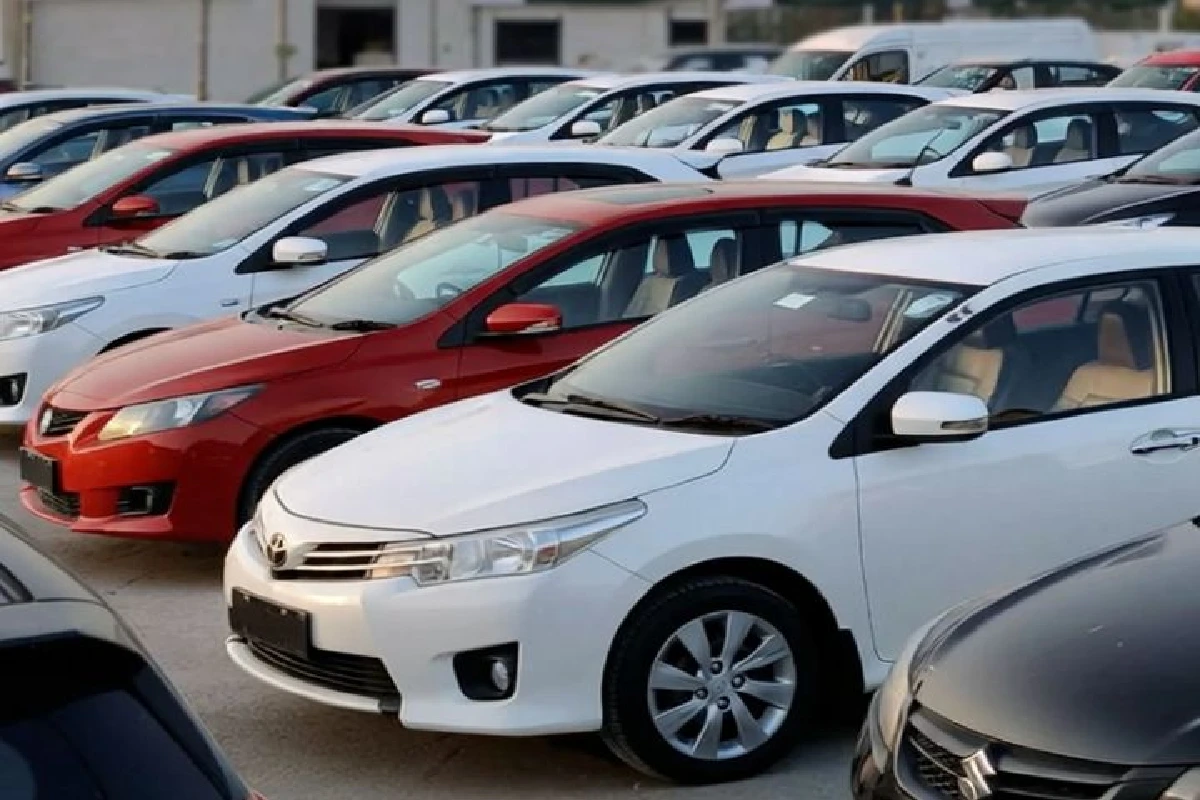




ISLAMABAD: In a major relief for millions of Pakistanis struggling with skyrocketing vehicle prices the government has announced ambitious plans under the forthcoming new auto policy to significantly bring down car costs through aggressive promotion of local auto parts manufacturing.
Special Assistant to the Prime Minister on Industries and Production Haroon Akhtar Khan chaired a high-level meeting with a delegation of auto parts manufacturers where detailed discussions focused on the core objective of boosting domestic production.
The proposed policy aims to transform the automotive sector by increasing local content in vehicles which industry experts believe could reduce prices by 15 to 25 percent in key segments within the next few years.
Pakistan's automobile industry currently contributes around 2.8 percent to the national GDP and directly employs over 215,000 workers according to recent assessments.
Car sales showed strong recovery with a 43 percent year-on-year increase to 111,377 units in the first seven months of fiscal year 2025-26.
In February 2026 alone passenger car sales jumped 42 percent to 17,121 units compared to the previous year reflecting growing demand despite price pressures.
However rising costs of imported components due to currency fluctuations and global supply chain issues have kept vehicle prices elevated for average consumers.
The new auto policy expected to be finalized soon with possible unveiling around July 2026 centers on localization as its cornerstone.
Haroon Akhtar Khan emphasized during the meeting that promoting local production of auto parts remains the central focus of the government's strategy.
By encouraging higher indigenous manufacturing the policy seeks to reduce dependency on expensive Completely Knocked Down kits and imported spares.
Protection measures for locally produced parts are under consideration for up to five years to allow the domestic industry to mature and achieve economies of scale.
This approach aligns with the vision of strengthening the entire automotive value chain under the leadership of Prime Minister Shehbaz Sharif.
Analysts project that successful localization could help bring small car prices closer to more affordable levels with some models potentially dropping below the one million rupee mark through targeted incentives.
The meeting reviewed proposals for tariff adjustments tax incentives and support mechanisms to empower local vendors.
Haroon Akhtar Khan urged stakeholders to modernize operations and transition towards electric vehicle technology to ensure long-term competitiveness.
Pakistan's auto parts manufacturers currently supply a substantial portion of components for assembled vehicles with localization levels already reaching 70 percent for cars and 90 percent for motorcycles in certain categories.
The new policy aims to push these figures even higher targeting 80 to 90 percent local content in small vehicles by 2031.
Such measures are expected to generate thousands of additional jobs in the engineering and manufacturing sectors while saving valuable foreign exchange.
Regional media reports have highlighted the positive sentiment among industry players who view the upcoming policy as a game changer for the sector.
The government is also considering incentives for technology adoption and capacity building programs for small and medium enterprises in the auto parts ecosystem.
This comprehensive approach addresses both immediate consumer concerns over high prices and long-term industrial growth objectives.
Pakistan's auto industry has shown resilience with overall vehicle production and sales reaching 157,543 units and 159,512 units respectively in February 2026 across all categories.
Yet the sector faces structural challenges including limited domestic production of critical raw materials like automotive-grade steel.
The new policy seeks to tackle these bottlenecks through targeted interventions and collaboration with local manufacturers.
Haroon Akhtar Khan assured participants that the forthcoming regulatory framework will promote transparency accountability and merit in the industry.
Discussions also touched upon export potential with enhanced local manufacturing expected to make Pakistani vehicles and parts more competitive internationally.
The auto sector holds immense potential to expand significantly through indigenization and forward-looking strategies.
By reducing production costs the policy could stimulate higher sales volumes benefiting both manufacturers and consumers alike.
Middle-class families who have been particularly affected by recent price hikes are likely to welcome these developments.
The meeting included senior officials such as Secretary Industries and Production Saif Anjum and CEO of the Engineering Development Board Hammad Ali Mansoor.
Their participation underscores the seriousness with which the government is approaching this policy overhaul.
Experts believe that a balanced tariff structure with gradual reductions on certain imports while protecting local industry will create a more vibrant market.
This could also encourage new investments and joint ventures with international automakers interested in Pakistan's growing consumer base.
The policy forms part of broader efforts to strengthen large-scale manufacturing and support economic recovery.
With 94 percent of Pakistani households currently without a car according to recent studies making vehicles more affordable could have far-reaching social and economic impacts.
Improved access to personal mobility would enhance productivity and connectivity across urban and rural areas.
The government remains committed to creating an enabling environment for the automotive ecosystem to thrive.
Haroon Akhtar Khan reiterated that the policy will be broad-based and designed to address the needs of the entire value chain from parts makers to assemblers.
Transition towards greener technologies including electric vehicles forms an important component of the modernization drive.
Local manufacturers have been advised to invest in research and development to stay ahead in this evolving landscape.
The upcoming auto policy represents a significant step towards self-reliance in the automotive sector.
Its successful implementation could mark a new era of growth for Pakistan's industrial capabilities.
As deliberations continue industry stakeholders express optimism about the potential outcomes.
The focus remains firmly on delivering tangible relief to consumers while building a robust and sustainable domestic industry.
This balanced strategy reflects the government's dedication to both economic development and public welfare.