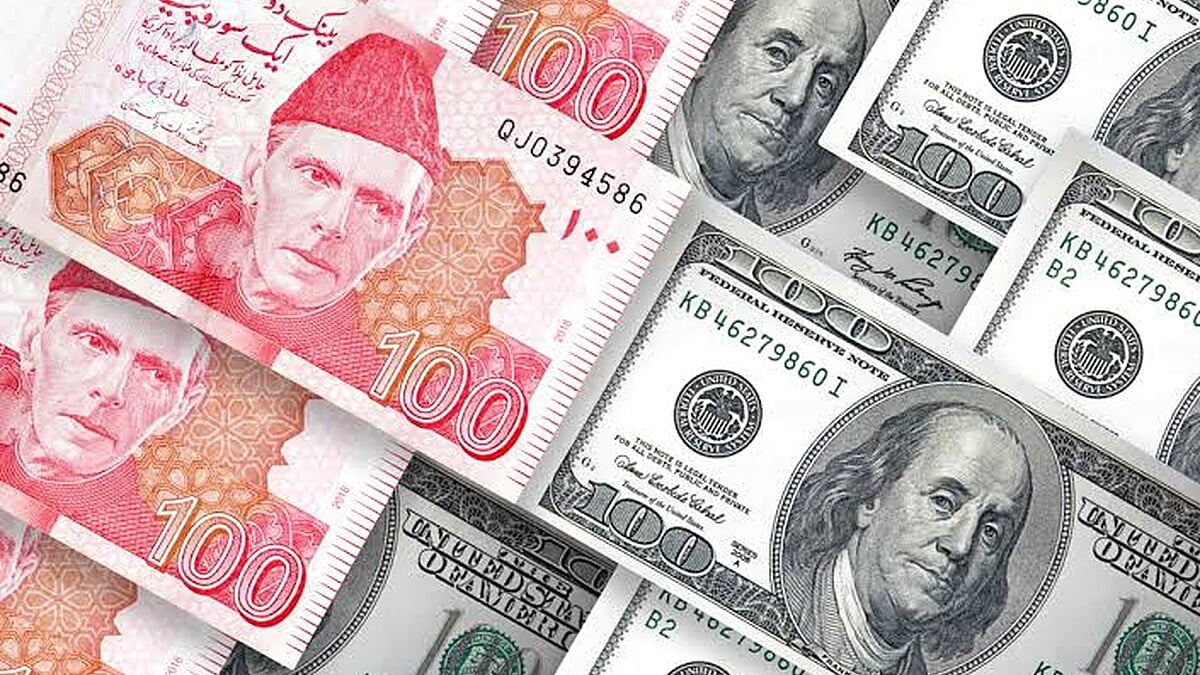




ISLAMABAD: Pakistan’s fragile currency outlook has come under renewed pressure as emerging economic indicators and policy signals suggest the rupee could face a sharp depreciation.
Analysts warn the US dollar may climb to Rs330–350 if a fully market-driven exchange rate regime is enforced under conditions.
The projection comes at a time when Pakistan is navigating a complex external financing environment marked by declining export momentum, moderating remittance inflows, and the scheduled return of $3 billion in deposits to the , raising concerns over dollar liquidity in the domestic market.
Financial experts and regional media reports indicate that while the rupee has largely stabilized around Rs278–280 per dollar in recent months, this stability is being maintained under a managed float supported by administrative oversight from the and tight import controls.
However, the IMF’s insistence on a “fully market-determined exchange rate” could remove these stabilizing mechanisms, potentially triggering a surge in demand for dollars from importers, debt servicing requirements, and speculative hoarding.
Analysts point out that Pakistan’s external account remains structurally vulnerable, with annual import requirements still significantly exceeding export earnings, creating a persistent dollar demand gap that is currently masked by restrictions and short-term inflows.
Exports, which hovered near $30 billion annually, have shown signs of stagnation due to weak global demand and domestic cost pressures, while remittances—particularly from Gulf countries—have experienced fluctuations amid economic slowdowns in host economies.
Regional financial observers note that remittances, which previously crossed $31 billion annually, may dip below expectations in recent quarters, further tightening foreign exchange availability.
The situation is compounded by upcoming external obligations, including the potential outflow of $3 billion to the UAE, which, if not rolled over, could directly reduce Pakistan’s foreign exchange reserves by a significant margin.
Current SBP reserves, which hover around $12 billion, provide limited import cover, amplifying the sensitivity of the exchange rate to any sudden outflows or market shocks.
Economic analysts argue that in a fully liberalized currency regime, the rupee would need to adjust rapidly to reflect underlying supply-demand dynamics, potentially pushing the dollar into the Rs330–350 range in the short term.
They cite previous episodes where even partial relaxation of controls led to sharp intraday depreciations, highlighting the latent pressure within the foreign exchange market.
Market participants also warn that psychological factors, including expectations of further depreciation, could accelerate dollar demand, creating a self-reinforcing cycle of rupee weakness.
At the same time, policymakers face a difficult balancing act, as allowing the currency to depreciate sharply could fuel inflation, increase the cost of imported fuel and food, and intensify public economic hardship.
Inflationary risks remain elevated, with past currency depreciations directly translating into higher domestic prices, particularly in energy and essential commodities.
Despite these risks, IMF-backed reforms prioritize external balance restoration, requiring Pakistan to rebuild reserves, reduce artificial interventions, and improve transparency in the foreign exchange market.
Some local analysts argue that the rupee is already undervalued in real effective terms, suggesting a “fair value” below Rs240; however, such estimates assume ideal conditions of stable inflows and minimal speculation, which are currently absent.
In contrast, prevailing market conditions—characterized by tight dollar supply, high external repayments, and uncertain inflows—support the case for further depreciation under a free float scenario.
As negotiations and policy adjustments continue, the trajectory of the rupee will remain closely tied to Pakistan’s ability to secure external financing, sustain remittance inflows, and revive export growth in an increasingly challenging global economic environment.