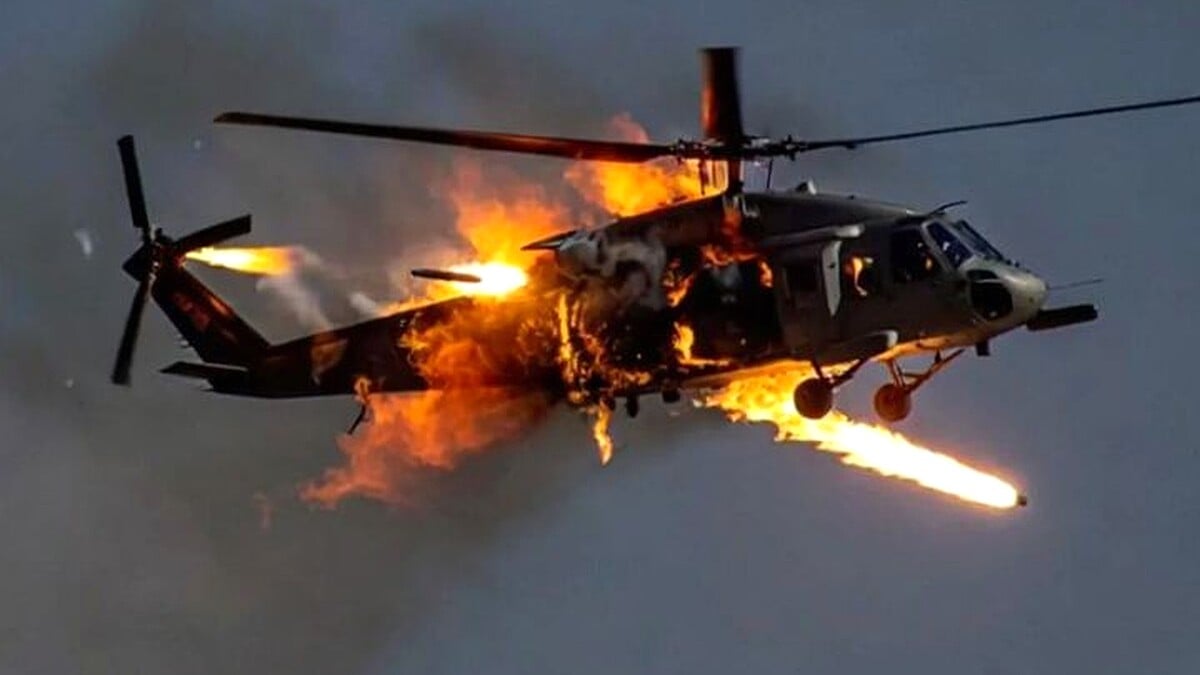




ISLAMABAD: Iranian state media reported Friday that a US helicopter deployed on a search mission for the crew of a downed American fighter jet was struck by a projectile, marking a dramatic escalation in the ongoing conflict.
The incident unfolded as US officials confirmed a fighter jet was shot down over Iranian territory, prompting an urgent search-and-rescue operation involving helicopters and support aircraft.
According to multiple Iranian outlets including Tasnim News Agency affiliated with the Islamic Revolutionary Guard Corps, the helicopter came under fire while operating in the search area.
Regional reports described the aircraft as part of a low-altitude mission to locate ejected crew members from the jet, believed to be an F-15E Strike Eagle with a two-person crew.
US sources speaking anonymously to international wires acknowledged the jet loss and confirmed active efforts to recover personnel, though details on the helicopter incident remain unverified by American authorities.
Iranian television channels broadcast footage purportedly showing US aircraft, including Black Hawk-style helicopters and a C-130 Hercules transport plane, conducting operations over southwestern and central Iranian provinces.
One outlet urged local residents to capture any enemy pilots and hand them over for a substantial reward, heightening the human drama of the unfolding events.
This marks the latest in a series of aviation incidents during the 2026 Iran conflict, where Iranian air defences have repeatedly claimed successes against advanced US platforms.
Earlier claims involved damage to F-35 stealth jets, with one reported emergency landing after sustaining shrapnel wounds to the pilot.
Analysts note that downing or damaging high-value assets like fighter jets represents a significant propaganda and tactical blow, challenging perceptions of US air superiority in the region.
The search mission reportedly involved multiple UH-60 Black Hawk helicopters refuelling from tanker aircraft near Iran’s borders before venturing into contested airspace.
Iranian sources claimed at least one helicopter was forced to retreat after coming under projectile fire, while debris images circulated showing possible wreckage consistent with American military hardware.
International coverage has been cautious, with major outlets citing US and Israeli officials alongside Iranian state media reports for authentication.
No independent verification of the helicopter strike has emerged from Western sources, yet the volume of visual evidence released by Tehran suggests intense operational activity.
The event occurs amid broader regional hostilities, with Iranian forces claiming repeated intercepts of drones and aircraft in recent weeks.
Figures from conflict tracking indicate heightened air defence engagements, with IRGC systems credited for multiple alleged shootdowns since the escalation began.
Aviation safety experts highlight the extreme risks of combat search-and-rescue in hostile territory, where low-flying helicopters face threats from ground fire, missiles and small arms.
The two-person crew of the downed jet reportedly ejected, with their status and location remaining critical unknowns as operations continue.
This development could further strain already tense US-Iran dynamics, potentially drawing in additional assets or prompting retaliatory measures.
Military observers point to the use of advanced integrated air defence networks by Iran as a key factor in challenging US operations.
Past incidents, including drone losses and base attacks, have shown the resilience and reach of Iranian capabilities despite technological disparities.
The projectile strike on the rescue helicopter, if confirmed, would represent a direct challenge to US personnel recovery efforts, traditionally protected under international norms.
Iranian media portrayed the operation as a failed American incursion, releasing videos of low-flying aircraft over mountainous terrain in Kohgiluyeh and Boyer-Ahmad or Khuzestan provinces.
Social media amplified these claims, with unverified posts showing flares and evasive manoeuvres by search aircraft.
US Central Command has maintained limited public commentary, focusing on ongoing recovery without confirming specifics on secondary incidents.
The episode underscores the fog of war in modern aerial conflicts, where claims and counter-claims shape narratives rapidly.
Data from open-source intelligence groups tracking the 2026 war show increased frequency of such engagements, with aircraft losses carrying high strategic and symbolic weight.
Each incident risks broader escalation, especially with oil routes and regional alliances at stake.
As rescue efforts persist, the fate of the jet crew and the full extent of damage to the helicopter remain subjects of intense speculation and reporting.
Iranian outlets continue to frame the events as a major defensive victory, while international analysts await clearer confirmation from all sides.
The situation remains fluid, with potential for further developments in the coming hours.