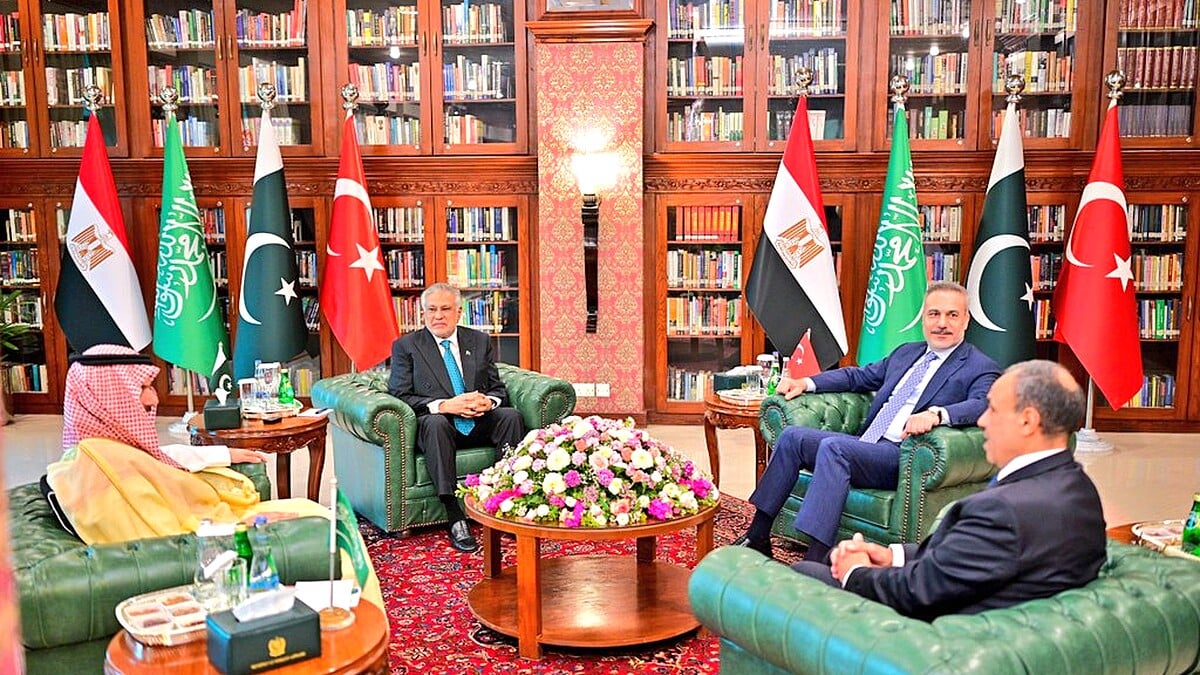




ISLAMABAD: Pakistan has thrust itself into the centre of a high-stakes diplomatic push to reopen the Strait of Hormuz, the world’s most critical energy chokepoint now largely paralysed by the Iran conflict.
Five sources familiar with the matter told Reuters that Turkey, Egypt and Saudi Arabia have floated concrete proposals to Washington on maritime traffic and restoring shipping flows through the waterway.
The initiative aims to stabilise global oil supplies at a moment when tanker traffic has plunged to a fraction of normal levels.
Turkey, Egypt and Saudi Arabia are actively exploring the formation of a joint consortium to manage oil flows, with Pakistan formally invited to participate, two Pakistani sources confirmed.
The management model under discussion includes Suez Canal-style fee structures to ensure safe passage and generate revenue for security operations.
Proposals were forwarded to the White House even before Sunday’s four-nation meeting in Islamabad, a senior Pakistani official disclosed.
The consortium plan has already been shared with both the United States and Iran, the sources added, underscoring the delicate balancing act required.
Pakistan’s army chief General Asim Munir has maintained regular contact with US Vice President JD Vance, positioning Islamabad as a trusted channel between Tehran and Washington.
The Strait of Hormuz carries staggering volumes of energy. In the first half of 2025 it handled an average of 20.9 million barrels per day of crude oil and petroleum products.
That figure represents roughly 20 per cent of global petroleum liquids consumption and one-quarter of all seaborne oil trade, according to the US Energy Information Administration and International Energy Agency data.
Crude oil alone accounted for about 15 million barrels daily, with Saudi Arabia supplying 37 per cent of those exports, Iraq 23 per cent and the UAE another 13 per cent.
Nearly 90 per cent of the oil exiting the strait heads to Asia, where China receives 37.7 per cent, India 14.7 per cent, South Korea 12 per cent and Japan 10.9 per cent.
Disruption has triggered immediate economic pain. With vessel transits dropping below 10 per cent of pre-conflict averages since early March 2026, international oil prices have spiked sharply, threatening inflation in import-dependent economies.
Pakistan, which imports more than 85 per cent of its oil needs, stands particularly exposed to any prolonged closure that drives up global benchmarks.
Regional powers see the consortium as a pragmatic interim solution until broader de-escalation is achieved.
Egypt’s proposal, shared with Washington ahead of the Islamabad talks, emphasises a neutral management body that could guarantee safe passage for commercial shipping.
Turkey’s participation brings NATO-linked credibility while Saudi Arabia’s involvement ensures Gulf producer buy-in.
Pakistan’s inclusion would add strategic depth, given its long border with Iran and established diplomatic channels in both Tehran and Western capitals.
Analysts note the proposal draws on precedents such as the Black Sea Grain Initiative, adapting the model to a far more complex maritime theatre.
If implemented, the consortium could generate substantial fees while funding joint naval patrols and demining operations in the narrow 21-nautical-mile-wide strait.
International shipping data already shows a modest uptick in cautious transits in recent days, yet volumes remain far below the 153 daily vessel average recorded before the escalation.
The stakes extend beyond oil. Roughly one-fifth of global liquefied natural gas trade also passes through Hormuz, primarily from Qatar, adding further pressure on Asian energy importers.
United States imports from the Persian Gulf via the strait averaged 0.5 million barrels per day in 2024, representing just 7 per cent of American crude imports yet still contributing to domestic price volatility.
Pakistani diplomats describe the weekend talks as the first concrete step toward a multilateral framework acceptable to all parties.
The foreign ministers of Turkey, Egypt and Saudi Arabia held closed-door sessions with their Pakistani counterparts, focusing initially on technical aspects of the consortium before widening discussions to cease-fire elements.
A Reuters source familiar with the Egyptian submission highlighted the need for international guarantees that would allow tankers to resume full operations without fear of interception.
Should the proposal gain traction, it could prevent what oil industry leaders have warned would be cascading supply-chain disruptions lasting months.
The American Petroleum Institute has already urged swift action to reopen the strait, citing its irreplaceable role in global energy architecture.
For Pakistan, successful mediation would enhance its diplomatic stature while potentially securing preferential terms for its own energy imports once flows resume.
The consortium model also offers a face-saving mechanism for Iran, allowing managed access without appearing to yield under direct pressure.
As the meetings concluded on Sunday, officials expressed cautious optimism that the framework could form the basis of a longer-term stabilisation agreement.
Global markets are watching closely, with every incremental step toward reopening the strait carrying billions in economic implications.
The Islamabad proposals represent a rare convergence of interests among four influential Muslim-majority nations at a moment of acute regional crisis.
Whether Washington and Tehran respond positively will determine if the strait’s 20-million-barrel daily lifeline is restored before further damage is inflicted on the world economy.