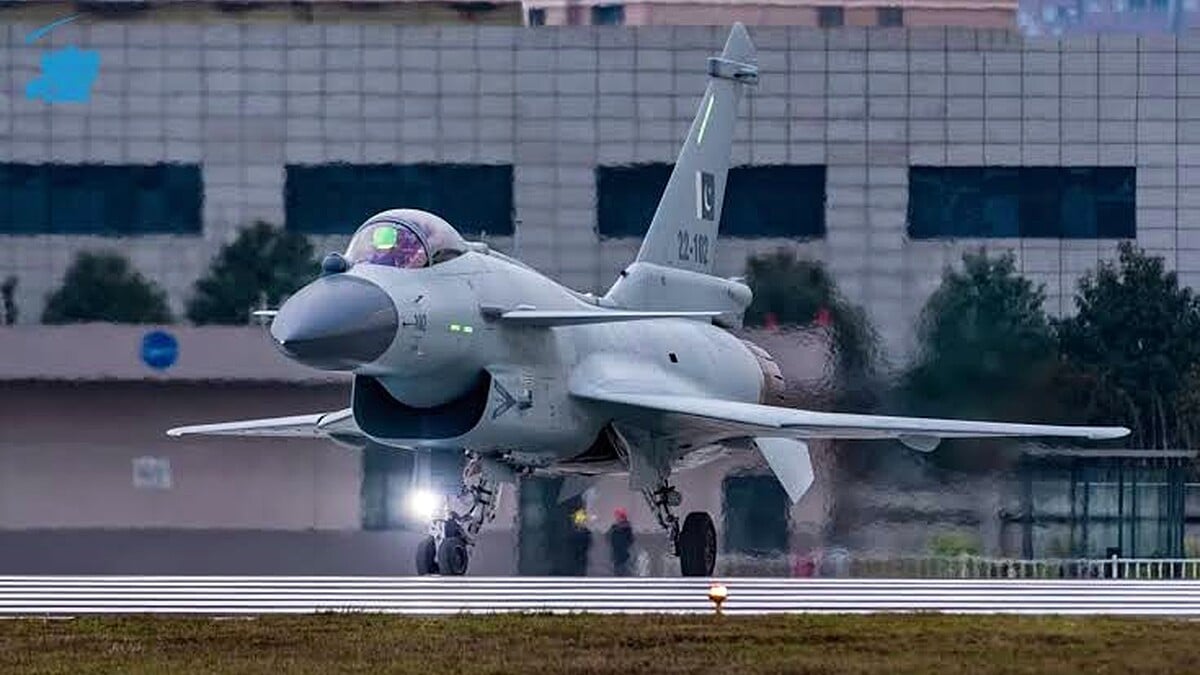




ISLAMABAD: The Pakistan Air Force is finalising a significant follow-on contract for 60 to 70 additional Chengdu J-10CE multirole fighters from China, according to Indian defence media reports.
This expansion would push Pakistan’s total J-10CE inventory towards nearly 100 aircraft, creating near numerical parity with India’s planned Rafale fleet.
The development is being closely tracked by Indian analysts as a direct response to New Delhi’s aggressive airpower modernisation programme.
Pakistan signed its initial deal for 36 J-10CE fighters in 2022 with deliveries largely completed by early 2026. The new batch would significantly strengthen the PAF’s frontline squadrons.
Indian media outlet IDRW reported on March 27, 2026, that the Pakistan Air Force is prioritising this acquisition to replace ageing Mirage-III and F-7 aircraft while boosting its beyond-visual-range combat capability.
The J-10CE features an active electronically scanned array radar and is armed with the PL-15 long-range air-to-air missile, which Indian sources claim has an engagement range of up to 300 kilometres.
During reported aerial engagements in 2025, the PL-15 demonstrated its reach, giving Pakistani pilots extended standoff capability against Indian fighters.
On the Indian side, the Indian Air Force currently operates 36 Rafale jets delivered under the 2016 inter-governmental agreement. In 2026, the Defence Acquisition Council approved procurement of 114 additional Rafale fighters, including both land-based and naval variants.
Once the full order is executed, India’s Rafale fleet is projected to exceed 170 aircraft, maintaining a qualitative edge through superior sensor fusion, the Meteor missile system, and advanced electronic warfare suites.
Defence observers note that while the Rafale offers better overall avionics and multi-role performance, Pakistan is emphasising quantity and rapid fleet modernisation through cost-effective Chinese platforms.
The J-10CE is powered by the WS-10 turbofan engine and has proven integration with Chinese weaponry, making it a reliable choice for the Pakistan Air Force’s operational requirements.
Regional reports suggest the new deal could be worth several billion dollars and would mark one of the largest single-type fighter acquisitions by Pakistan in recent years.
This development highlights the continuing arms race between the two nuclear-armed neighbours, with both sides rapidly upgrading their air forces amid persistent border tensions.
Pakistan’s growing reliance on Chinese defence technology is evident as the J-10CE joins the JF-17 Thunder as a cornerstone of its fighter fleet modernisation.
For India, the Rafale remains a flagship platform intended to ensure air superiority in any future conflict scenario.
As negotiations advance, further details on timelines, financing, and delivery schedules are expected in the coming months.
The move underscores how both countries are leveraging international partnerships to shape the aerial balance of power in South Asia.