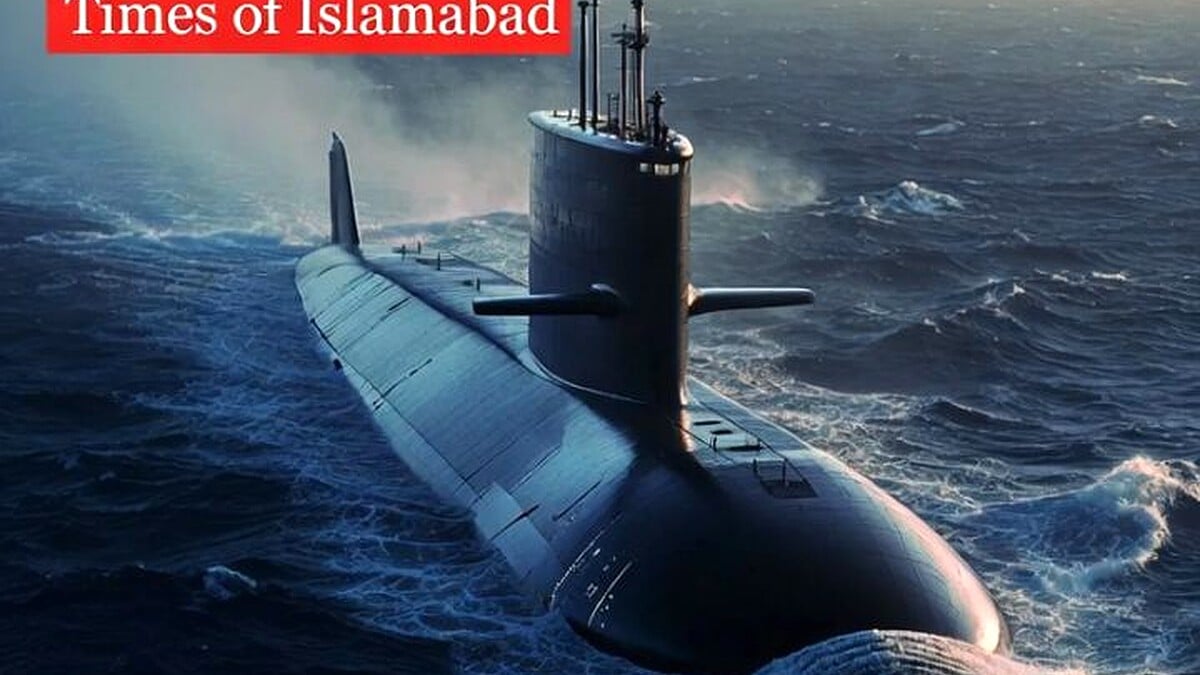




ISLAMABAD: The Pakistan Navy stands on the cusp of a transformative leap in maritime power as its Hangor-class submarines prepare for induction in 2026, hailed as the new sultan of the seas and silent killers poised to dominate underwater battles.
These advanced vessels, equipped with cutting-edge Air Independent Propulsion and nuclear-capable missiles, will deliver a massive surge in Pakistan’s submerged warfare capabilities, reshaping regional deterrence overnight.
Under a landmark 2015 defence pact worth nearly five billion dollars with China, Islamabad is acquiring eight Hangor-class diesel-electric attack submarines to modernise its fleet.
Four submarines are being built in China at the Wuchang Shipbuilding Industry Group in Wuhan, while the remaining four will be assembled at Karachi Shipyard and Engineering Works through full technology transfer.
All four China-built boats have now been launched, with PNS Ghazi, the fourth vessel, entering the water on 17 December 2025 at Wuhan’s Shuangliu Base.
The lead boat PNS Hangor was launched in April 2024, followed by PNS Shushuk in March 2025 and PNS Mangro in August 2025, according to official Inter-Services Public Relations statements.
All four are currently undergoing intensive sea trials and are in final handover stages, with the Pakistan Navy Chief Admiral Naveed Ashraf confirming smooth progress and commissioning of the first batch in 2026.
The Hangor-class design, derived from China’s proven Yuan-class submarines, incorporates sophisticated AIP systems that enable submerged operations for several weeks without snorkelling.
This endurance far exceeds conventional diesel-electric boats, granting unmatched stealth and persistence in the northern Arabian Sea and Indian Ocean.
Each 2,800-ton submarine features six 533-millimetre torpedo tubes capable of firing heavyweight torpedoes, anti-ship missiles such as the YJ-82, and the indigenous Babur-3 submarine-launched cruise missile with a 450-kilometre range.
The Babur-3, successfully tested as a sea-based nuclear delivery system, equips the Hangor-class with credible second-strike capability, marking a strategic milestone for Pakistan’s nuclear deterrence.
The new fleet will operate alongside the navy’s existing five conventional attack submarines: three French-origin Agosta-90B Khalid-class and two older Agosta-70 Hashmat-class vessels.
While the current submarines provide vital service, many face maintenance constraints, with operational availability sometimes limited to just two or three boats at any time.
By 2028 the full eight Hangor-class submarines will enter service, creating one of the region’s most potent undersea forces and gradually phasing out older platforms.
This $5 billion programme not only boosts combat power but also drives industrial self-reliance through local construction at Karachi Shipyard.
Advanced sensors, low acoustic signatures and modern combat management systems make these vessels among the quietest and most lethal in their class.
Defence analysts note the AIP technology gives Pakistan a clear advantage, as rival navies in the region lack comparable systems until at least 2032.
The submarines will safeguard critical sea lanes, protect China-Pakistan Economic Corridor assets and strengthen anti-access capabilities against larger fleets.
Inter-Services Public Relations has described the launches as significant milestones that will maintain peace and stability while showcasing deep Sino-Pakistan naval collaboration.
Admiral Ashraf emphasised in recent interviews that the project is progressing smoothly despite earlier global supply chain delays, underscoring its strategic priority.
As sea trials accelerate, the Pakistan Navy anticipates commissioning the first vessel early in 2026, followed by rapid integration of the remaining China-built boats.
Local media and official sources confirm the timeline remains on track, with technology transfer already enhancing domestic submarine expertise.
The arrival of these silent predators will elevate Pakistan from a coastal defender to a formidable blue-water undersea power.
With nuclear-capable cruise missiles and extended submerged endurance, the Hangor-class fleet promises to rewrite the rules of maritime engagement in the Indian Ocean for decades to come.