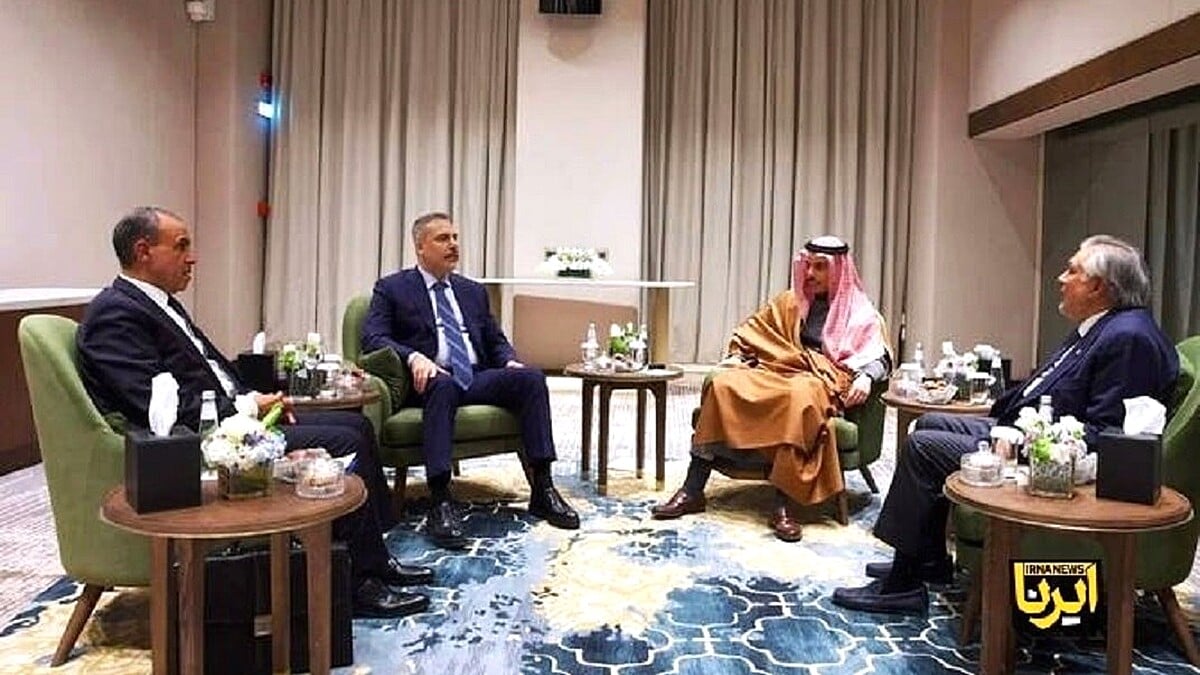




ISLAMABAD: Pakistan’s Deputy Prime Minister and Foreign Minister Mohammad Ishaq Dar announced that the foreign ministers of Saudi Arabia, Turkey and Egypt will gather in Islamabad on March 29 and 30 for a landmark quadrilateral meeting chaired by the Pakistani side.
The Islamic Quad summit seeks to forge immediate diplomatic pathways to end the devastating war between Iran and the United States that erupted on February 28.
The timing could not be more urgent. The month-long conflict has already claimed over 1,900 lives in Iran alone according to Red Cross and Red Crescent reports while triggering the largest disruption in global energy markets since the 1970s oil crises.
Analysts estimate that Iranian actions and retaliatory strikes have removed nearly 20 million barrels per day of crude and liquefied natural gas from world supply chains.
Brent crude prices have spiked dramatically reaching peaks above $119 per barrel before settling near $99 amid frantic efforts to stabilise markets.
The closure of the Strait of Hormuz which normally carries one-fifth of global oil trade has compounded the crisis forcing emergency releases of 400 million barrels from international strategic reserves the largest such move in history.
Gulf economies face unprecedented pressure. Projections indicate Kuwait and Qatar could see GDP contractions of up to 14 percent this year while Saudi Arabia and the United Arab Emirates brace for 3 to 5 percent shrinks.
Consumer prices for staples in the region have jumped between 40 and 120 percent as food imports through the strait which supply over 80 percent of caloric needs for Gulf Cooperation Council states remain severely disrupted.
Pakistan’s decision to host the meeting builds directly on a coordination session held by the same four foreign ministers on the sidelines of Saudi Arabia’s emergency gathering of 12 Arab and Islamic nations in Riyadh earlier this month.
There the ministers agreed to pool their collective influence to prevent further escalation and explore combined strengths in mediation.
Turkish Foreign Minister Hakan Fidan has publicly emphasised the group’s intent to combine diplomatic leverage noting initial plans for the meeting were shifted to Islamabad at Pakistan’s invitation.
Saudi Foreign Minister Prince Faisal bin Farhan and Egyptian counterpart Badr Abdelatty are expected to arrive with mandates focused on de-escalation and regional stability.
Local media including Dunya News reported that the Pakistani side will stress Islamabad’s readiness to facilitate direct or indirect talks between Washington and Tehran.
Prime Minister Shehbaz Sharif has already signalled Pakistan’s willingness to host such dialogue describing it as an honour to advance peace and stability.
Pakistan brings unique credentials to the table. It shares a 900-kilometre border with Iran maintains deep defence ties with Saudi Arabia through a 2025 pact and commands respect across both Sunni and Shia communities as home to the world’s second-largest Shia population.
These factors position Islamabad as a credible neutral venue unlike other proposed locations.
The war’s human and strategic toll continues to mount. United States forces have reported injuries in retaliatory strikes while Iranian infrastructure including energy facilities on Kharg Island which handles 90 percent of the country’s crude exports has suffered significant damage.
Washington has indicated it seeks to conclude major operations within weeks rather than months yet insists on key objectives being met.
Economists warn that prolonged disruption could shave 0.3 percent off global GDP growth this year with Europe facing even steeper slowdowns as a major energy importer.
Inflationary pressures are already building with United States gasoline prices rising more than 30 percent to nearly four dollars per gallon in some areas.
The Islamic Quad’s agenda is expected to cover not only immediate ceasefire proposals but also longer-term confidence-building measures.
These include monitored frameworks for Iran’s uranium enrichment activities which Pakistani officials have previously suggested could satisfy both sides.
Regional analysts view the meeting as a potential turning point. With indirect messages already exchanged through Pakistani channels and reports of a US 15-point plan under consideration the gathering may pave the way for direct US-Iran engagement in Islamabad itself as early as this week.
Success would mark a major diplomatic victory for Pakistan and demonstrate the growing clout of this emerging Islamic Quad in shaping Middle East outcomes.
Failure however risks deeper entanglement with consequences extending far beyond the region’s borders.
As delegations prepare to land in the capital all eyes remain fixed on whether four influential Muslim nations can translate shared concern into concrete action capable of stopping a conflict that has already redrawn global energy maps and threatened international peace.
The coming 48 hours may determine if diplomacy prevails over further destruction.