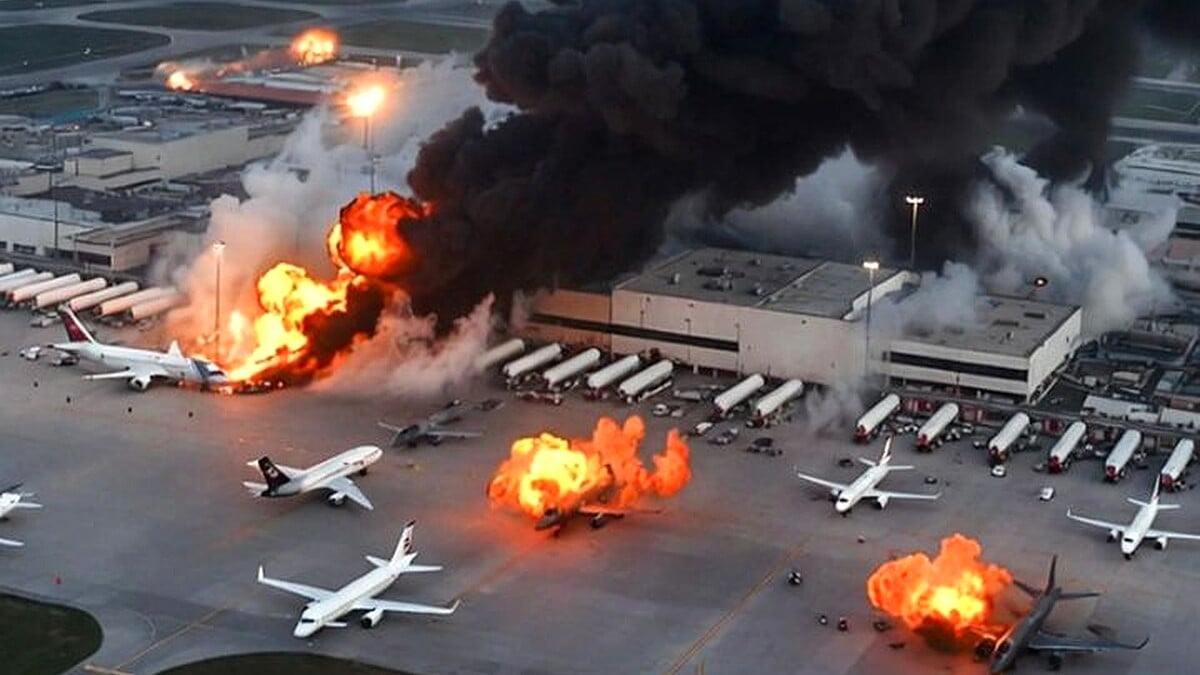




ISLAMABAD: Iran’s military has claimed a precision strike using advanced Arash-2 drones that forced the complete closure of Israel’s Ben Gurion International Airport, the country’s primary aviation gateway handling millions of passengers annually.
Iranian army spokesperson Brigadier General Mohammad Akraminia stated that the operation achieved its objectives, with most drones deployed being Arash-2 models. These long-range kamikaze UAVs, described as a more destructive evolution of earlier Kian and Arash-1 variants, targeted critical infrastructure at the site.
The Arash-2 is capable of striking targets up to 2,000 kilometres away while maintaining low radar visibility, allowing it to penetrate sophisticated air defence systems like Israel’s Iron Dome and associated networks.
Ben Gurion Airport, located near Tel Aviv, serves as both a major civilian hub and a strategic military asset. It houses refuelling facilities, maintenance depots for fighter jets, and supports Israeli Air Force operations, making it a high-value target in the escalating regional conflict.
Reports from Iranian state media and outlets such as Tasnim and Press TV indicate that the drones hit fuel depots and refuelling aircraft supporting military flights. Iranian officials described the attack as a direct response to prior strikes on Iranian territory, including alleged assaults on energy and nuclear sites.
The closure has disrupted thousands of flights, stranding passengers and affecting international connectivity. Israeli authorities have not issued detailed public confirmation of the extent of damage, though aviation sources report a full operational halt for security assessments and repairs.
This incident marks a significant escalation in drone warfare tactics. The Arash-2’s design emphasises range, stealth, and cost-effectiveness, posing challenges to even advanced interceptors. Analysts note that such low-cost systems can overwhelm defences when deployed in coordinated swarms.
Regional media, including Pakistani outlets like Dawn and The Express Tribune, have highlighted the strike’s implications for broader Middle East stability. Coverage points to repeated Iranian claims of targeting Ben Gurion in recent weeks amid intensifying exchanges.
The airport’s dual civilian-military role amplifies the impact. Pre-conflict, Ben Gurion handled over 20 million passengers yearly, with peak daily operations exceeding 500 flights. Military use includes rapid deployment of assets and logistical support for operations across the region.
Iranian sources claim the strike damaged key support systems for Israeli jets, potentially reducing sortie rates in ongoing hostilities. Independent verification remains limited due to the conflict zone, but satellite imagery and local reports suggest disruptions extending to nearby infrastructure.
The development underscores vulnerabilities in high-profile targets previously considered secure. Pentagon-linked facilities and civilian jets at the airport add layers of complexity, as any compromise risks broader international repercussions.
Experts warn that the proliferation of advanced drones like the Arash-2 could reshape aerial conflict dynamics. With ranges covering much of the Middle East, these systems enable deep strikes without risking manned aircraft, lowering the threshold for engagement.
Israeli transport officials have faced criticism for operational decisions amid heightened threats. Flight restrictions were already in place, but the latest incident has led to a total shutdown, affecting both commercial carriers and military logistics.
Iran maintains that the attack was limited to military objectives within the airport perimeter. Spokesperson statements emphasise precision to avoid excessive civilian fallout, though the closure itself has widespread economic consequences.
The event has drawn attention from international observers concerned about aviation safety in conflict zones. Similar incidents in the region, including reported debris damage to private aircraft at Ben Gurion, have previously caused temporary halts.
As tensions persist, both sides continue to exchange claims of successful strikes and defensive successes. The Arash-2 operation represents Iran’s assertion of retaliatory capability despite reported setbacks to its own infrastructure.
This shutdown is expected to last several days as damage assessments continue and security protocols are reinforced. The ripple effects on global air travel routes and regional supply chains could prove substantial in the coming weeks.
The incident adds to a growing list of high-stakes drone engagements that challenge traditional air superiority doctrines. With figures showing increased reliance on unmanned systems across modern battlefields, the Ben Gurion strike may signal a new phase in asymmetric warfare tactics.