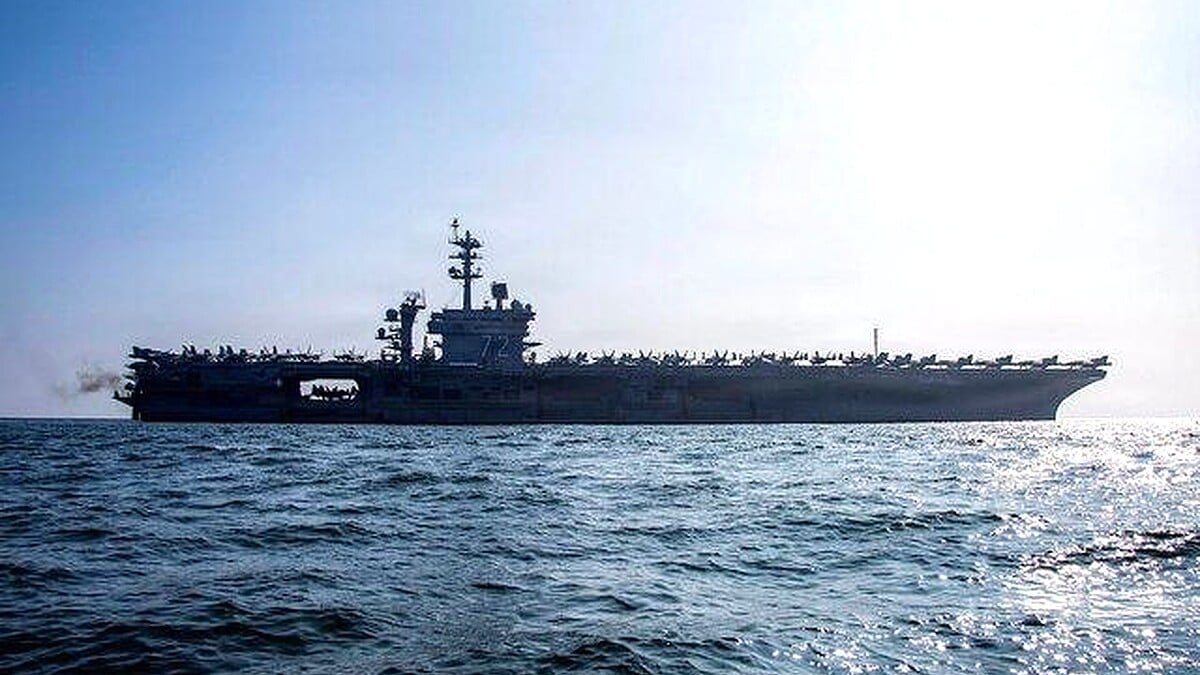




ISLAMABAD: Iranian military authorities declared on Wednesday that shore-to-sea cruise missiles successfully targeted the USS Abraham Lincoln aircraft carrier, compelling the massive US warship to alter its course and retreat from forward positions near Iranian waters.
The operation, conducted by the Iranian Army Navy, was framed as a direct assertion of Tehran’s maritime sovereignty against what officials termed a hostile fleet threatening regional stability.
State media outlets including IRNA and Press TV reported that the Qader anti-ship cruise missiles, launched from coastal batteries, struck elements of the carrier strike group and forced an immediate change in positioning.
Rear Admiral Shahram Irani, commander of the Iranian Navy, stated that movements of the enemy aircraft carrier remain under constant monitoring, with further powerful strikes promised should the fleet enter missile range again.
The 100,000-tonne Nimitz-class carrier, redirected to the US Central Command area in January 2026, had been operating in support of Operation Epic Fury, involving strikes on Iranian missile sites and naval assets.
Iranian officials linked the latest action to retaliation for the sinking of the Iranian destroyer Dena, which claimed 84 martyrs and left 20 missing, describing the missile barrage as a measured response coinciding with farewell ceremonies for the fallen sailors.
Defence analysts note that Qader missiles, with reported ranges exceeding 200 kilometres and sea-skimming capabilities, form a key layer of Iran’s asymmetric coastal defence strategy along the Persian Gulf and Strait of Hormuz.
The waterway handles roughly one-fifth of global oil shipments, making any disruption a flashpoint for international energy markets.
Regional reports from Pakistani and Turkish media outlets amplified Tehran’s claims, citing video footage released by Iranian state television showing missile launches streaking toward the carrier group.
No independent verification of actual damage to the USS Abraham Lincoln has emerged, and US Central Command has previously denied similar Iranian assertions of strikes on the vessel.
Earlier in March, Iranian sources claimed multiple ballistic and cruise missile salvos under Operation True Promise-4, prompting US officials to insist the carrier remained operational and undamaged.
The Abraham Lincoln, carrying Carrier Air Wing 9 with F/A-18 Super Hornets, F-35C Lightning IIs and support aircraft, anchors significant American air superiority in the region.
Its presence, alongside the USS Gerald R Ford strike group in adjacent waters, underscores Washington’s commitment to securing maritime routes amid escalating hostilities.
Iranian military statements emphasised that the latest missile operation demonstrated the effectiveness of indigenous defence systems against advanced naval threats.
Officials warned that continued provocative manoeuvres by US forces would invite stronger responses, framing the incident as a defence of sovereign waters rather than unprovoked aggression.
Tensions have surged since the US-led strikes began in late February, targeting Iranian naval bases, missile facilities and related infrastructure.
Reports indicate over 1,000 casualties in Iran from the broader conflict, alongside disruptions to shipping that have driven oil prices sharply higher.
Local Pakistani media, including Dawn and The Express Tribune, have tracked the carrier’s repositioning farther from Iranian shores following reported drone and missile threats, citing satellite imagery and open-source intelligence.
Such movements, while denied as retreats by American officials, align with Iranian narratives of successful deterrence.
Military observers highlight Iran’s layered “mosaic defence” doctrine, integrating shore-based missiles, fast-attack craft and underground facilities to counter superior naval power.
The Qader system, alongside Noor and Ghadir variants, has been tested extensively in recent years to challenge carrier strike groups operating within 300 kilometres of the coast.
Tehran’s latest claim arrives as diplomatic channels remain strained, with Iranian spokespersons dismissing US overtures and asserting that regional stability rests with Iranian armed forces.
The incident underscores the fragile balance in the Gulf, where naval posturing risks rapid escalation into wider confrontation.
International shipping firms have already adjusted routes, raising concerns over supply chain impacts and higher insurance premiums for vessels transiting the area.
As both sides maintain high alert, the reported retreat of the USS Abraham Lincoln stands as a potent symbol in Tehran’s messaging of resistance against external naval presence.
Further developments are expected as monitoring continues and both militaries reinforce their positions in this critical maritime theatre.