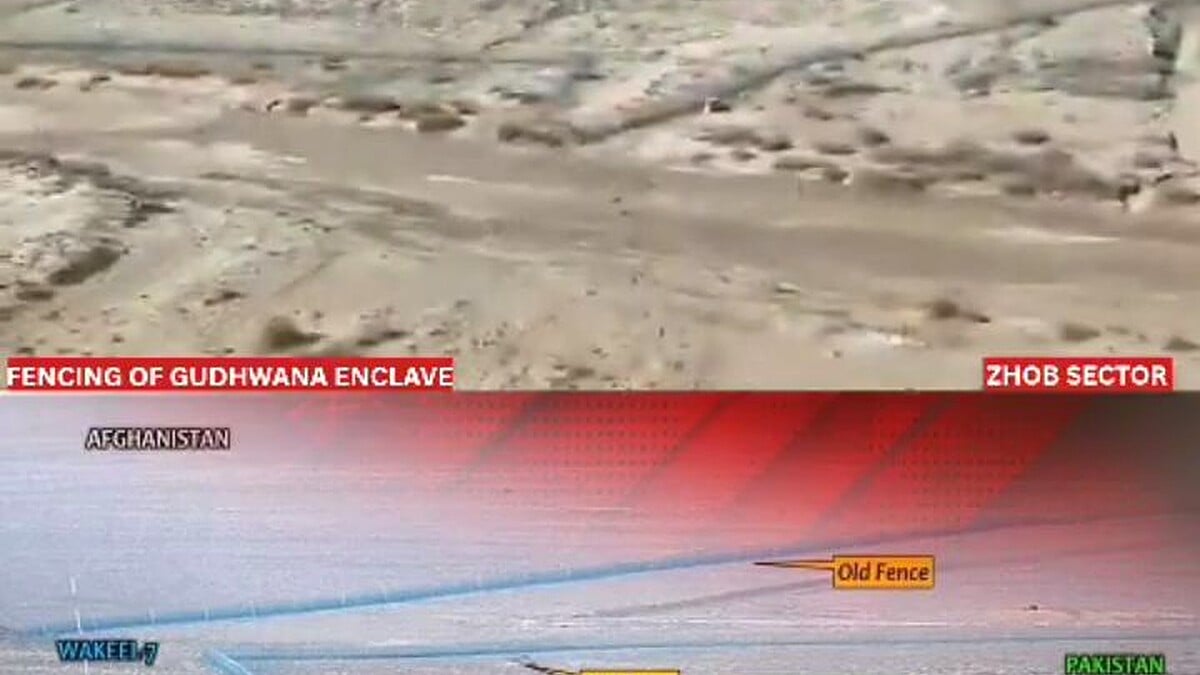




ISLAMABAD: Pakistan’s security forces have secured 32 square kilometres of the strategically significant Ghudwana Enclave in the Zhob sector, signalling a profound shift in battlefield strategy along the Afghan border amid escalating tensions with the Taliban regime.
The limited tactical operation, executed in late February 2026 as part of Operation Ghazab Lil Haq, followed unprovoked attacks by Tehreek-e-Taliban Afghanistan-linked elements on Pakistani positions. Forces seized the key Tahir Post and established permanent control over the enclave with zero casualties on their side while neutralising multiple hostile positions.
This territorial gain marks a departure from reactive border management to proactive depth creation. By pushing defensive lines westward into previously Afghan-controlled high ground, Pakistan has altered the geometry of engagements, denying militants operational depth and infiltration corridors that once extended deep into Pakistani territory.
Defence experts view the move as a calculated evolution in strategy. The enclave, previously a staging ground for cross-border raids, now serves as a forward buffer zone. Its capture disrupts historical logistics routes used for arms and personnel transfer, restricting enemy mobility across a 2,640-kilometre disputed Durand Line.
From a tactical perspective, control over Gudwana eliminates terrain blind spots that allowed undetected movements. Permanent positions enhance real-time surveillance dominance and shorten response times, enabling faster interdiction of threats originating from Afghan soil.
In broader counter-terrorism terms, denial of this launch node forces groups like TTP into less secure lower terrain. This reduces their ability to coordinate large-scale attacks inside Pakistan, where over 1,700 incidents were claimed in 2024 alone, contributing to more than 2,500 fatalities in recent years.
The operation forms part of a wider strategic recalibration under Operation Ghazab Lil Haq. Pakistan has transitioned from targeted airstrikes on militant hideouts to direct pressure on Taliban military infrastructure, including strikes on facilities in Kabul, Kandahar and Paktia, while seizing additional border posts.
National media reports, including Business Recorder, describe the Ghudwana gain as a decisive step toward transforming the porous frontier into a managed boundary. IG FC Balochistan North, Major General Muhammad Atif Mujtaba, visited the sector to review consolidation, praising troop professionalism in establishing observation dominance.
Analysts highlight that Pakistan now controls around 50-60 square kilometres of forward Afghan territory across multiple sectors. This buffer strategy aims to create physical separation from TTP sanctuaries, addressing long-standing concerns over safe havens that enabled militant regeneration despite repeated diplomatic overtures.
The shift reflects Islamabad’s resolve to impose costs directly on the Taliban regime for failing to curb cross-border militancy. Precision ground and air actions have destroyed dozens of Taliban outposts, with reports indicating heavy losses among hostile elements while maintaining calibrated escalation.
Logistically, securing Gudwana along traditional movement corridors severs facilitation networks. It strengthens enforcement mechanisms and improves overall border architecture, protecting civilian populations in Zhob and adjacent districts from spillover violence.
Regional developments underscore the changing dynamics. Pakistan’s approach combines ground dominance with economic measures and targeted operations, compelling a rethink in Kabul while avoiding full-scale conventional conflict.
Senior military officials emphasise that such gains are defensive in nature yet offensive in execution. The enclave’s integration into Pakistan’s defensive framework enhances response capabilities across the western theatre and limits asymmetric threats.
This battlefield adjustment has drawn attention to evolving hybrid challenges along the Durand Line. By establishing forward positions, Pakistan demonstrates a strategy focused on sustained control rather than temporary retaliation.
The Ghudwana success adds momentum to ongoing efforts, reinforcing Pakistan’s commitment to securing its territory against threats from Afghan soil. Forces remain positioned for long-term dominance, ensuring reduced infiltration and improved stability in border regions.