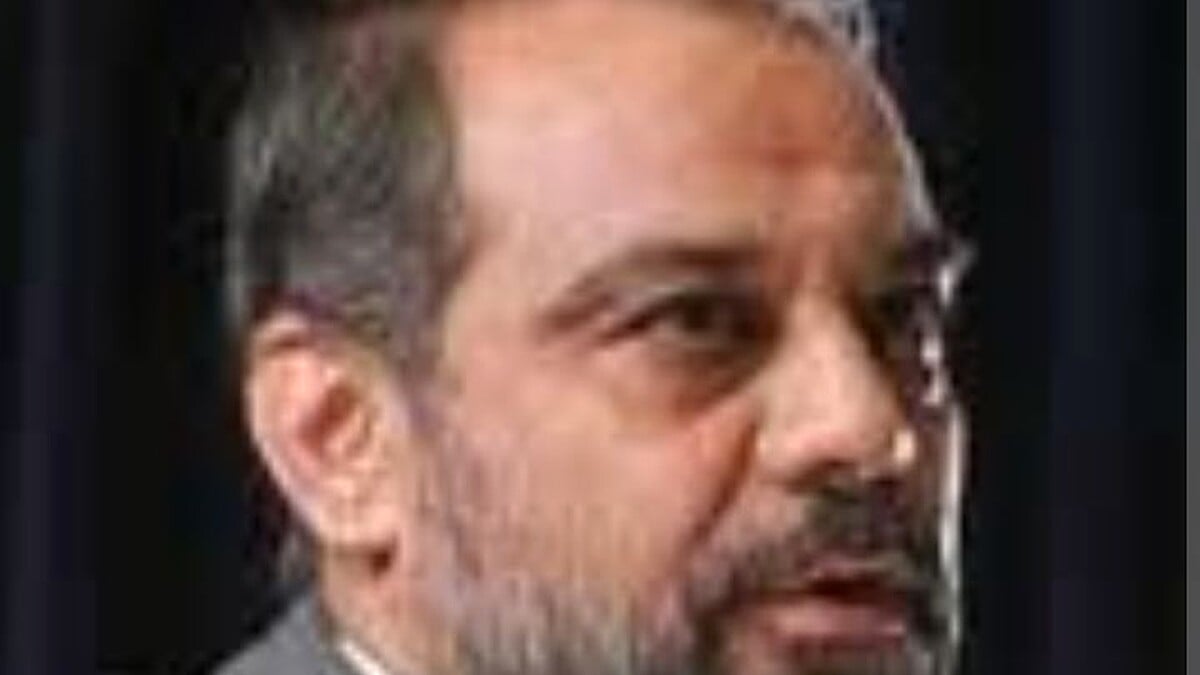




ISLAMABAD: In a bold leadership shake-up amid escalating regional conflict, Iran has named veteran Islamic Revolutionary Guard Corps commander Mohammad Bagher Zolghadr as Secretary of the Supreme National Security Council.
The appointment, announced on Tuesday by the president’s office, comes just days after predecessor Ali Larijani was killed in an Israeli airstrike.
Zolghadr, a hardline figure with decades in Iran’s security apparatus, assumes the pivotal role overseeing nuclear policy, foreign threats and military strategy at a critical juncture.
The move signals Tehran’s resolve to maintain an uncompromising stance as the war with Israel enters its fourth week.
Multiple high-level assassinations have already decapitated key leadership, including Supreme Leader Ayatollah Ali Khamenei in late February strikes.
Zolghadr’s selection places a battle-tested IRGC insider at the helm of the body that coordinates Iran’s defence and diplomatic responses.
Born around 1954 in Fasa near Shiraz, Zolghadr earned a bachelor’s degree in economics from the University of Tehran’s Faculty of Economics before the 1979 Islamic Revolution.
He was linked to the Islamist Mansourun guerrilla group and reportedly co-founded Ansar-e Hezbollah, a militant organisation active in post-revolutionary security operations.
His military career spans more than four decades within the IRGC. During the 1980-1988 Iran-Iraq War, he rose rapidly as a commander.
In 1983 he co-founded and led the Ramazan Garrison, an irregular warfare headquarters focused on extraterritorial operations.
That unit trained proxy militias and laid the operational foundation for what later became the IRGC’s elite Quds Force, influencing Tehran’s regional proxy network across Lebanon, Syria and beyond.
Zolghadr held the IRGC’s top staff positions for 16 consecutive years. From 1989 to 1997 he served as chief of the Joint Staff, the third-highest command role.
He then became deputy commander-in-chief from 1997 to 2006, effectively the second-most powerful officer during a period of post-war reorganisation and missile programme expansion.
In 2005 he transitioned to civilian security oversight as deputy interior minister for security affairs under President Mahmoud Ahmadinejad, serving until 2007.
In that capacity he coordinated closely with Basij forces and Ansar-e Hezbollah to suppress domestic dissidents, earning a reputation as a ruthless enforcer of regime stability.
International sanctions reflected his influence. The United Nations designated him in 2007 under Resolution 1737 for links to Iran’s nuclear and ballistic missile programmes.
He remained on the list until removal in October 2023 following the expiration of targeted measures in Resolution 2231.
After leaving the interior ministry, Zolghadr held advisory roles in the judiciary. In September 2021 he was appointed secretary of the Expediency Discernment Council, succeeding Mohsen Rezaei.
He has remained a member of that powerful advisory body since 2022, appointed directly by Supreme Leader Khamenei.
Analysts note Zolghadr’s deep personal ties to IRGC founding figures. His long friendship with former IRGC commander Mohsen Rezaei shaped his ascent.
He authored a 2002 book, “The Tale of Western Estrangement”, criticising Western cultural influence in line with hardline ideological views.
The Supreme National Security Council he now leads formulates Iran’s most sensitive policies. It includes the president, foreign and defence ministers, and top military commanders.
Under Zolghadr, the council is expected to prioritise missile deterrence, proxy coordination and resistance to external pressure.
Regional observers highlight the timing. With oil prices surging and Strait of Hormuz tensions rising, Zolghadr’s IRGC pedigree suggests no softening of Tehran’s posture.
Pakistan, sharing a volatile border with Iran and facing spillover risks in Balochistan, will monitor developments closely for implications on bilateral trade, energy cooperation and counter-terrorism efforts.
Zolghadr’s family connections reinforce his establishment credentials. His son-in-law, Kazem Gharibabadi, currently represents Iran at the International Atomic Energy Agency in Vienna. His wife holds a senior position in cultural affairs.
As the 71-year-old assumes office, Iran confronts unprecedented leadership losses. The appointment underscores a pattern: replacing slain officials with loyal IRGC veterans to project continuity and strength.
Zolghadr’s record indicates the council will pursue aggressive defence strategies while navigating complex diplomatic channels.
Experts tracking Iran’s power structure describe the transition as seamless yet symbolically charged.
It places a figure with direct experience in both conventional warfare and asymmetric operations at the centre of decision-making during one of the Islamic Republic’s most testing periods. Regional stability, nuclear negotiations and proxy conflicts now rest heavily on his shoulders.