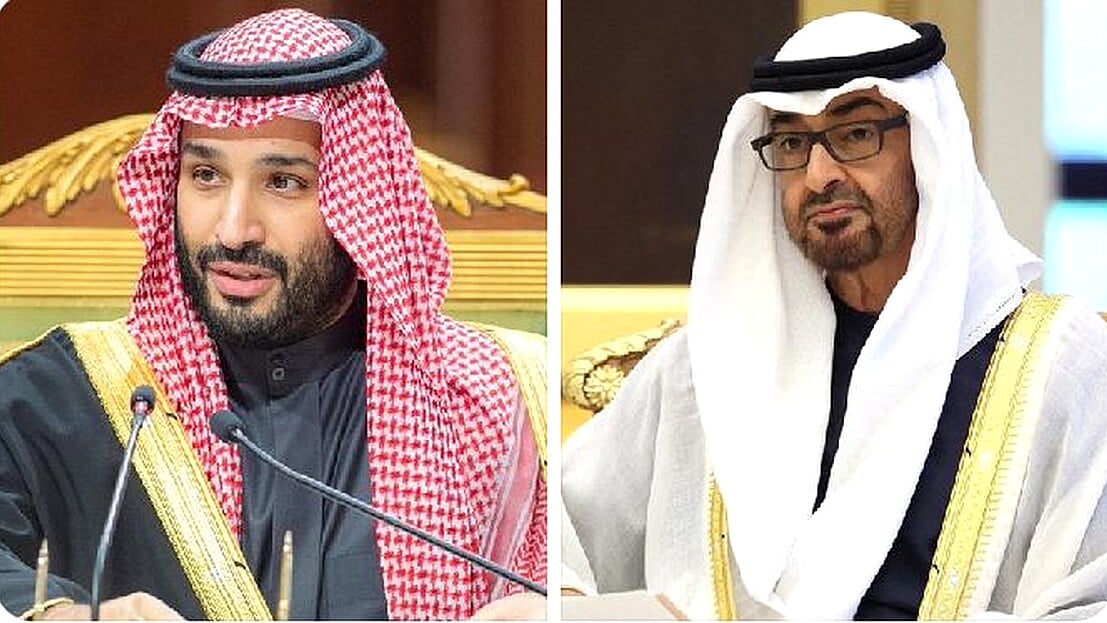




ISLAMABAD: Saudi Arabia and the United Arab Emirates have taken concrete steps toward joining the US Israeli campaign against Iran the Wall Street Journal reported signalling a potential game changer in the escalating conflict that has already drawn the Gulf deep into the fray.
The kingdom has granted US forces access to its strategic King Fahd Air Base in a stunning reversal of its earlier refusal to allow facilities against its longtime rival Tehran.
Crown Prince Mohammed bin Salman stands close to ordering direct Saudi participation with officials indicating entry into the war is now only a matter of time.
The UAE meanwhile shut down the Iranian Hospital and Iranian Club in Dubai crippling key Tehran support nodes while threatening to freeze billions in Iranian assets tied to the Revolutionary Guard.
These moves come after Iran unleashed unprecedented retaliation on Gulf targets following US Israeli strikes that began late February.
Al Arabiya tallies confirm Iran fired 4911 missiles and drones at Gulf states 85 percent of its total arsenal compared to just 850 against Israel.
The UAE alone intercepted 338 ballistic missiles 1740 drones and 15 cruise missiles with the total launched exceeding 2000 attacks on Emirati soil.
Saudi Arabia absorbed 575 drone strikes and 49 missile hits including direct assaults on Riyadh energy hubs and the capital itself.
Iran targeted luxury hotels airports and refineries across the region while damaging five US Air Force refuelling planes at Prince Sultan Base inside Saudi territory.
Qatar suffered hits on its Ras Laffan gas hub slashing 17 percent of production with repairs estimated at three to five years.
Saudi Foreign Minister Prince Faisal bin Farhan declared patience unlimited no more warning that any miscalculation on Gulf response capacity would prove costly.
UAE leaders informed Washington they stand ready for the conflict to stretch nine months while lobbying aggressively against any ceasefire that leaves Iranian military power intact.
Gulf states initially lobbied President Trump to halt strikes and barred bases as launchpads yet Iranian aggression shattered that restraint.
Western officials confirmed Riyadh attitude flipped toward punishing Tehran for heinous extortion style behaviour and militia sponsorship.
The UAE closed Iranian linked institutions after proving they violated local laws advancing regime agendas not public welfare.
Oil prices surged past 100 dollars per barrel as Strait of Hormuz threats mounted with Tehran hinting at Suez style tolls post war.
Five US refuelling aircraft lie damaged on Saudi soil underscoring vulnerability despite advanced defences.
Gulf Cooperation Council solidarity hardened during Riyadh meetings where ministers from UAE Saudi Qatar and others affirmed attacks unjustified and vowed collective defence.
Middle East Eye sources revealed expanded King Fahd access positions Jeddah as vital logistics hub amid thousands of US troops en route.
Bloomberg noted crude futures jumped immediately after the WSJ disclosure erasing earlier stock gains.
Saudi Arabia reserves full right to military action after repeated diplomatic overtures including 2023 China brokered ties yielded no reciprocity.
UAE Foreign Minister Sheikh Abdullah bin Zayed stressed preparation for prolonged engagement during calls with US counterparts.
Analysts at Middle East Institute highlight the structural bind weaker allies face when superpower actions drag them into unwanted fights.
Yet frustration over failed deterrence bets pushed Gulf capitals toward offensive support to re establish red lines.
Iranian strikes hit every GCC member including civilian sites and energy arteries disrupting exports and tourism icons.
Flights continue from Dubai under missile warnings yet passenger jets operated within minutes of alerts revealing resilience amid chaos.
Regional media like Arab News and Anadolu documented daily interceptions with Saudi reporting 92 drones downed in recent waves alone.
The developments risk igniting wider Muslim world tensions while threatening global energy flows through Hormuz which carries one fifth of world supply.
Gulf officials pressed Congress for expedited arms sales during closed Washington sessions.
Experts warn joining offensive operations opens unpredictable cans of worms yet the barrage left no choice.
With Crown Prince decisions imminent and UAE asset freezes underway the Iran war edges toward a transformative phase involving direct Arab frontline roles.
These shifts underscore how Iranian retaliation transformed reluctant hosts into potential co combatants determined to cripple Tehran before any truce.
The coming weeks may redefine Gulf security architecture with billions at stake and deterrence hanging in balance.