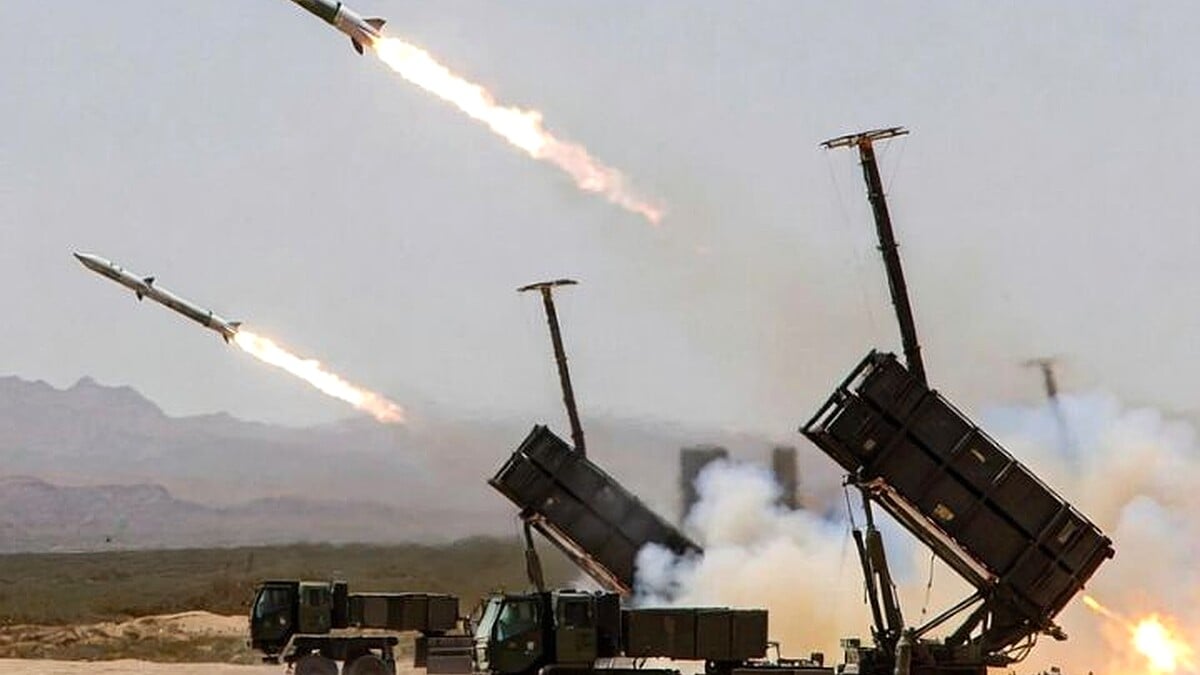




ISLAMABAD: The United States has launched land-based ballistic missiles from the territory of Persian Gulf countries to strike targets inside Iran, according to a detailed report by The Wall Street Journal published just hours ago.
This development marks the first combat use of American ground-launched missiles in the current conflict and adds a new dimension to the air campaign that began on February 28.
The missiles, with a range of 200 to 300 miles, streaked high over the Persian Gulf before slamming into Iranian positions.
The Wall Street Journal described these as the Army’s two-year-old Precision Strike Missiles, which proved highly accurate in their initial barrages.
Subsequent strikes employed ATACMS ballistic missiles that hit and sank Iranian navy vessels as well as a submarine docked in port.
Iran has accused the United States of using the same ground-based system to strike Kharg Island, its key offshore oil-processing facility.
Air Force Gen. Dan Caine, chairman of the Joint Chiefs of Staff, stated that the missile attacks have “made history.”
The launches occurred in the opening hours of the war, complementing aerial strikes by U.S. and Israeli forces.
Despite earlier reports that Gulf states refused American use of their bases and airspace for direct attacks, the short-range missiles appear to have been fired from GCC territory.
The Gulf Cooperation Council nations include Saudi Arabia, the United Arab Emirates, Qatar, Kuwait, Bahrain and Oman.
This subtle involvement raises fresh questions about the extent of regional alliance support in the escalating conflict.
Iranian retaliation has been fierce and widespread.
The United Arab Emirates alone has faced more than 2,000 drones and missiles since the war started, with over 80 percent aimed at civilian infrastructure.
These attacks killed six civilians and injured 157 others across oil facilities, refineries, airports, ports and hotels.
Similar strikes hit Qatar, Saudi Arabia and other GCC members, targeting U.S. bases and energy sites.
Iranian President Masoud Pezeshkian issued an apology to neighbouring countries, yet senior officials in Tehran continued to threaten nations hosting American presence.
The Gulf states have now shifted strategy, urging Washington to cripple Iran’s regime before any ceasefire.
They view Tehran’s theocracy as an existential threat after years of attempted diplomacy failed.
Disruption of the Strait of Hormuz, through which 35 percent of global crude oil and 20 percent of liquefied natural gas passes, has driven international oil prices above 100 dollars per barrel.
This economic warfare affects energy-importing nations worldwide, including Pakistan, which relies heavily on Gulf supplies.
The ground missile innovation allows the United States to maintain pressure without constant reliance on carrier-based aircraft or long-range bombers.
Military analysts note that mobile launchers on GCC soil provide flexibility and rapid response capabilities.
Precision guidance systems have ensured minimal collateral damage while achieving strategic hits on naval and oil assets.
The conflict has already seen Iran fire roughly 290 missiles and 500 drones at Israeli targets in parallel.
U.S. forces have sunk more than 30 Iranian warships, including a large drone carrier, according to Central Command.
Gulf air defences, largely supplied by the United States, have intercepted many incoming threats but depleted stocks rapidly.
The UAE has relied on its port of Fujairah to reroute oil exports, bypassing the blocked Strait of Hormuz.
Yet repeated Iranian drone strikes on Fujairah and Dubai’s fuel depot continue to disrupt operations.
Regional diplomats warn that further escalation could draw more GCC nations directly into active roles.
The historic use of Army ground missiles signals a doctrinal shift for U.S. forces in the Middle East.
It demonstrates how short-range systems can integrate seamlessly with air power for sustained operations.
Iran’s underground missile cities have faced relentless targeting, yet Tehran continues asymmetric responses through proxies and direct barrages.
The war’s economic fallout already slows global growth and raises food prices in developing countries.
For Pakistan, stable oil flows from the Gulf remain critical for both industry and daily life.
Observers expect the U.S. to press advantages gained from these land-based strikes in coming days.
The Wall Street Journal reporting underscores the fluid and expanding nature of the battlefield.
Gulf leaders insist any settlement must address Iran’s nuclear programme, ballistic missiles and regional proxies.
Until then, they demand continued American support to neutralise the threat permanently.
This latest revelation from the Wall Street Journal highlights how territorial access in the Persian Gulf is quietly shaping the war’s direction.