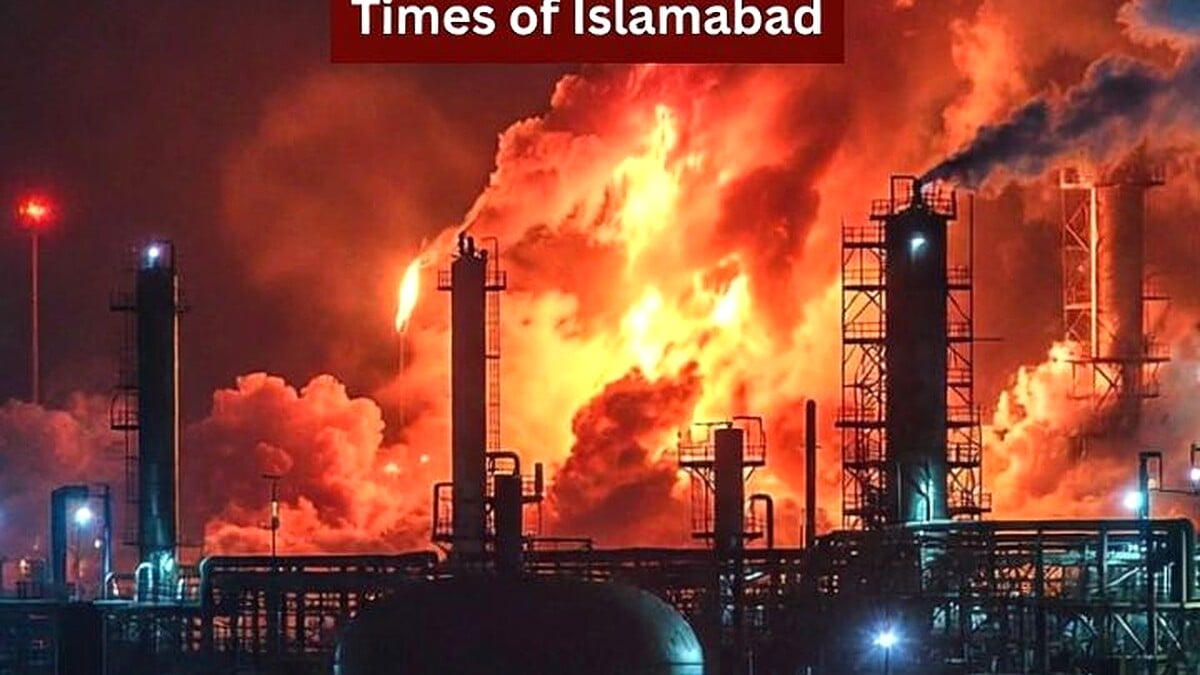




ISLAMABAD: Iranian missiles and drones slammed into Saudi Arabia’s strategic SAMREF refinery in Yanbu late Wednesday, causing significant damage to processing units and forcing an immediate partial shutdown of the 400,000-barrel-per-day facility.
The assault marks the latest escalation in the ongoing Iran-Gulf conflict that erupted after US and Israeli operations began on February 28, with Tehran directly targeting key Saudi energy infrastructure for the first time in this phase.
Saudi officials confirmed interception of several projectiles but reported fires and structural hits at the Aramco-ExxonMobil joint venture site, disrupting flows of automotive diesel, jet fuel and marine oils critical to global supply chains.
Industry analysts estimate the strike could slash Saudi refined product exports by up to 150,000 barrels daily in the short term, pushing international oil benchmarks toward fresh highs above 85 dollars per barrel.
SAMREF, equally owned by Saudi Aramco and ExxonMobil’s Mobil Yanbu subsidiary, processes Arabian Light crude into propane, ultra-low-sulphur diesel and sulphur, boasting 13.2 million barrels of storage capacity despite its focus on in-line blending for rapid export.
Located on the Red Sea coast in Yanbu Industrial City, the refinery forms a cornerstone of Saudi Vision 2030 diversification, supplying western provinces and international markets while feeding into the kingdom’s third-largest refining hub that collectively exceeds 1.1 million barrels daily.
Just months earlier in December 2025, Aramco, ExxonMobil and SAMREF signed a venture framework agreement to upgrade the site into an integrated petrochemical complex producing high-value distillates and chemicals with lower emissions, a project now facing uncertain delays.
This attack echoes the 2019 Abqaiq-Khurais incident where Iranian-linked drones halved Saudi output temporarily, yet SAMREF’s coastal position and advanced air defences had previously shielded it until now.
Defence sources in Riyadh disclosed that Iranian Shahed-style drones combined with precision ballistic missiles overwhelmed partial intercepts, igniting secondary explosions in distillation columns and storage tanks.
No immediate casualty figures were released, though local reports indicated minor injuries among on-site personnel evacuated swiftly under emergency protocols.
Saudi Energy Minister Prince Abdulaziz bin Salman vowed swift restoration and full accountability, stating the kingdom retains all options including proportionate response to protect its sovereign assets.
Global markets reacted sharply with Brent crude futures spiking 4 percent in early trading as traders priced in supply risks across the Strait of Hormuz and Red Sea routes.
Experts note Yanbu’s role as a strategic bypass for Gulf exports via the East-West pipeline, underscoring how such strikes threaten not just Saudi revenue exceeding 300 billion dollars annually from oil but also regional stability.
Iranian state media claimed the operation targeted military-linked facilities in retaliation for alleged Saudi support in the broader conflict, denying civilian infrastructure intent despite satellite imagery showing clear refinery plumes.
United States officials condemned the strike as reckless escalation, reaffirming commitment to Gulf partners while monitoring oil price volatility that could fuel inflation worldwide.
China, a major buyer of Saudi refined products, expressed concern over supply chain disruptions, highlighting its own stakes in nearby YASREF joint venture also in Yanbu processing 430,000 barrels daily.
European Union energy monitors warned of potential gasoline and diesel shortages in Mediterranean markets reliant on Saudi exports, urging diversified sourcing amid winter demand peaks.
Historical data reveals Saudi refining capacity grew from 2.1 million to projected 3.8 million barrels daily through such ventures, making SAMREF’s 402,000-barrel rating pivotal for domestic fuel security and export competitiveness.
Security analysts highlight Iran’s demonstrated missile reach exceeding 1,500 kilometres, tested in recent salvos against multiple Gulf states including UAE and Bahrain targets.
Saudi Arabia’s Patriot and newer systems intercepted over 80 percent of incoming threats according to preliminary assessments, yet swarm tactics exposed vulnerabilities in layered defences.
Economic impact projections from Riyadh-based think tanks forecast a 2 to 3 percent dip in quarterly GDP if downtime extends beyond two weeks, though Aramco’s vast reserves enable rapid mitigation.
Neighbouring states in the Gulf Cooperation Council issued joint statements of solidarity, with UAE and Qatar reporting their own heightened alerts following parallel Iranian probes.
Pakistani diplomatic channels monitoring the crisis urged de-escalation, emphasising dialogue to safeguard vital energy corridors affecting South Asian importers.
Reconstruction efforts are already mobilised with Aramco crews deploying specialised teams trained from previous incidents, targeting return to near-full capacity within days where feasible.
Longer-term, the attack may accelerate Saudi investments in hardened bunkering and drone countermeasures across industrial cities like Yanbu and Jubail.
International observers stress that sustained tensions risk derailing Saudi petrochemical ambitions aimed at converting 4 million barrels daily into higher-margin chemicals by 2030.
As flames were contained overnight, global attention turns to potential ripple effects on shipping insurance premiums and alternative routing costs through safer passages.
This incident underscores the fragile balance in Middle East energy security, where one facility’s outage reverberates across continents and commodity exchanges.
Saudi leadership reiterated resolve to defend territorial integrity while pursuing diplomatic avenues to prevent wider conflagration threatening global prosperity.
Analysts predict heightened military posturing across the Red Sea, with possible coalition patrols to secure critical export nodes in coming weeks.
The world watches closely as recovery timelines and retaliatory signals shape the trajectory of this volatile chapter in regional affairs.