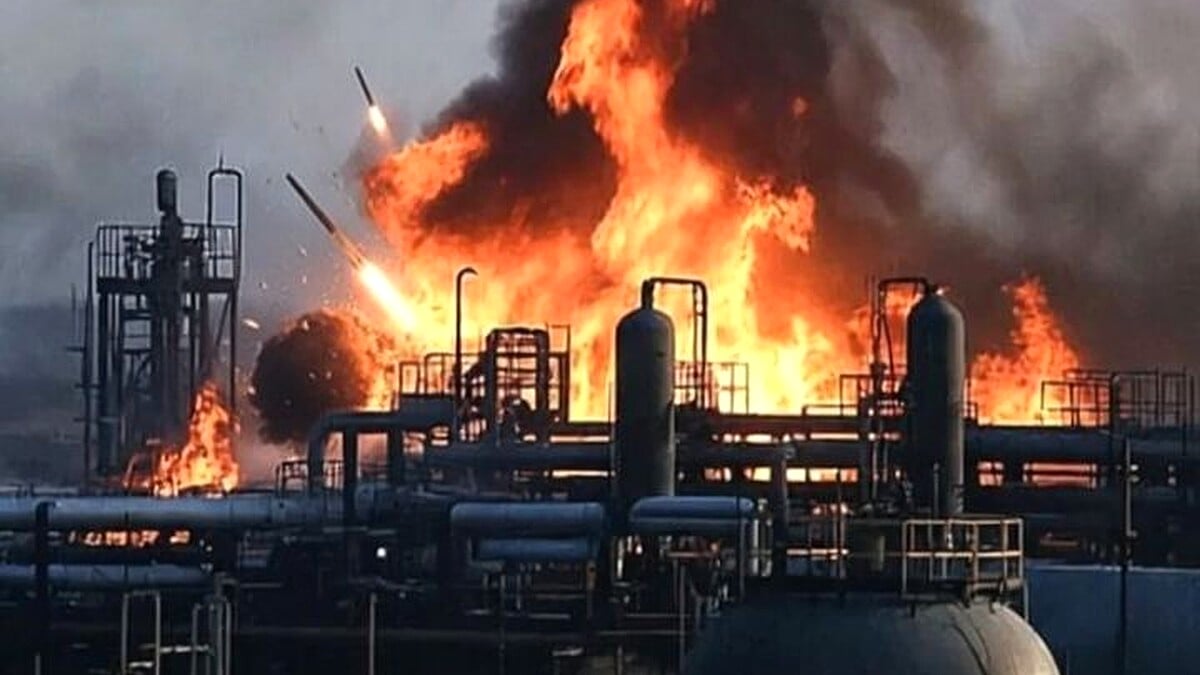




ISLAMABAD: Qatar’s critical Ras Laffan Industrial City, home to the world’s largest liquefied natural gas export complex, has been struck by an Iranian missile attack, sparking a significant fire and raising alarms over global energy security.
The incident occurred on March 18, 2026, as part of Iran’s ongoing retaliatory campaign against Gulf states supporting or perceived to support US and Israeli operations against Tehran. Qatar’s Interior Ministry and Civil Defense authorities confirmed emergency teams were deployed to contain the blaze in the Ras Laffan area.
QatarEnergy, the state-owned energy giant, issued a formal statement acknowledging the missile strikes on Ras Laffan Industrial City. It reported that extensive damage has been inflicted, with fires erupting following the impacts. Emergency response protocols were activated immediately, and all personnel have been accounted for with no casualties reported at this stage.
The company emphasized its commitment to providing updates as the situation develops. Ras Laffan processes gas from the North Field, the Qatari side of the shared North Dome/South Pars reservoir with Iran, supplying approximately one-fifth of global LNG exports.
This attack marks a direct escalation in the targeting of energy infrastructure. Earlier in March, Iranian drones had struck facilities in Ras Laffan and nearby Mesaieed Industrial City on March 2, prompting QatarEnergy to halt LNG production entirely. That suspension disrupted supply chains and caused European natural gas prices to surge by over 50 percent in initial trading sessions.
Qatar’s Ministry of Defence had previously intercepted numerous Iranian drones and missiles aimed at the country, including attempts on military sites and energy hubs. Reports from early March indicated limited damage from those incidents, with satellite imagery showing no major structural harm to core processing units before the precautionary shutdown.
The latest strike, however, appears more successful in penetrating defenses, resulting in visible flames and smoke. Social media footage and official alerts depicted the fire, underscoring the vulnerability of concentrated energy assets in the region.
Iran’s Islamic Revolutionary Guard Corps has issued explicit warnings and evacuation notices for Gulf energy sites, including Ras Laffan, in response to strikes on its own facilities such as South Pars. These tit-for-tat actions have widened the conflict beyond direct US-Israeli engagements with Iran.
Qatar’s Ministry of Foreign Affairs condemned the attack as a grave violation of sovereignty and a direct threat to national security. Officials invoked the right to self-defence under Article 51 of the UN Charter, reserving options for proportionate response.
The implications for global markets are profound. Ras Laffan accounts for a substantial share of LNG destined for Asia and Europe. Any prolonged outage could exacerbate energy shortages, drive up prices, and strain economies already facing volatility from the broader Middle East crisis.
Analysts note that previous halts in March led to force majeure declarations by QatarEnergy, shielding it from contractual penalties while highlighting systemic risks in the LNG trade. Insurance premiums for Gulf shipping and energy operations have risen sharply.
The shared North Field/South Pars reservoir underscores the irony: Iran and Qatar jointly exploit the world’s largest natural gas field, yet geopolitical tensions now endanger mutual economic interests. Strikes on either side risk cascading environmental and supply disruptions.
Qatar has maintained a neutral diplomatic stance in regional conflicts but hosts the Al Udeid Air Base, a major US military facility. This positioning has drawn Iranian ire amid accusations of enabling operations against Tehran.
As firefighting efforts continue, authorities assess structural integrity and repair timelines. Restoration of full capacity could take weeks or months, depending on damage extent.
The incident highlights the fragility of global energy flows through the Strait of Hormuz and Gulf hubs. Market observers warn of potential oil price spikes toward $150 per barrel if attacks persist across multiple producers.
International calls for de-escalation have intensified, with the United Nations and regional mediators urging restraint to avert broader economic fallout. Qatar continues to coordinate with allies for enhanced air defenses.
This strike on Ras Laffan represents a pivotal moment in the conflict’s energy dimension, where infrastructure has become a primary battlefield.