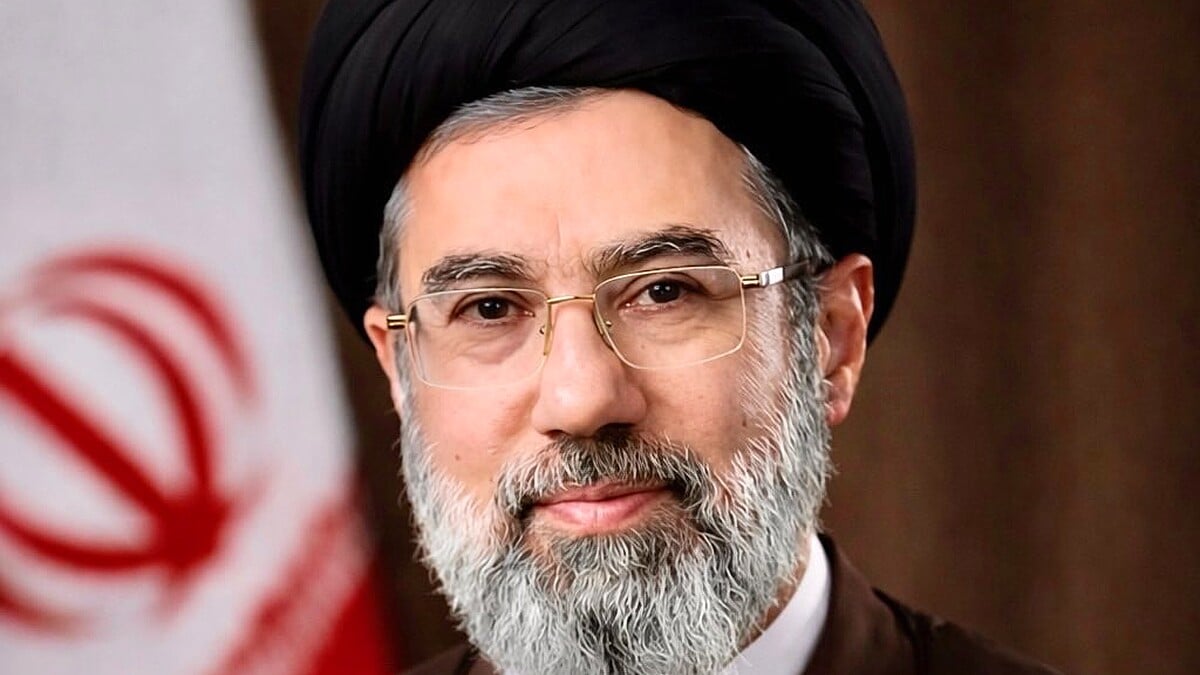




ISLAMABAD: Media reports from Kuwaiti media suggest that Iran’s newly appointed Supreme Leader, Mojtaba Khamenei, has been secretly transported to Moscow for leg surgery following injuries sustained in recent airstrikes.
The claim, originating from the Kuwaiti newspaper Al-Jarida, has sparked renewed speculation about the health and whereabouts of Mojtaba Khamenei amid the ongoing conflict involving Iran, the United States and Israel.
According to Al-Jarida, citing a high-ranking source close to the Iranian leadership, Mojtaba Khamenei was evacuated from Iran under strict secrecy aboard a Russian military aircraft.
The newspaper reported that Russian President Vladimir Putin personally offered assistance during a phone call, proposing medical treatment in Moscow due to the severity of the injuries and security concerns from continued airstrikes.
The operation on the leg was described as successful and took place at a medical facility within one of Putin’s presidential residences or a related private hospital.
This development follows earlier reports that Mojtaba Khamenei, aged 56 and the second son of the late Ayatollah Ali Khamenei, suffered leg injuries on the opening day of intensified attacks that began around late February.
Multiple sources, including Iranian and Israeli officials cited in international media, have acknowledged that the new supreme leader sustained wounds to his legs early in the conflict, though the extent remains unclear and often disputed.
US officials, including Defense Secretary Pete Hegseth, have described Mojtaba Khamenei as wounded and likely disfigured, questioning his capacity to govern effectively while in hiding or limited communication.
President Donald Trump and other observers have fueled rumors by suggesting the leader might be unaware of key events, including the war itself or even his own ascension to power after his father’s assassination on February 28.
Iranian state media and officials have consistently downplayed the severity, referring to him occasionally as the “wounded war veteran” supreme leader and insisting he remains in full health while managing affairs.
Iran’s Foreign Minister Abbas Araghchi has publicly stated that Mojtaba Khamenei is in good condition and actively leading the country during the crisis.
No official confirmation has emerged from Tehran or Moscow regarding any transfer to Russia or ongoing surgery.
The absence of direct statements or appearances by Mojtaba Khamenei since assuming the role has intensified public curiosity and fueled circulating narratives.
Al-Jarida’s report aligns with a pattern of unverified claims in regional media about high-level Iranian figures seeking treatment abroad amid escalating hostilities.
Observers note that such stories often emerge in the opaque environment of wartime information control, where both sides engage in psychological operations.
The alleged Russian involvement highlights the deepening strategic ties between Iran and Russia, particularly in military and now potentially medical domains.
Putin’s reported personal intervention underscores Moscow’s role as a key ally willing to provide discreet support during Tehran’s vulnerabilities.
Critics argue these claims serve to undermine Iran’s leadership stability at a critical juncture.
Supporters of the Iranian government dismiss them as Western or Gulf-sponsored disinformation aimed at sowing doubt.
Fact-checking outlets have highlighted the lack of corroborating evidence beyond the single Kuwaiti source, urging caution in accepting the narrative at face value.
As the conflict enters its third week, questions about the supreme leader’s physical state and decision-making capacity continue to loom large.
Any verified confirmation of medical travel to Moscow would mark a significant escalation in reliance on external partners for leadership security.
Until then, the story remains in the realm of speculation, driven by anonymous sources and amplified across international outlets.
The situation reflects broader uncertainties in Iran’s power structure following the abrupt transition triggered by Ayatollah Ali Khamenei’s death.
Mojtaba Khamenei’s rapid elevation, despite past reservations reportedly expressed by his father about his readiness, adds layers to the ongoing debate.
Health rumors have historically plagued Iranian leadership announcements, often used to gauge internal dynamics or external pressures.
In this case, the combination of injury reports and alleged foreign treatment has captured global attention.
Whether Mojtaba Khamenei is indeed receiving care in Russia or remains secure within Iran, the claims underscore the high stakes of the current regional confrontation.
Further developments will likely depend on any public appearance or official Iranian statement addressing the rumors directly.
For now, the Kuwaiti media assertion stands unconfirmed but prominently featured in discussions about Iran’s wartime leadership resilience.