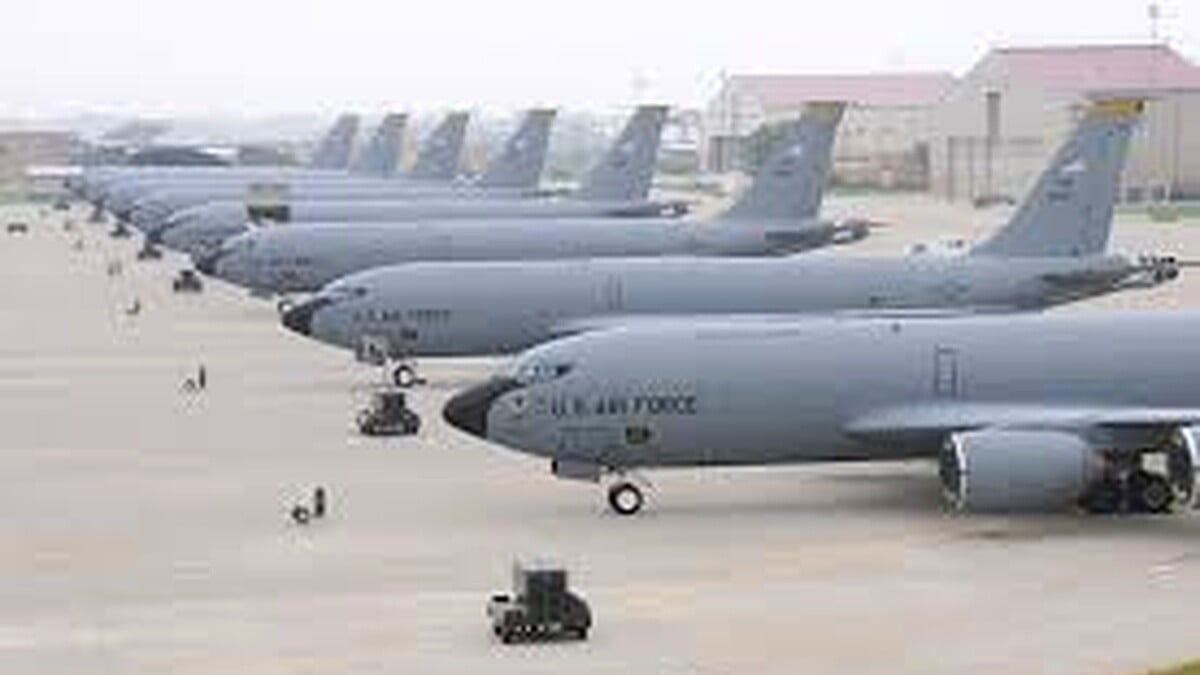




ISLAMABAD: An Iranian ballistic missile struck Prince Sultan Air Base in Saudi Arabia, damaging five United States Air Force refueling aircraft on the ground, according to reports from The Wall Street Journal citing US officials. The strike, part of Tehran’s retaliatory campaign amid the ongoing US-Israel-Iran conflict, left the planes damaged but repairable, with no fatalities reported from the incident.
The attack targeted the strategic facility southeast of Riyadh, which hosts US military personnel and supports regional operations. Saudi air defenses intercepted several incoming projectiles during recent waves, yet at least one missile penetrated to cause the specified damage to aerial tankers, primarily KC-135 Stratotankers critical for extending fighter jet endurance.
This development adds to mounting pressures on US air assets in the theater. The five damaged refuelers join other recent losses, pushing the tally of US refueling planes affected to at least seven in the escalating hostilities that began late February 2026.
Separate incidents have compounded the strain. A KC-135 crashed in western Iraq on March 12 while supporting operations under Operation Epic Fury, resulting in the deaths of all six crew members. US Central Command confirmed the loss occurred in friendly airspace, with no indication of hostile fire or mid-air collision as the primary cause in initial assessments, though investigations continue.
Additional reports highlight other tanker vulnerabilities, including one incident involving damage to a refueling aircraft’s tail fin during multi-plane operations. These events underscore the risks to support infrastructure as Iranian missile and drone barrages target US-linked sites across the Gulf.
Prince Sultan Air Base has faced repeated Iranian attempts since early March. Saudi Defense Ministry statements detail interceptions of multiple ballistic missiles and drones aimed at the installation, with some projectiles falling in uninhabited areas or causing limited peripheral effects.
In one related development, an Iranian strike on March 1 contributed to injuries that later proved fatal for a US service member, marking one of several American casualties in Saudi Arabia. Overall US deaths in the conflict have reached higher figures, with service members killed across bases in the region.
The base’s role remains pivotal. It houses advanced air defense systems like Patriot batteries and serves as a hub for US fighter deployments. Damage to refueling capacity disrupts sustained air campaigns, forcing adjustments in mission planning and potentially delaying response times.
Iran’s strategy appears focused on degrading US and allied enablers. Strikes have hit radar installations, communication nodes, and airfields in Saudi Arabia, Qatar, and elsewhere, aiming to blunt missile defense effectiveness and stretch resources.
Saudi authorities have consistently reported successful interceptions, minimizing broader impacts. The kingdom’s defenses neutralized threats near Riyadh and eastern oil fields, though occasional breakthroughs have caused civilian casualties in adjacent areas, such as a residential strike in Al-Kharj killing two foreign workers.
The conflict’s trajectory shows intensified Iranian retaliation following initial US and Israeli strikes on Iranian targets. Missile launches from Tehran have declined in volume over recent days, per data analyses, yet remaining salvos demonstrate persistent capability.
US military posture includes reinforcements, with additional aircraft carriers, destroyers, and Marine units deployed to bolster deterrence. Officials emphasize continued operations despite setbacks, highlighting the resilience of forward-deployed forces.
Analysts note that tanker losses, while operationally significant, do not yet cripple overall air superiority. However, cumulative effects could influence campaign tempo if repairs lag or threats persist.
Regional allies face parallel challenges. Qatar reported a direct hit on Al Udeid Air Base, the largest US facility in the Middle East, while other Gulf states manage airspace disruptions affecting commercial aviation.
The incident at Prince Sultan underscores the broadening scope of the war. What began as targeted exchanges has evolved into multi-front engagements, with implications for energy security, shipping routes, and global oil markets.
As repairs proceed on the damaged aircraft, US commanders prioritize force protection and mission continuity. The event highlights the high stakes in sustaining aerial refueling amid active hostilities.
Broader diplomatic efforts remain stalled, with no immediate signs of de-escalation. The strike serves as a reminder of Iran’s asymmetric tools in countering superior conventional forces.