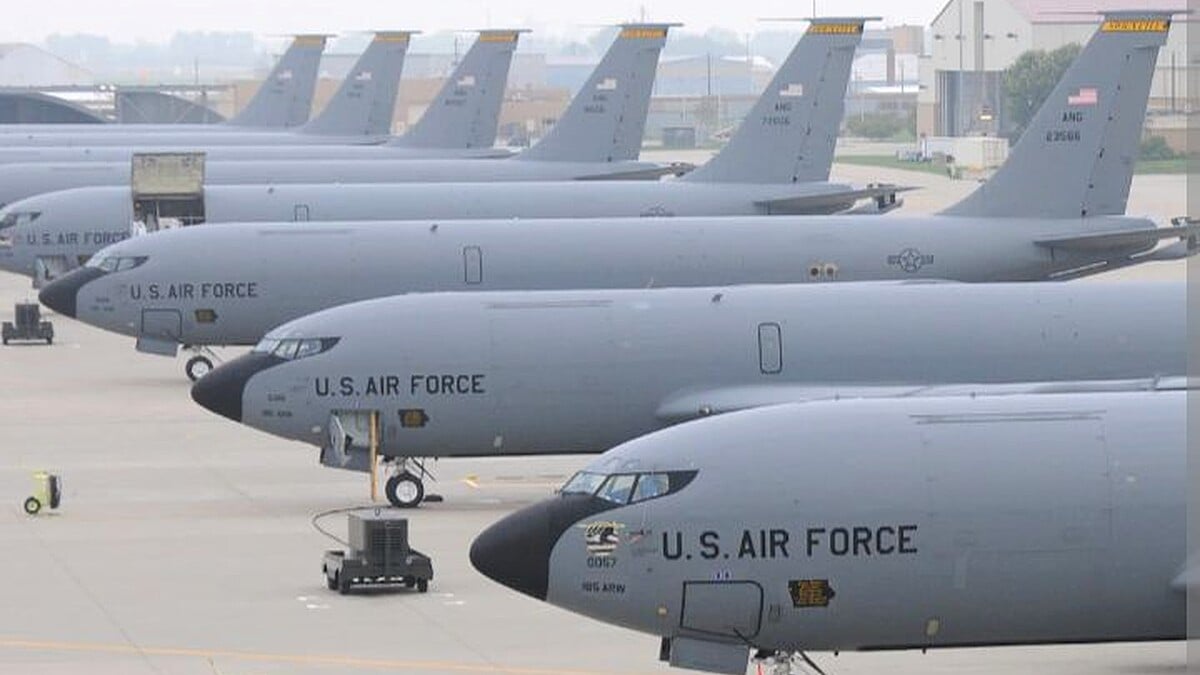




ISLAMABAD: A United States Air Force KC-135 Stratotanker crashed in western Iraq on Thursday during Operation Epic Fury, the ongoing U.S.-led military campaign against Iran, prompting immediate search and rescue operations while the Pentagon firmly rejected Iranian claims of a shoot-down by the Islamic Revolutionary Guard Corps.
The incident involved two KC-135 aerial refueling aircraft operating in friendly airspace. One tanker was lost near the Turaibil area along the Iraqi-Jordanian border, with its crew status remaining unknown as recovery efforts continued late into the day. The second aircraft sustained damage but managed to declare an emergency and land safely, reportedly at Ben Gurion Airport in Tel Aviv, according to flight tracking data and official sources.
U.S. Central Command issued a swift statement emphasizing that the crash resulted from an unspecified incident between the two tankers and explicitly ruled out hostile fire or friendly fire as contributing factors. This denial directly countered circulating assertions from IRGC-affiliated channels suggesting Iranian forces had targeted and downed a U.S. aircraft amid escalating aerial operations.
Operation Epic Fury, launched on February 28 with joint U.S.-Israeli strikes, has targeted Iranian military infrastructure, including missile sites, air defenses, and naval assets. As of Thursday, CENTCOM reported strikes on approximately 6,000 targets across Iran, including over 60 vessels and 30 minelayers in the Persian Gulf and Strait of Hormuz vicinity. The campaign has severely disrupted Iran’s ability to project power, with Tehran responding through threats to close the strategic waterway and attacks on regional shipping.
The KC-135 Stratotanker, a Boeing-built platform first entering service in the late 1950s, remains a cornerstone of U.S. long-range strike capabilities. These aircraft extend the endurance of fighter jets and bombers by providing mid-air refueling, proving essential for sustained missions deep into contested airspace. During Epic Fury, tankers like the KC-135 have supported thousands of sorties, enabling strikes on hardened facilities such as those at Natanz and Fordow.
This loss marks the fourth publicly acknowledged U.S. aircraft incident in the operation. Earlier, three F-15E Strike Eagle fighters were downed in Kuwait due to apparent misidentification by allied defenses, though all crew ejected safely. The KC-135 crash adds to operational pressures on U.S. tanker fleets, with reports indicating some assets have been repositioned from forward bases like Prince Sultan in Saudi Arabia to European locations following Iranian drone threats.
Iranian state-linked media and IRGC spokespersons have repeatedly issued claims of downing U.S. platforms, including unverified assertions of F-15 shoot-downs south of Tehran and other fighter jets over Basra. CENTCOM has consistently labeled such reports as disinformation, pointing to patterns where Tehran exaggerates successes to bolster domestic morale amid heavy losses. For instance, prior IRGC statements alleging hundreds of U.S. casualties have been disproven, with confirmed American deaths remaining limited.
The crash occurs against a backdrop of intensified economic fallout from the conflict. Iran’s threats to target energy infrastructure and restrict transit through the Strait of Hormuz—handling roughly 20 percent of global oil—have driven Brent crude prices above $100 per barrel, a 38 percent surge since late February. Shipping traffic has plummeted, with vessels adopting deceptive identifiers to evade attacks.
Rescue teams, supported by regional assets, continued operations in western Iraq as night fell. The downed KC-135 typically carries a crew of three to five, depending on mission configuration. No immediate details emerged on potential survivors or the precise cause, though mid-air incidents between refueling aircraft can involve boom contact issues or wake turbulence.
Pentagon officials underscored that the event would not impede ongoing missions. Tanker availability remains robust despite the setback, with variants like the KC-135RT capable of extended-range operations through receiver capabilities. Analysts note that such platforms are irreplaceable in enabling the high sortie rates observed in Epic Fury.
The incident highlights the complexities of large-scale air campaigns in contested regions. While U.S. forces maintain air superiority, logistical demands on refueling assets increase risks of non-combat mishaps. Iranian propaganda efforts seek to portray vulnerabilities, but official U.S. accounts prioritize transparency to counter misinformation.
As the conflict enters its third week, global attention remains on potential escalation paths, including further disruptions to energy markets and responses from Gulf allies. The Pentagon’s admission of the aircraft loss, paired with the safe landing of the companion tanker, underscores a measured approach to information release amid active operations.