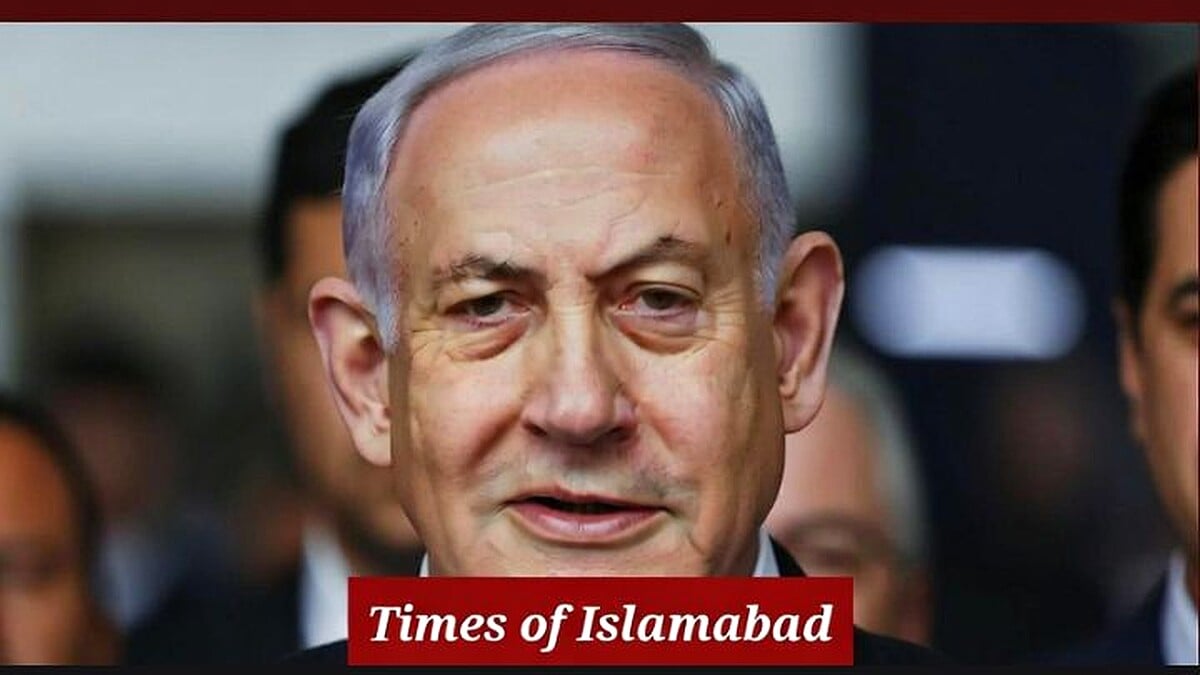




ISLAMABAD: Israeli Prime Minister Benjamin Netanyahu has described extreme Islam in both its Sunni and Shia forms as a profound threat to the entire world, while stating that ongoing efforts are aimed at paving the way for the return of the Messiah.
In recent remarks that have drawn widespread attention, Netanyahu framed current military and strategic actions as necessary responses to what he views as existential dangers posed by radical Islamist ideologies.
The statement on extreme Islam echoes his earlier comments from late February 2026, where he spoke of forming a new regional axis to counter both Sunni and Shia radical axes, including groups aligned with Iran and emerging Sunni networks.
Analysts note that Netanyahu has consistently portrayed Iran’s Shia-led regime and its proxies as primary sources of regional instability, often extending this critique to broader militant Islamist movements.
Recent operations, such as those targeting Iranian infrastructure in early 2026, were justified by Netanyahu as efforts to neutralize threats from ballistic missiles, nuclear ambitions, and terrorist proxies that endanger not only Israel but humanity at large.
He has emphasized that these actions create conditions for peace by removing oppressive regimes that chant slogans of destruction against Israel, the United States, and others.
On the messianic aspect, Netanyahu stated in early March 2026 that Israel would reach the return of the Messiah, though clarifying it would not occur imminently, such as the following week.
Variations of the quote circulated widely on social media and news platforms, with Netanyahu saying, “We will make it to the return of the Messiah, but this will not happen next Thursday.”
This rhetoric ties into Jewish eschatological beliefs about the Messiah ushering in an era of justice and peace after periods of conflict and redemption.
Some observers interpret these statements as appealing to domestic religious audiences and international supporters who see Israel’s actions in biblical terms.
The comments come against the backdrop of intensified conflicts in the Middle East, including strikes on Iranian targets and broader confrontations involving proxies in multiple arenas.
Netanyahu has argued that defeating these threats is essential for regional transformation, potentially leading to expanded alliances and stability.
Critics, however, view such language as inflammatory, risking escalation of sectarian tensions and complicating diplomatic efforts.
Regional actors have responded variably, with some Arab states quietly aligning against shared perceived threats while others condemn the rhetoric as provocative.
The Prime Minister’s words reflect a long-standing narrative in Israeli policy that radical extremism transcends sectarian divides and requires unified opposition.
By linking security measures to messianic anticipation, Netanyahu appears to infuse strategic decisions with historical and spiritual significance.
This approach resonates with segments of Israeli society and certain international allies who frame contemporary events within prophetic frameworks.
Yet it also invites scrutiny over whether such discourse promotes unity or deepens divisions in an already polarized region.
As conflicts persist, Netanyahu’s dual emphasis on combating extremism and awaiting redemption continues to shape public discourse.
The statements underscore the intersection of geopolitics, ideology, and faith in Israel’s current leadership outlook.
With ongoing developments in the region, these declarations are likely to influence both domestic politics and international relations in the coming period.