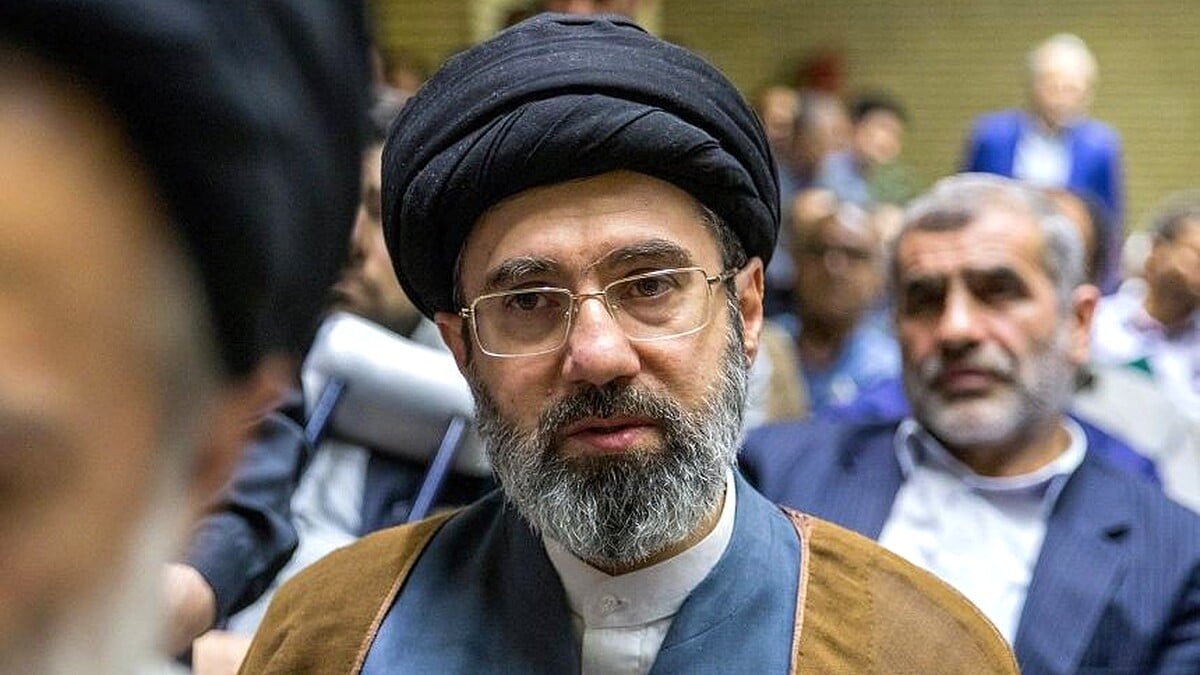




ISLAMABAD: Iran’s newly appointed Supreme Leader, Mojtaba Khamenei, has delivered a resolute message emphasizing continuity in resistance and a firm commitment to avenging the blood of martyrs while pursuing compensation from adversaries.
In his remarks, the son of the late Ayatollah Ali Khamenei described the weight of assuming the position once held by two foundational figures of the Islamic Republic. He expressed the profound difficulty of occupying the seat previously sat upon by Imam Ruhollah Khomeini and his own father, the martyred former Supreme Leader.
Mojtaba Khamenei underscored that the nation would never forget the imperative of revenge for those who have fallen. This pledge aligns with the broader revolutionary ethos that has defined Iran’s leadership since 1979, particularly in the face of perceived external aggressions.
He highlighted successes in maintaining national unity, stating that efforts to sow division within the country had been decisively thwarted. Such assertions come against the backdrop of ongoing regional tensions and internal challenges that have tested the resilience of the Islamic Republic.
The new leader reaffirmed Iran’s policy of seeking amicable relations with neighboring states. He clarified that military actions remain targeted solely at adversary bases, with no intention of broader escalation beyond defensive necessities.
Khamenei declared an unwavering determination to continue such targeted operations as required. This stance reflects a strategic doctrine focused on deterrence and proportional response rather than indiscriminate confrontation.
Central to his statement was the demand for compensation from the enemy. He outlined a clear hierarchy of actions: if direct restitution is refused, Iran would seize equivalent assets belonging to the adversary.
Should asset seizure prove unfeasible, the Supreme Leader warned of destroying property of comparable value. This graduated approach signals a calculated escalation pathway aimed at imposing tangible costs on perceived aggressors.
The remarks arrive shortly after Mojtaba Khamenei’s selection by the Assembly of Experts in early March 2026. His appointment followed the assassination of his father, Ayatollah Ali Khamenei, in joint US-Israeli strikes that marked the onset of intensified conflict.
Analysts note that the choice of Mojtaba, long viewed as a behind-the-scenes influential figure, represents a defiant signal of continuity and hardening resolve. His low public profile prior to succession contrasted with his reported deep ties to the Islamic Revolutionary Guard Corps.
The personal dimension adds gravity to his vows. Reports indicate that family members, including his wife, perished in the same strikes that claimed his father’s life, fueling expectations of a more hardline posture.
Iranian officials across institutions have echoed themes of retribution. Statements from the presidency, judiciary, and military have framed revenge as a legitimate duty, reinforcing the narrative of unyielding resistance.
The Supreme Leader’s emphasis on targeting only military installations seeks to frame Iran’s posture as defensive and precise. This messaging aims to maintain support among allies while deterring further incursions.
Broader implications extend to regional stability. Neighbors have expressed concerns over potential spillover, even as Tehran reiterates its preference for friendship with proximate states.
Economic and asset-related threats introduce a novel layer to Iran’s retaliatory toolkit. Past episodes of sanctions evasion and asset freezes provide context for such declarations, though enforcement remains complex amid global financial scrutiny.
The pledge to obtain compensation “in any case” underscores a long-term strategic mindset. It positions the conflict as one of endurance, where Iran claims moral and material rights to redress.
Public reactions within Iran vary. While regime supporters rally around calls for unity and revenge, some voices express apprehension over intensified repression or prolonged hostilities.
International observers monitor these developments closely. The statements have heightened alerts regarding potential asymmetric responses, including proxy actions or cyber operations.
Mojtaba Khamenei’s address serves as an early indicator of his leadership style. It blends reverence for predecessors with a forward-looking assertion of power and accountability.
As the conflict evolves, these words may shape Iran’s diplomatic and military calculus. The emphasis on measured yet firm retaliation could either de-escalate through deterrence or prolong confrontation.
The Islamic Republic’s history under successive supreme leaders has featured similar vows of resistance. Whether this iteration leads to negotiation or further escalation remains uncertain amid the fluid security landscape.