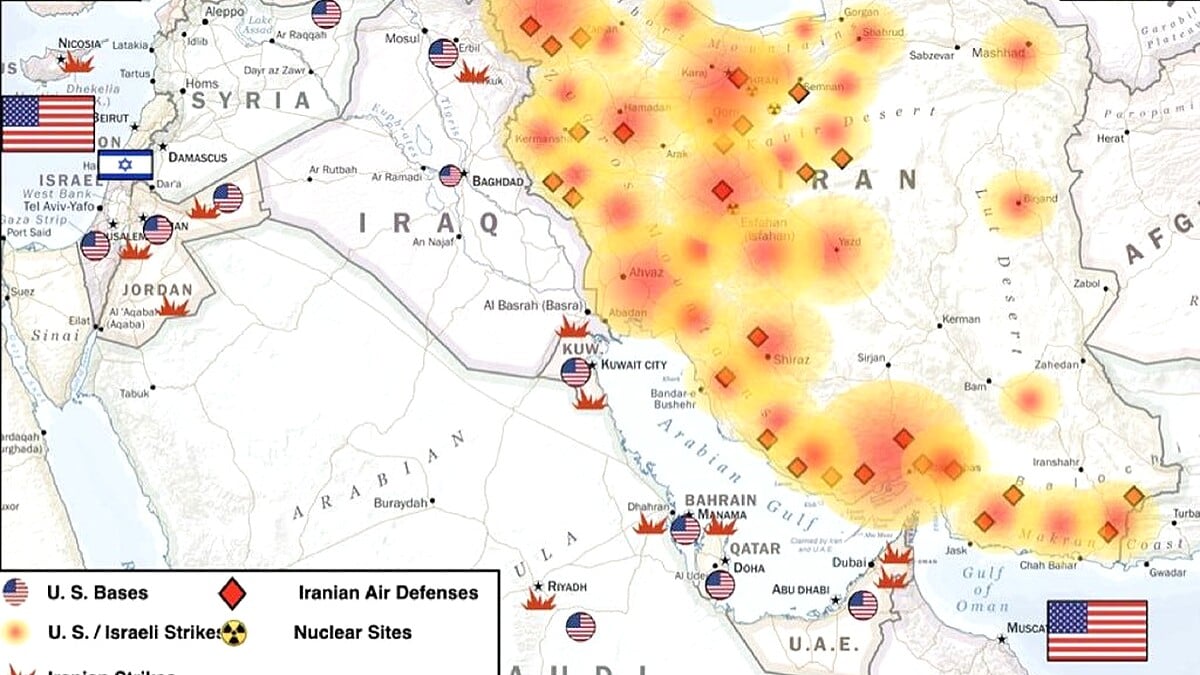




ISLAMABAD: The United States has publicly released detailed mapping of its bombing sites in Iran during the first ten days of the ongoing conflict exposing at least two targeted locations near the Pakistan-Iran border.
Satellite imagery and official disclosures indicate that strikes hit radar systems at the Zahedan air base in eastern Iran close to Pakistan’s Balochistan province.
This revelation underscores how the war now reaches Pakistan’s doorstep with the potential for even slight miscalculations in targeting or missile trajectories to result in unintended strikes on Pakistani territory.
The conflict erupted on February 28 2026 when joint US and Israeli forces launched large-scale airstrikes under Operation Epic Fury aimed at crippling Iran’s military nuclear and ballistic missile capabilities.
Over the initial phase the US and allies conducted thousands of strikes exceeding 5000 targets according to CENTCOM reports destroying naval vessels missile sites and key infrastructure across cities including Tehran Isfahan Bushehr and Tabriz.
Defense Secretary Pete Hegseth described recent days as among the most intense with heavy deployment of fighters and bombers to maintain pressure on Tehran.
Maps compiled from commercial satellite data and verified by outlets such as Reuters Al Jazeera and BBC Verify show the geographic spread of attacks stretching from northwestern Iran to southern coastal regions along the Persian Gulf.
Eastern strikes particularly around Zahedan and potentially Chabahar highlight proximity to Pakistan where the border runs through rugged Balochistan terrain shared by both nations.
Analysts note that the Zahedan facility targeted for its radar installations lies within striking distance of Pakistani border areas raising immediate concerns over accidental spillover.
Pakistan’s meteorological authorities have already warned of possible pollutant drift from damaged Iranian sites into western regions complicating environmental risks.
The US emphasis on precision-guided munitions notwithstanding the scale of operations increases chances of errors in a densely contested airspace.
Iranian retaliatory actions have targeted US bases across the Middle East including in Bahrain Qatar Kuwait and the United Arab Emirates but have not directly engaged Pakistan.
However Islamabad has deployed warships to escort merchant vessels in the Gulf ensuring energy supply lines amid threats to the Strait of Hormuz.
Protests in Pakistan against the US-led campaign have resulted in casualties and disruptions with the US Embassy in Islamabad canceling visa services temporarily.
The border vulnerability stems from historical tensions in Balochistan where insurgent groups operate on both sides adding layers of complexity to any unintended incursion.
Experts warn that a missile veering off course or debris from intercepted strikes could land in Pakistan prompting defensive responses and further escalation.
Pakistan maintains a neutral stance officially urging de-escalation while prioritizing national security along its western frontier.
The conflict has already caused significant casualties with reports of over 1200 civilian deaths in Iran and military losses on multiple sides.
Global markets reflect the uncertainty with oil prices fluctuating due to fears over disrupted Gulf shipping.
The release of the strike map appears part of US efforts to demonstrate transparency in targeting while justifying the campaign as necessary to eliminate threats from Iran’s nuclear ambitions.
Yet the inclusion of eastern sites amplifies regional anxiety particularly for neighbors like Pakistan and Afghanistan sharing long porous borders with Iran.
Diplomatic channels remain strained with no immediate ceasefire in sight as US officials project the operation continuing for weeks.
Pakistan’s government faces domestic pressure to strengthen border defenses and monitor developments closely to prevent any direct involvement.
The situation highlights the fragile balance in South Asia where a Middle East war risks drawing in adjacent states through proximity alone.
As the conflict enters its second week the border strikes serve as a stark reminder of how interconnected regional security has become in this era of extended aerial campaigns.
Any minor deviation in operations could transform a distant war into a local crisis with profound implications for stability in Pakistan and beyond.